

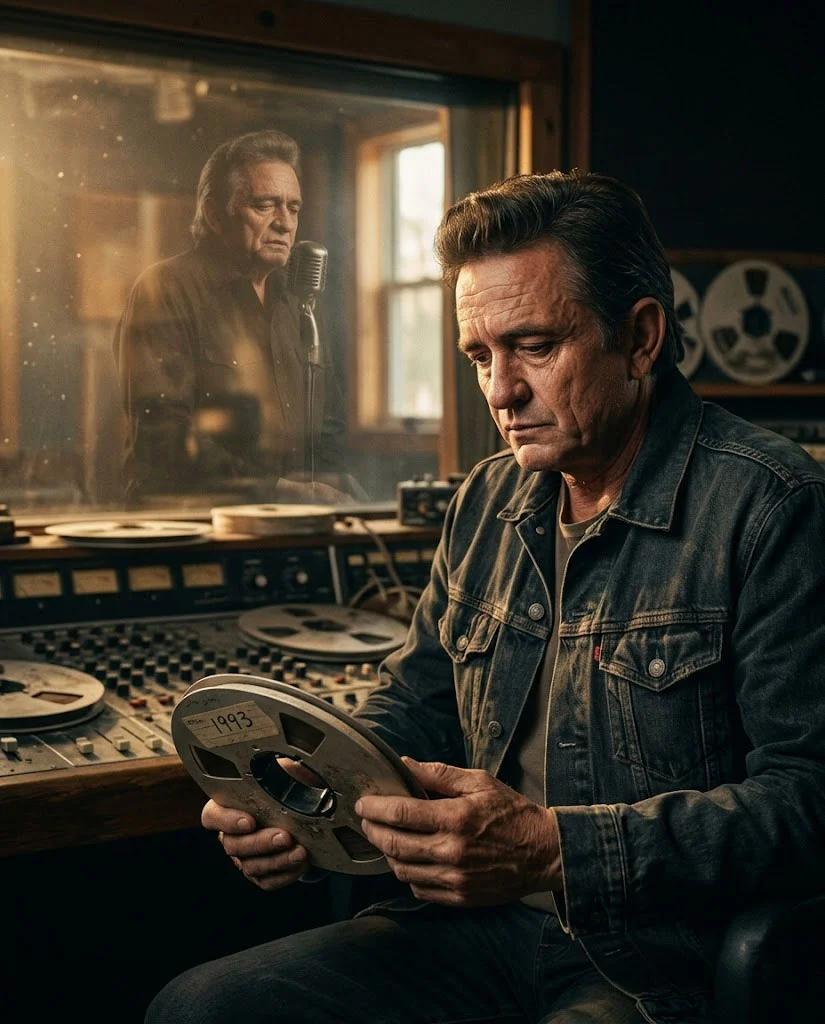
In June 2024 a vault door finally opened and a forgotten chapter of Johnny Cash returned to the light. Twenty-one years after his death, the tapes he made in early 1993 at LSI Studios in Nashville became the album Songwriter. The story behind those sessions is not just a tale of rescued music. It is a haunting reminder of how often the world mistakes silence for irrelevance.
At the start of 1993 Cash walked into the studio without a record label, without a marketing plan, and without any promise that radio would care. Country radio had already stopped playing his songs. His last major hit was more than a decade behind him. To much of the industry he was a memory, a figure from an earlier era, a name that belonged to the past.
So he sat before the microphone and recorded eleven original songs alone. No label lined up to release them. No executive asked to hear them. The tapes were placed in a vault and left in the dark for thirty-one years.
He stepped into the studio not because the market demanded a product. He went in because the words demanded to exist.
By then Music Row had moved on. Cash was no longer the dangerous young outlaw, and he was not yet the revered elder statesman. He was a working artist at an uncomfortable crossroads, holding on to the quiet dignity of a craft that the commercial world had discarded.
Those intimate sessions never became the album they were meant to be. Cash moved forward and later found a powerful late-career resurgence with producer Rick Rubin. But the eleven tracks from LSI Studios remained hidden, untouched and unheard.
The rescue came from his son John Carter Cash and producer David Ferguson. Together they brought the old sessions into the present and prepared them for release. Vince Gill, Marty Stuart, and Dan Auerbach added guitars to the original vocal tracks. They played alongside the ghost of a legend, offering a reverence that Nashville had once refused to give.
When Songwriter arrived in the summer of 2024 the response was overwhelming. Critics called it stunning. Fans called it a revelation. Reviewers praised the raw, unhurried truth in Cash’s aging voice. Listeners marveled at the weight of his storytelling and the strange power of hearing a man speak clearly from a time when few wanted to listen.
Yet the applause leaves behind a deeply uncomfortable question. If Cash had released these same songs in 1993, would those same critics have paused to hear them. The honest answer is probably no.
It is easy to applaud an artist once history has secured their legacy. It is much harder to recognize their value when they stand before you unfashionable and unpolished.
Songwriter is more than a collection of salvaged tracks. It is a mirror held up to a culture that often waits until a voice is gone to understand its worth. Cash did not make a mistake by writing those songs when nobody was paying attention. He was simply early.
The music was always a masterpiece. The world needed thirty-one years to catch up.