
On a quiet February night in Arizona, a man who had spent forty-three years trying to escape a single careless sentence finally let go. Waylon Jennings was sixty-four years old when he died in his sleep, with his wife nearby and a legacy of music that would outlast every wild chapter of his life. He had helped shape the Outlaw movement and stood beside Johnny Cash and Willie Nelson. Yet the applause never reached the deepest part of him.
Back in 1958, Buddy Holly heard a deep voice on the radio and gave the Texas kid a place in his band. Waylon had been a restless soul from Littlefield, Texas, a boy who left school at sixteen and refused to wait for permission. The ride should have been a straight shot to stardom. Then came the Winter Dance Party Tour in early February 1959.
The Midwest roads were brutal and the tour bus heaters kept dying. The Big Bopper was sick with the flu and desperate for rest, so the twenty-one-year-old Waylon gave up his seat on the chartered plane. Buddy Holly teased him about freezing on the bus, and Waylon laughed before firing back with a line that would become his ghost.
I hope your ol’ plane crashes.
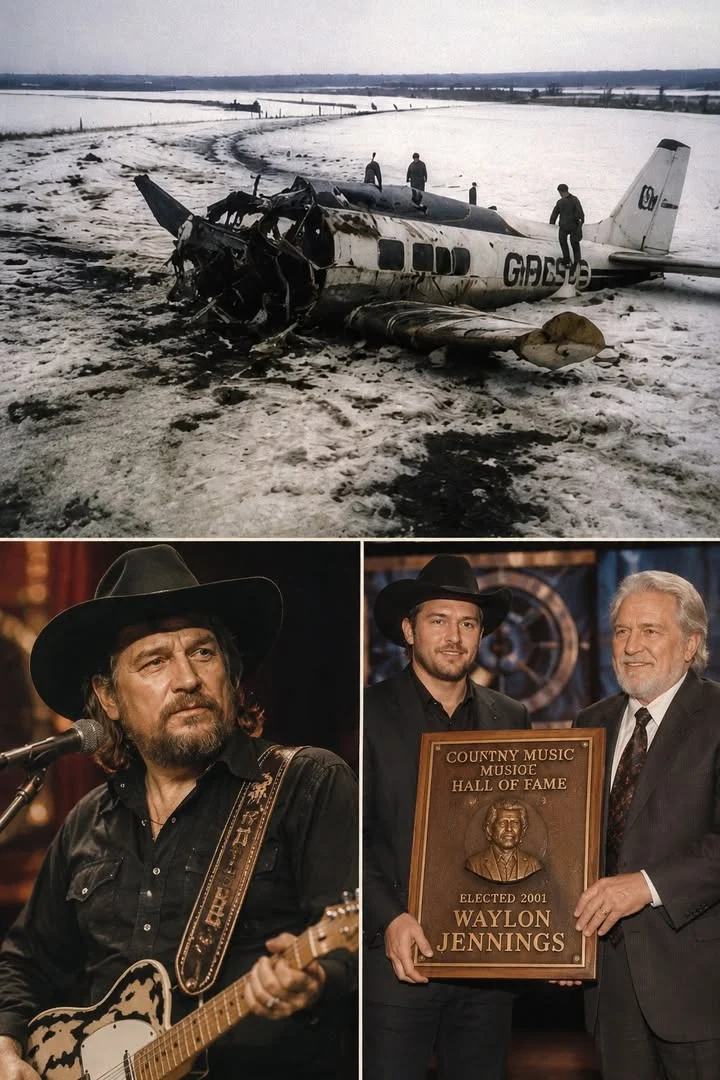
Hours later, that plane slammed into a frozen cornfield near Clear Lake, Iowa. Buddy Holly, Ritchie Valens, and the Big Bopper were all gone. Waylon was still alive, standing in the snow and suddenly holding a burden that fame would only make heavier.
The burden did not announce itself with shouts. Survivor’s guilt has a quiet way of hiding in a man’s chest, and it stayed there through the pills, the cocaine, the federal busts, and years of blinding fame. He gave country music a rougher honesty and a restless new voice, earning ninety-six charting singles and sixteen number-one hits. None of those victories could stitch the wound closed.
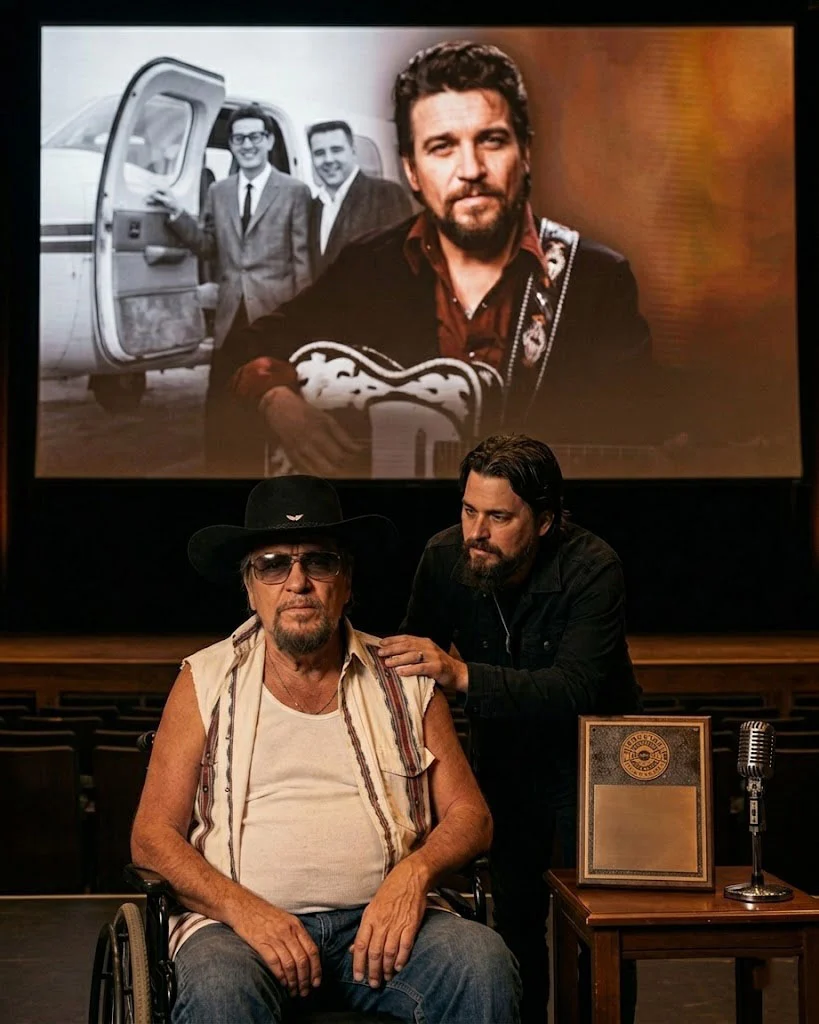
Behind the black hat and the unyielding stare was a husband and father battling private storms. In October 2001, the Country Music Hall of Fame called his name. Waylon did not go. He sent his twenty-two-year-old son Shooter to stand in his place, letting the next generation carry the torch.
Four months after that empty chair, February arrived with the same cold memory that had marked his soul for decades. On a quiet night in Chandler, Arizona, Waylon Jennings passed away in his sleep. He was sixty-four years old. He had lived several lifetimes inside one hard story, and now he was finally free.
After forty-three years, the man who gave away a seat finally boarded his own flight home.