
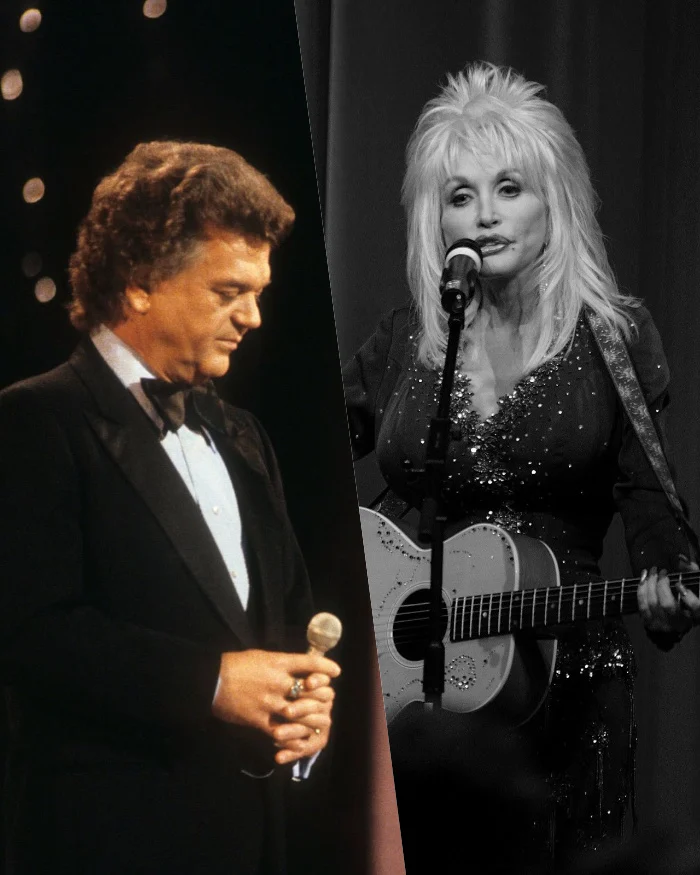
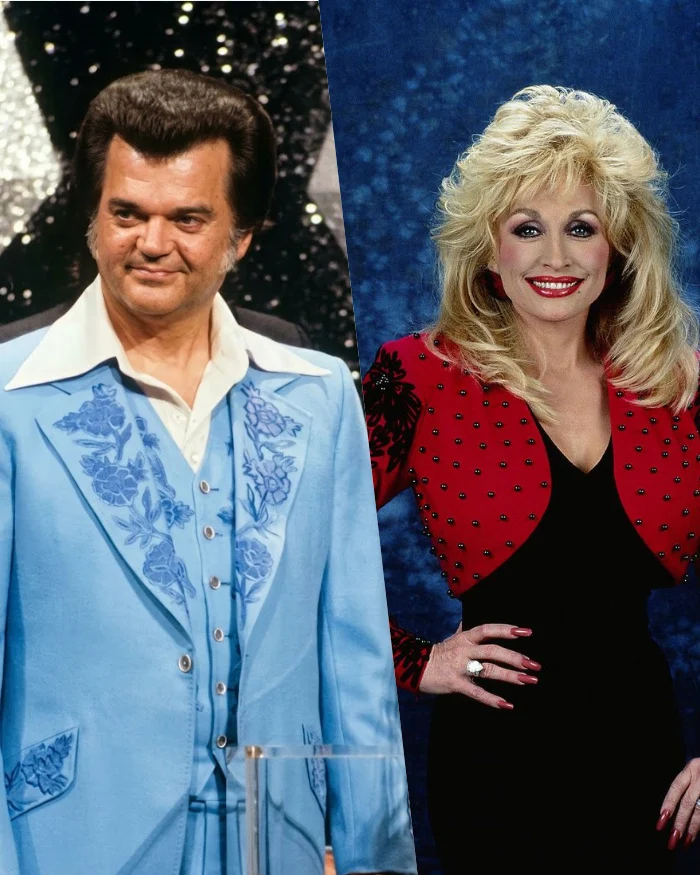
The most haunting duet in country music was never captured in a shared studio. It was rebuilt from old tape, isolated vocals, and the stubborn refusal of fans to let history stay silent.
During the 1970s, Dolly Parton and Conway Twitty ruled the country charts on parallel tracks. Twitty recorded at Bradley’s Barn and Parton cut tracks inside RCA Studio B. Their names traded the top of the Billboard charts with mechanical regularity, yet their voices never converged on a single microphone.
The barrier was corporate rather than artistic. Twitty was an anchor superstar for MCA Records while Parton remained bound to RCA Victor. Both labels guarded their premier assets with fierce exclusivity. Cross-label collaborations demanded labyrinthine publishing clearances, conflicting release schedules, and complex royalty agreements that executives treated as unprofitable headaches.
Their separate stage commitments tightened those walls. Twitty was deep in his legendary duet run with Loretta Lynn. Parton was locked into the demanding creative and television machinery of the Porter Wagoner partnership. Each camp lived on relentless touring circuits and exhaustive album cycles. The industry chose immediate commercial dominance over unexpected artistic risk, leaving two of Nashville’s most distinct vocalists on paths that never physically crossed.
Decades later, listeners and digital archivists refused to accept that the archive had closed for good. Modern sound specialists began attempting what twentieth-century record executives never arranged. Instead of hunting elusive multi-track tape reels in corporate vaults, they used spectral de-mixing algorithms and source-separation models to map harmonic frequencies and transient signatures from old vinyl or tape masters. These tools sliced the lead vocal free from rhythm guitars, steel notes, and backing tracks.
Once a vocal stood alone as a stem, engineers pitch-matched it, aligned tempos, and placed the raw audio across a balanced modern stereo field. The resulting recordings play like ghost sessions. Twitty’s deep, bruised baritone intertwines with Parton’s crystalline storytelling soprano, and the manufactured harmony feels both miraculous and quietly melancholic.
Behind the scenes, the two icons shared a quiet professional respect. They crossed paths at industry award banquets and outdoor festivals. They understood the grueling physical discipline required to build and sustain an entertainment empire from impoverished working-class roots.
Both singers knew how to articulate rural hardship, heartbreak, and personal pride better than almost anyone else in American music. They spoke the same emotional language even when competing contracts kept them in separate rooms.
Technology managed to build the bridge that Nashville executives never permitted. The duet arrived half a century late, surviving not as a flesh-and-blood encounter but as a digital testament to the sound of an era that never quite was.
Digital algorithms can now reconstruct the frequencies, align the phrasing, and place their voices into a single track. Yet the clean precision of modern software only highlights what the golden era left on the table. The artificial harmonies offer a quiet attempt to fix a masterpiece that history simply dropped. The duet finally exists, not as a living session but as a ghost performance that reveals exactly what the industry sacrificed to keep both stars on separate, grueling tours.