
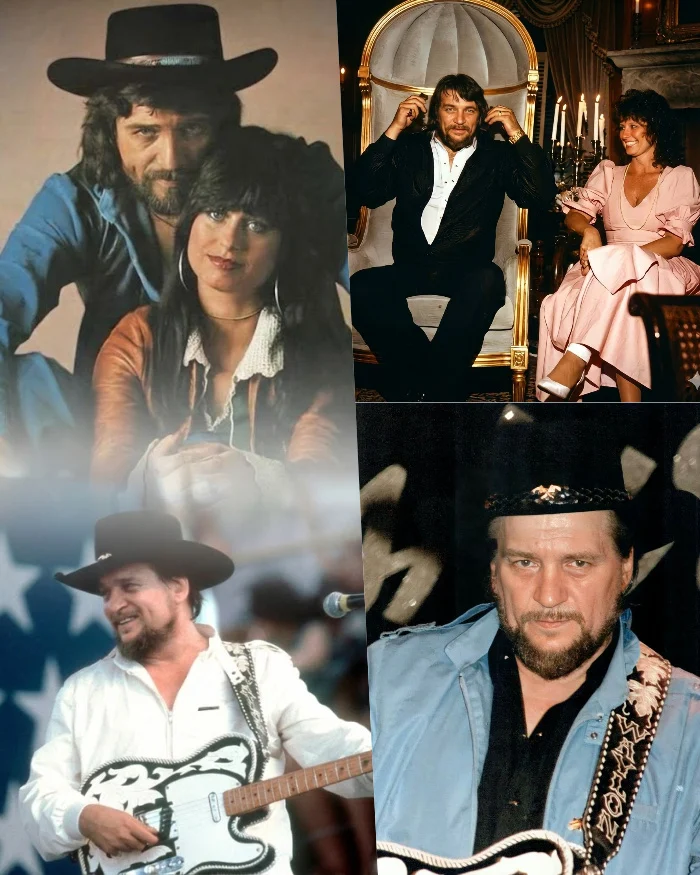
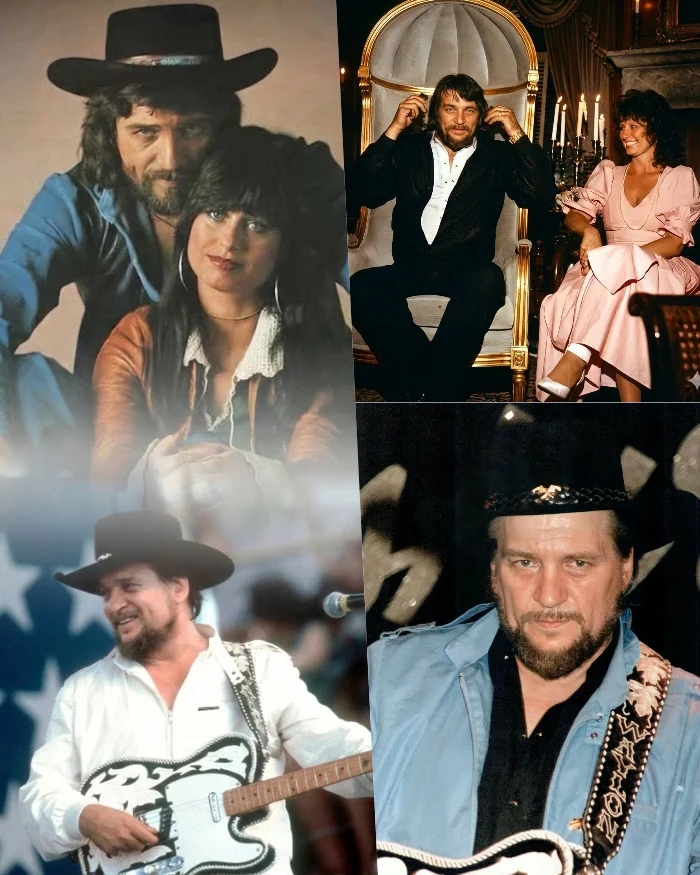
The final breath came in silence inside a Chandler home, far from the roaring stages that had shaped a generation. Waylon Jennings died peacefully in his sleep on February 13 2002 at the age of sixty-four. For the outlaw country pioneer who had spent decades challenging Nashville, the ending was startlingly still.
His body had carried the cost of relentless touring and hard living. Diabetes complications had forced him away from the spotlight, and in the winter of 2001 his left foot was amputated, leaving him confined to a wheelchair. Yet the man who once fought the music industry with clenched fists never surrendered his spirit.
His wife Jessi Colter remained beside him through thirty-three years of marriage. She stood with him through destructive addiction battles in the 1980s and never left his side at the end. Together they found a hard-won peace after the chaos of his prime.
Before Waylon, Nashville operated like a rigid assembly line. Record labels chose songs, studio players and the final sound. He refused that control and waged a high-stakes battle for creative independence.
He never wanted a polished country record. He wanted the road, the barroom and the band he trusted.
When he won that freedom in the 1970s, he rebuilt country music from the inside out. In closed-door late-night sessions, he stripped away lush string sections and gentle background choirs favored by the establishment. He brought his actual touring band into the recording booth. A driving thumping bass and the biting tone of his leather-wrapped Telecaster captured the raw energy of a honky-tonk directly on tape.
That stubborn insistence on recording strictly on his own terms gave birth to the Outlaw movement. It proved that a country artist did not need a manufactured sound to sell millions of records.
Across the country, fans and fellow musicians felt the sudden silence after his passing. A foundational pillar of American music was gone. His records continue to play in living rooms, carrying the unmistakable rasp of a rebel who never compromised.
The leather-wrapped Telecaster fell quiet, but the road he carved remained wide open for anyone willing to walk it on their own terms. The deeper chapters of his life remain in the studio sessions behind his greatest records, where a fierce rebel turned personal honesty into a sound that still carries.