
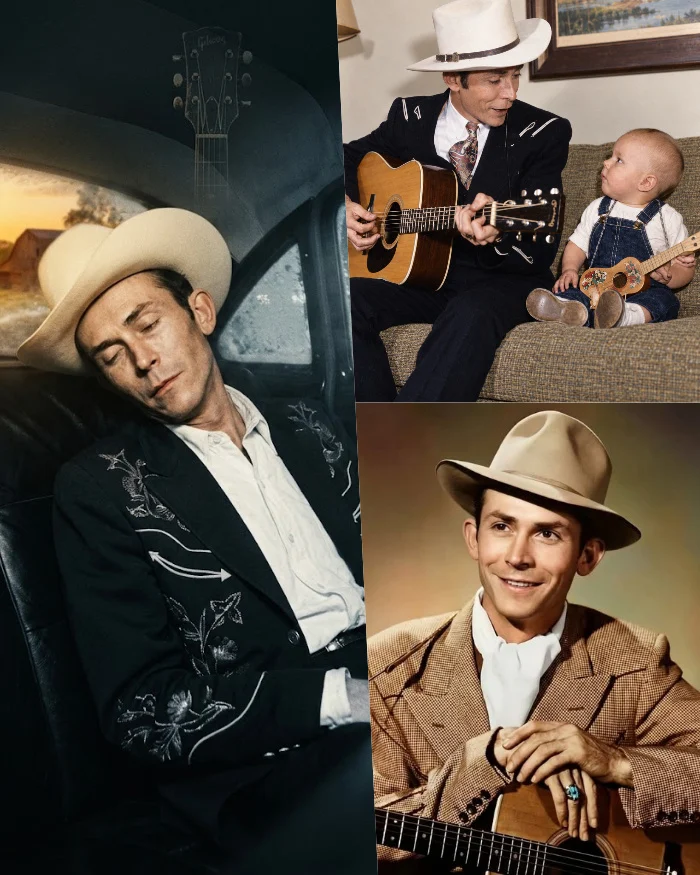
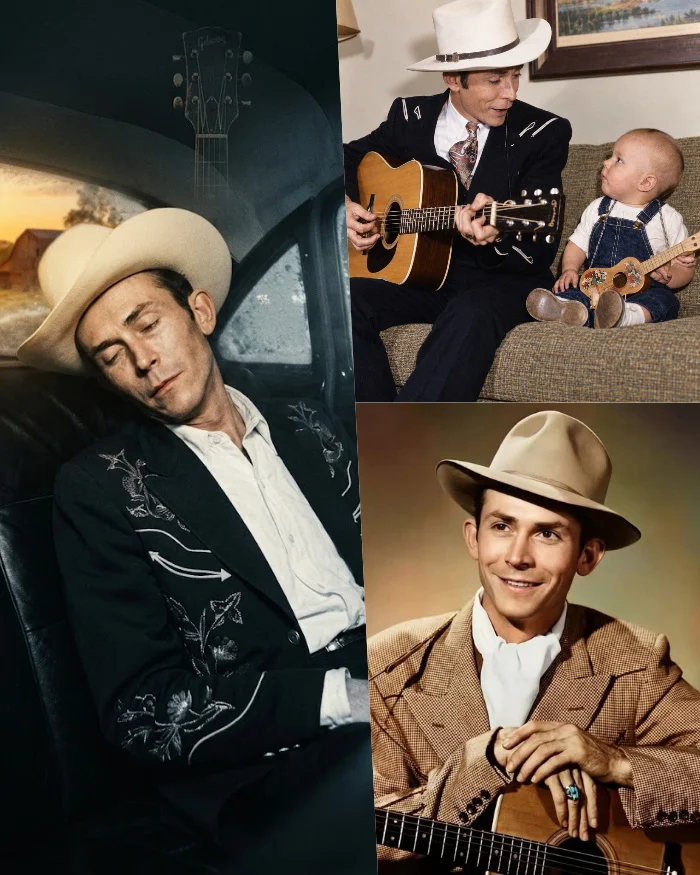
A small child sat in the front pew while a winter crowd pressed through Montgomery streets and the air inside the auditorium grew thick with hymns and grief.
The date was January 4, 1953, and the mourning was for Hank Williams, the songwriter who had died on New Year’s Day at 29. More than 20,000 people filled the streets around the Montgomery City Auditorium, and nearly 3,000 more packed the seats, aisles, and balconies.
White lilies and floral wreaths rose from radio stations, record distributors, and listeners across the country. On the stage, a silver casket stood open, and Roy Acuff, Ernest Tubb, and Red Foley sang solemn gospel hymns. Local airwaves carried the service to thousands of homes, turning a personal funeral into a national farewell.
Yet the deepest silence belonged to Randall Hank Williams, the three-year-old son his father had called Bocephus. Held by his mother, Audrey Sheppard, he looked at flashing press cameras and weeping strangers.
Days earlier, Hank had been laughing and singing with him on the living room floor. In the auditorium, the toddler watched the man who once carried him on his shoulders lying still beneath flowers and hymns.
For the crowd, Hank Williams was a legend. For the boy, he was the father who had stopped playing in the living room.
The funeral became the largest public gathering Montgomery had ever seen for an artist. It closed a brief and brilliant chapter in country music and marked the moment a family loss became American myth.
In the years that followed, Audrey guided her son toward that inherited stage. By age eight, she had him performing his father’s catalog on package tours, dressed in miniature western suits and holding an oversized acoustic guitar.
Promoters treated him as the living echo of Hank Williams, and the spotlight demanded a child carry a legend before he could fully understand its weight.