
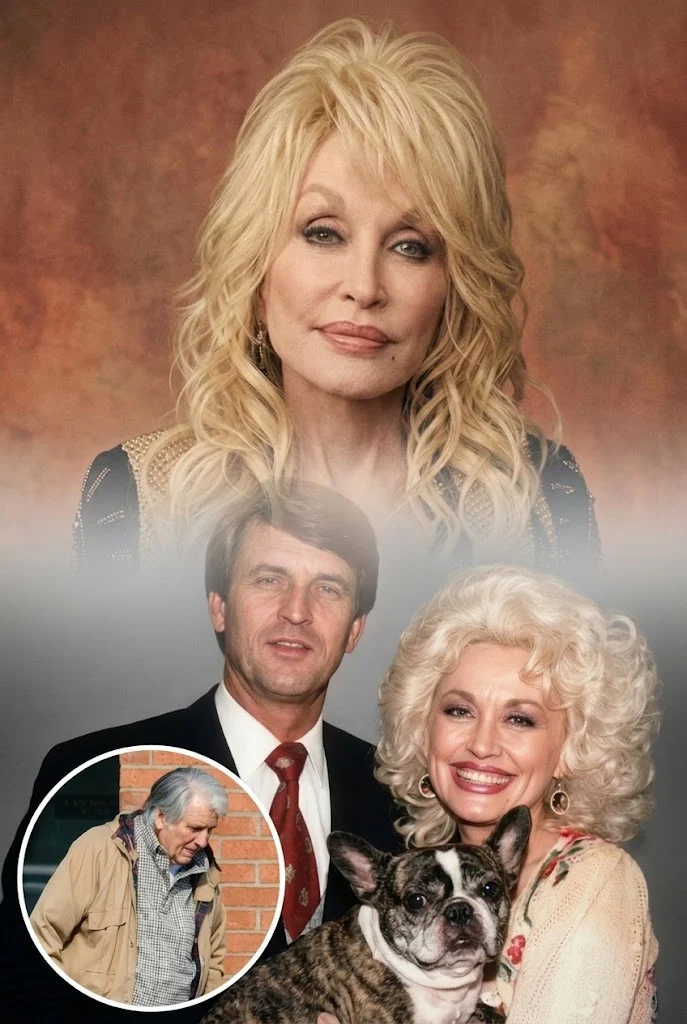
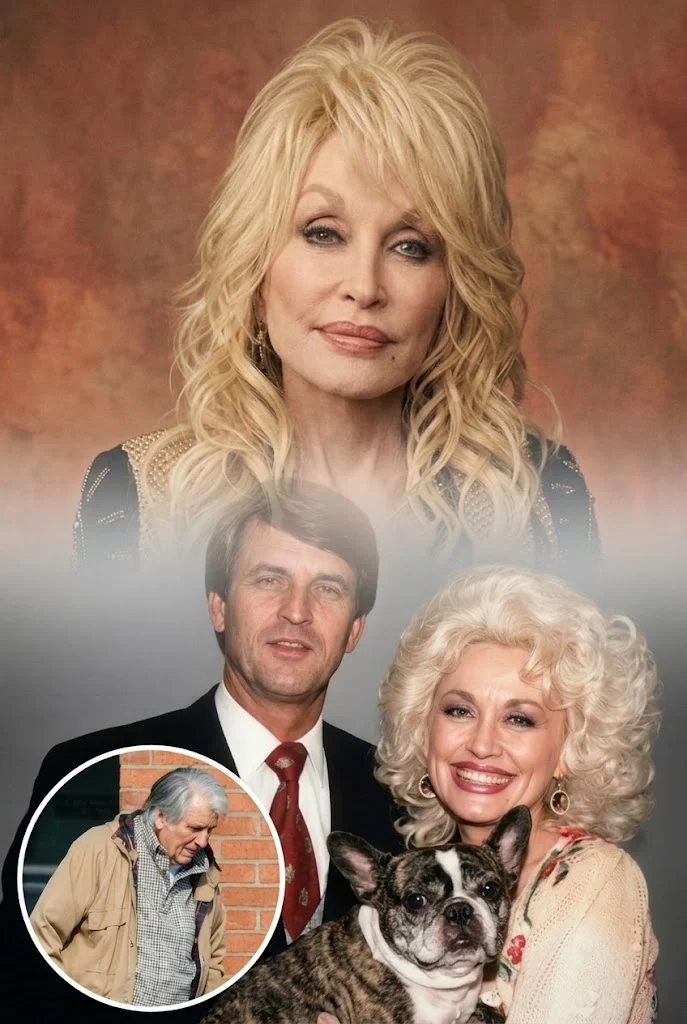
The quiet Nashville home where Dolly Parton and Carl Dean built a private world suddenly held a heavier silence after Carl passed away on March 3, 2025 at age 82.
Dolly remained at his side through his final moments, ending a fifty-nine-year marriage that began outside a Nashville laundromat in 1964 and became the hidden foundation beneath her global fame.
Her public statement offered only a few words and admitted that language could not measure the depth of their shared life.
“Simple words could never measure the depth of their time together.”
The family honored Carl’s lifelong wish to stay away from the entertainment industry. They held a private service with close relatives only. No press pools. No live cameras. No industry gathering.
Fans and fellow musicians from across the country sent tributes to a partnership that stayed entirely private while Dolly became a global icon.
The man who called her Kid, drove their camper van across country roads, and refused every red carpet invitation was no longer sitting across the kitchen table.
Their story began on a sunny afternoon in late May 1964 outside the Wishy Washy Laundromat on Nashville’s 16th Avenue South.
Dolly had arrived from Sevier County with cardboard luggage to pursue a songwriting career, while Carl, a twenty-one-year-old running an asphalt-paving business, pulled over in a white Chevrolet pickup to playfully warn her about getting sunburned.
Two years later, on May 30, 1966, the young couple slipped away across state lines to Ringgold, Georgia, and exchanged vows in a quiet Baptist church.
Monument Records had asked Dolly to delay marriage to protect her promotional rollout, so they kept the ceremony private with only Dolly’s mother, Avie Lee, the local pastor, and his wife present.
That same year, Carl accompanied his wife to a formal BMI songwriting awards dinner in Nashville.
Watching the flashbulbs, publicists, and industry executives, Carl made a firm decision on the drive home.
He told Dolly he loved her and supported everything she aimed to accomplish, but he vowed never to attend another entertainment industry function or walk another red carpet.
Rather than weakening their relationship, that clear boundary became the steady bedrock of a nearly sixty-year marriage.
While Dolly built one of the most visible careers in modern music, Carl continued managing his paving business and tending to their property in Brentwood, Tennessee.
Whenever the demands of national tours and recording sessions paused, the pair returned to the simple routines they established in their early twenties.
Without assistants, security details, or fanfare, Carl loaded their modest camper van for unannounced weekend road trips along rural Tennessee highways and quiet state parks.
Inside that camper, the towering blonde wigs, bright stage makeup, and elaborate rhinestone gowns were set aside.
Dolly sat in the passenger seat wearing everyday clothes, slicing fruit and packing picnic lunches while Carl kept his hands steady on the steering wheel, watching the two-lane highway ahead.
Their dinner dates remained unpretentious throughout every decade of her fame.
They routinely pulled through drive-through lanes at local Taco Bell or Krystal locations, drove to an open meadow or scenic overlook, and shared meals on paper plates so neither had to wash dishes.
When personal challenges arose, that same front door became a shelter for family.
In the early 1980s, after medical complications prevented Dolly from having children, the couple opened their household to several of her younger siblings, including Floyd, Freida, and Rachel.
Carl helped manage the daily routines, cooking family meals and driving the younger siblings to school while Dolly worked long studio hours.
That deep maternal spirit nurtured in private eventually reached children worldwide through the Imagination Library, a literacy initiative Dolly founded in 1995 that has gifted hundreds of millions of books to young readers in honor of her father.
In their later years, the rhythm of that sanctuary shifted as Carl faced progressive health challenges.
Dolly intentionally scaled back her schedule to remain at their Nashville home, managing daily care and preparing quiet meals, while trusted family members stepped in to help look after household logistics and preserve his lifelong privacy away from public attention.
In May 2016, Dolly and Carl had returned to Ringgold to renew their wedding vows for their 50th anniversary, proving that lasting devotion never needed the applause of an arena.
Her songs will remain part of American music for generations, but the home she built with Carl Dean belonged only to the two of them.
The private routines of their final years together, and the quiet decisions that carried their bond through nearly sixty years, remain the most personal chapter of her life.