
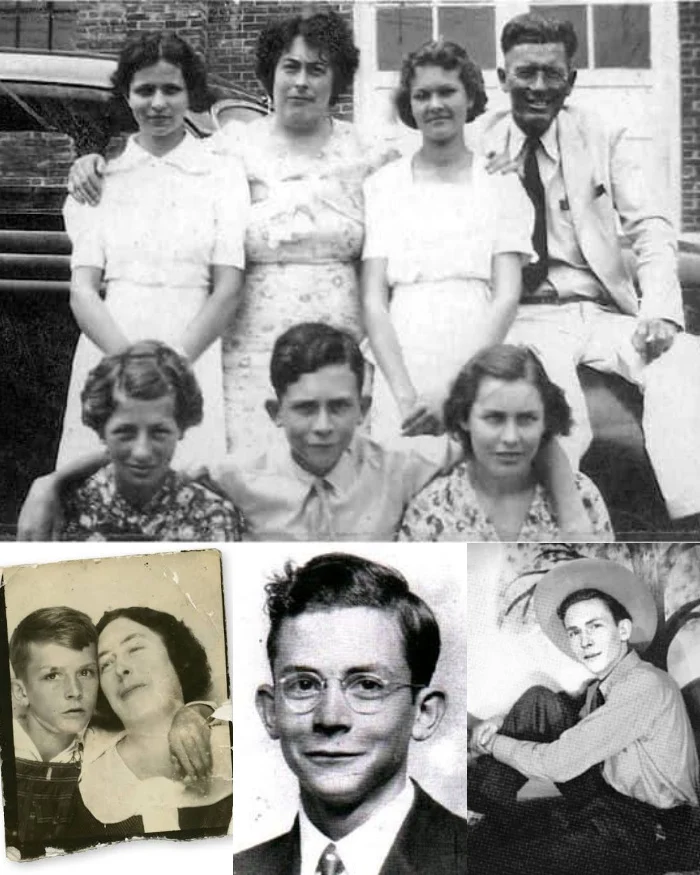
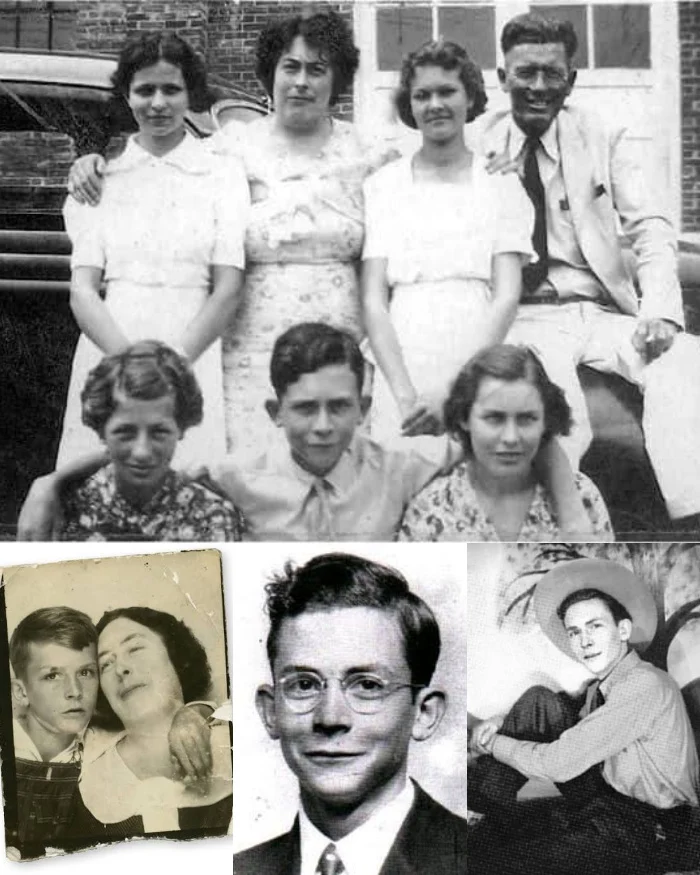
An empty wooden cradle stood in a pine woods house in Butler County, Alabama, as proof that joy could turn to grief in two days. Ernest Williams died in late 1921 without proper medical care, and his absence became a presence no one could remove from the family.
When Hiram “Hank” Williams arrived on September 17, 1923, in the logging settlement of Mount Olive, his mother Jessie Lillie Skipper Williams held him with both hope and terror. He was frail, born with spina bifida occulta, an undiagnosed spinal defect that would bring constant back pain and keep her watching every breath.
His father Elonzo “Lon” Williams worked for the W.T. Smith Lumber Company, driving log trains through thick pine groves. Lillie played organ in the local Baptist church and kept their small home together amid sawdust, hard labor, and the hum of sawmills.
The routine broke when Lon’s health failed. A severe facial paralysis linked to injuries and nerve illness from World War I service sent him to the Veterans Administration hospital in Alexandria, Louisiana, in 1930. Hank was six. Lon remained institutionalized for nearly a decade, leaving Lillie alone in a household shadowed by depression and fear.
Every late night fever felt like the ghost of 1921 returning for the only son she had left.
She moved the family to Georgiana and took work wherever she could find it. She ran boarding houses, canned produce, and managed domestic shifts that stretched past dark. Every dollar helped feed her children and put shoes on Hank and his older sister Irene.
Inside that protective grip, Hank looked for air beyond the house. He sold roasted peanuts and shined shoes outside storefronts along the Louisville and Nashville railroad line. He carried a cheap acoustic guitar his mother purchased and practiced for hours on the boarding house porch.
On those downtown sidewalks, he met Rufus “Tee-Tot” Payne, an African American street musician who played guitar and sang blues and spirituals for tips around Georgiana and Greenville. Hank shadowed him relentlessly, offering small coins or leftover food from his mother’s kitchen in exchange for lessons.
Payne taught him to slide chords, keep steady rhythm with his thumb, and bend notes until they matched the raw tension in his voice. Hank also absorbed the sacred shape-note hymns Lillie played at church, blending street blues and church devotion into a sound that would later travel far beyond Alabama.
By the mid-1930s, the family moved to Montgomery. There, the young singer entered amateur talent contests at the Paramount Theatre and formed his first band, the Drifting Cowboys. The songs he carried across the country kept the ache of those railroad towns, the mother’s fear, and the brother who never had the chance to live.