
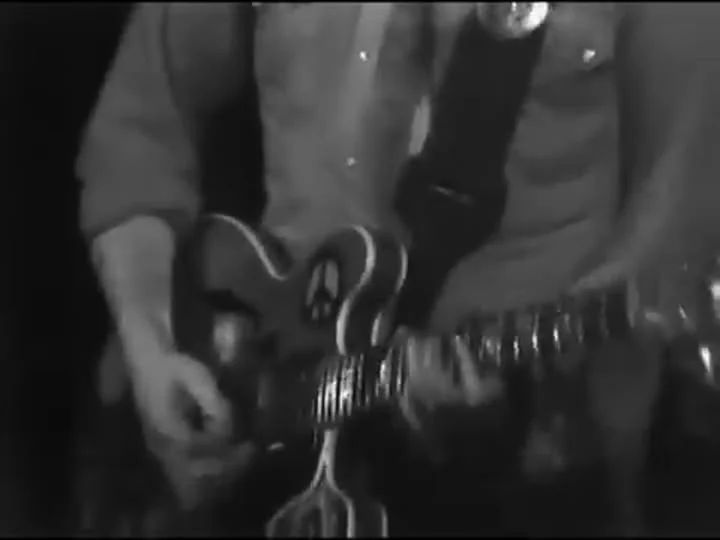
The summer of 1969 was a crucible of cultural upheaval and sonic exploration, but for those who witnessed it firsthand—or who have watched the grainy footage since—no moment captured the sheer, untamed velocity of rock and blues quite like Ten Years After’s performance at Woodstock. As the sun dipped over Max Yasgur’s farm, Alvin Lee launched into a guitar solo that felt like a runaway train. The song was “I’m Going Home”, and it didn’t just electrify the crowd; it rewired the DNA of live performance forever. In that seven-minute inferno, the band didn’t just play music—they chased something primal, something exhilarating, something that still resonates more than half a century later.
“I played the fastest, longest guitar solo of my life,” Lee later joked. And indeed, the Woodstock version remains a white-hot landmark of raw talent and endurance.
To understand how that moment came to be, you have to rewind to the small, smoky jazz club called Klooks Kleek in London, where Ten Years After recorded the live album Undead in 1968. This album, their second release, was a transitional masterpiece. It marked the band’s departure from their earlier jazz-blues roots into a more electrified, breakneck rock and roll. While tracks like “Woodchopper’s Ball” and “I May Be Wrong, But I Won’t Be Wrong Always” hinted at their improvisational prowess, it was “I’m Going Home” that became the centerpiece—a nine-minute medley that tore through rockabilly, blues, and early rock influences with breathtaking speed.
What makes “I’m Going Home” so singular is not just its blistering pace, but the way each instrument contributes to a controlled chaos. The song is, at its heart, a rock and roll medley that weaves in snippets of “Blue Suede Shoes” and “Whole Lotta Shakin’ Goin’ On”, but Ten Years After made it wholly their own. Here’s how the band built that sonic frenzy:
1. Guitar. Alvin Lee’s work on his signature Gibson ES-335 is the track’s blazing sun. His rapid-fire licks blend Chuck Berry’s swagger with bluesy bends and rockabilly momentum. The tone is slightly overdriven—never muddy—allowing the natural woodiness of the guitar to cut through the mix. It set a benchmark for live blues-rock guitar that still humbles players today.
2. Piano. Chick Churchill’s boogie-woogie lines weave beneath the guitar like a rhythmic shadow. Though never taking center stage, the piano adds a percussive, call-and-response energy that roots the song in early rock traditions. For fans of vintage interplay between guitar and piano, “I’m Going Home” is a masterclass in texture.
3. Bass. Leo Lyons delivers a busy, walking bass line that gallops alongside Lee’s guitar. His agile runs provide harmonic depth and rhythmic propulsion—without it, the song’s furious energy would collapse into noise.
4. Drums. Ric Lee’s drumming is relentless: tight snare rolls, hi-hat syncopation, and sudden cymbal crashes push the song like a race to the finish. It’s not flashy, but it’s the engine that keeps the adrenaline pumping from the first note to last.
The Woodstock performance amplified all of this. With extended solos and the roar of half a million people, that version became a cultural touchstone. When the 1970 documentary Woodstock featured the song, Ten Years After erupted into global fame. For many, it was their first taste of the band—and it left an indelible mark on rock history.
Why does “I’m Going Home” still matter? It’s more than a time capsule. It’s a testament to what happens when a band, a stage, and raw talent collide. In an age of studio perfection and digital gloss, this recording reminds us that sometimes the most electrifying music is the most human. For guitar students, it’s a lesson in speed and control. For drummers, a study in relentless groove. For listeners, it’s a ride that still feels urgent, still feels free.
If you’re a vinyl collector or a lover of late-60s rock, Undead as a whole is worth rediscovering. It captures a moment when British rock was evolving rapidly, and “I’m Going Home” remains its most exhilarating artifact. The interplay of piano and guitar, the bass line that never rests, the drums that drive like a runaway engine—this is music that demands to be heard loud, preferably on a vintage stereo.
For those seeking more of that same spirit of virtuosity and raw energy, here are five tracks that echo the flame of “I’m Going Home”:
Cream – “Crossroads (Live at the Fillmore)” – Eric Clapton’s live soloing here is in the same league as Alvin Lee’s, blues-based but wildly expressive.
The Allman Brothers Band – “Whipping Post (Live at Fillmore East)” – Another legendary live track that builds intensity through instrumental mastery.
Rory Gallagher – “Tattoo’d Lady” – A blues-rock tour de force from one of the most underrated guitarists of the 70s.
Johnny Winter – “Be Careful with a Fool” – Winter’s playing echoes the same blend of speed and soul that defines Lee’s style.
Jimi Hendrix – “Machine Gun (Live at Fillmore East)” – Hendrix’s improvisational prowess and raw emotion parallel the energy of “I’m Going Home.”
“I’m Going Home” is not just a song. It’s a journey into the heart of what live rock can be—rebellious, virtuosic, and communal. Whether you’ve heard it a hundred times or are discovering it now, it offers endless nuances to appreciate. And as Alvin Lee’s fingers danced across the frets that August night in 1969, he didn’t just play a solo; he carved a moment that would outlast the mud, the rain, and the decades. It still rocks. It still matters.