
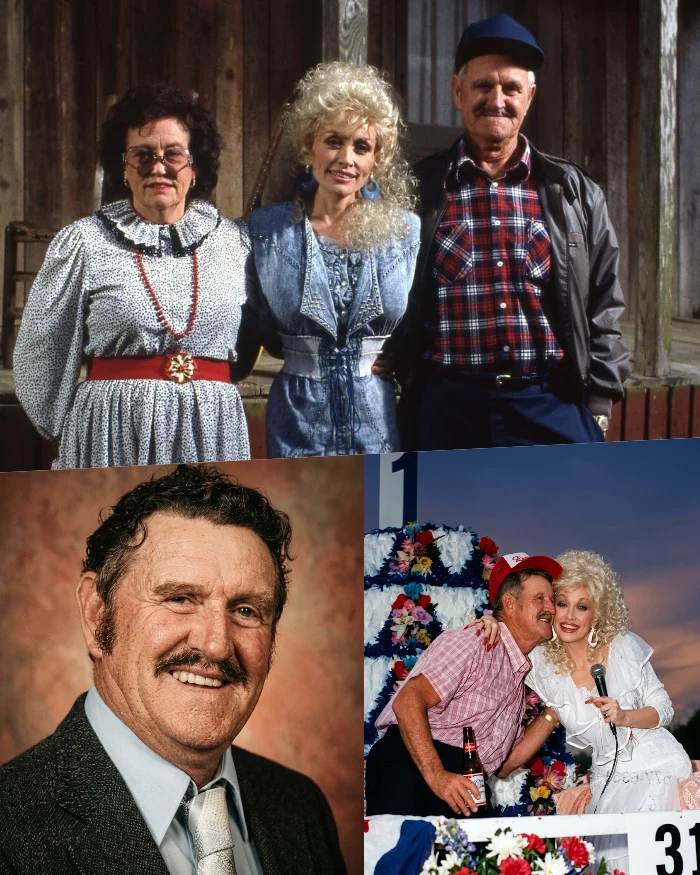
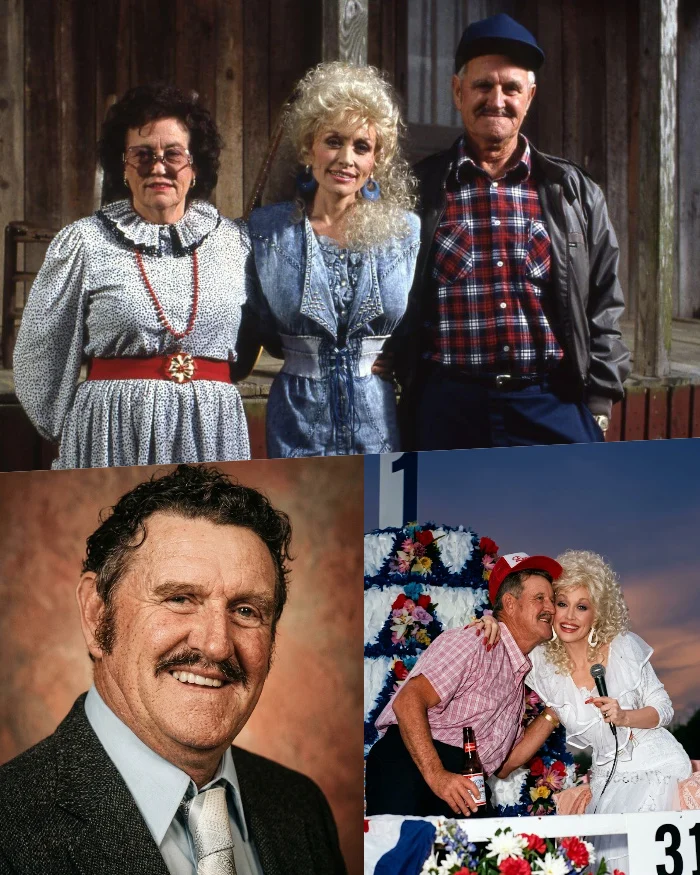
Robert Lee Parton once scrubbed the bronze statue of his daughter in the dark because he wanted her image to shine for tourists the next morning. He could not read. He could barely walk without pain. Yet he helped shape the idea that would send books to mountain children.
That quiet act reveals the true origin of Dolly Parton’s empire. Long before the stage lights and the business deals she watched her father keep fourteen people alive on a steep hillside in the Great Smoky Mountains of Tennessee.
Robert Lee Parton was a sharecropper. His home was a one-room wooden cabin in Locust Ridge. It had no electricity and no running water. Newspaper covered the walls against the winter wind. He and his wife raised twelve children there. Survival depended on a tobacco crop that had to be planted, weeded, and harvested by hand on rocky, vertical slopes where machines could not reach. A bad season meant hunger.
The labor permanently damaged his body. Dolly grew up watching him push through severe rheumatism and spinal pain. He walked back into the fields before sunrise. His hands cracked and bled from frost and soil. Yet what she remembered most was his mind. He never learned to read or write. He could still stretch a dollar, trade for what the family needed, and outsmart bad circumstances.
That poverty became the bedrock of her art. The music industry often pressured country artists to polish their images and hide rural roots. Dolly did the opposite. She wrote about the drafty cabin, the patched clothing, and the resilient mountain people around her. By refusing shame, she turned the everyday Appalachian experience into American cultural history.
When she moved from Nashville songwriter to global entertainer, she carried her father’s business instinct with her. She credited his ability to evaluate a raw deal and anticipate a hard winter as the blueprint she used to navigate Hollywood. During grueling tours and high-pressure negotiations, including her famous refusal to surrender publishing rights to Elvis Presley, she anchored herself to the memory of his unyielding boundaries. She matched his pace. She wrote thousands of songs. She built businesses with the drive of a daily laborer.
Those Smoky Mountain years shaped more than her work ethic. They shaped what she did with success. Her philanthropy aimed to make sure her region would not have to struggle the way her parents did. When she opened Dollywood in Sevier County in the 1980s, the goal was not amusement alone. It was economic infrastructure. She placed a tourist engine in her home county to provide thousands of stable jobs. Families could find work that did not require the backbreaking agricultural poverty her father endured.
The deepest piece of her legacy responded directly to her father’s private shame. Because Robert could not read, Dolly launched the Imagination Library in 1995. The program began in Sevier County with one simple promise. Every child from birth to age five could receive one free book each month, regardless of family income. The first book sent to every enrolled child is a customized version of The Little Engine That Could. The choice reflects the quiet determination of her upbringing.
She launched the program while Robert was still alive. He helped her think through the logistics of reaching isolated families in mountain hollows. Before his death in 2000, he saw the first shipments of books arrive in local mailboxes.
Out of all the hit records and movie roles the literacy program was the greatest thing she had ever done
His pride was absolute, though he expressed it in his own quiet way. Locals in Sevierville occasionally saw him driving to the county courthouse square in the middle of the night. He would bring a bucket of soapy water to scrub the bronze statue of his daughter. He worked in the dark so the monument would shine perfectly for the tourists arriving the next morning.
The Imagination Library has since mailed hundreds of millions of books worldwide. Dollywood remains the largest employer in Sevier County. Every contract she negotiated and every charitable foundation she built rested on the instincts of a man who spent his life working rocky soil. Dolly Parton took the survival skills of an Appalachian sharecropper and turned them into a legacy that completely transformed the mountains that made her.