
Hospitalized and fighting for his music, Waylon Jennings refused to sign away his soul. That standoff became the crack in a Nashville machine that had controlled every note.
In the early 1970s, Music Row operated like a polished corporate assembly line. Label executives assigned studio musicians, picked songs, and dictated arrangements with strict precision.
Artists were expected to stand behind a microphone and deliver a smooth, heavily orchestrated sound built for pop crossover. Sweeping strings, polite background choirs, and predictable phrasing made records safe, shiny, and controlled.
Willie Nelson grew exhausted by that sterile production line. Producers smoothed his vocal phrasing and buried his acoustic guitar beneath heavy orchestration. In 1972, he packed up his family and moved to Austin, Texas.
Far from the boardrooms of Music Row, Nelson found a living musical community. Country music could breathe there alongside folk and rock, free from corporate oversight and rigid industry dress codes.
Waylon Jennings chose a different battlefield. He stayed in Tennessee and fought the machine from inside RCA Records. He wanted to record with his own touring band, not the label’s rotating cast of polished session players.
The breaking point came in 1973 when his recording contract came up for renewal. Jennings brought in New York manager Neil Reshen to handle the executives. During tense closed-door meetings, Reshen played hardball while Jennings was hospitalized with hepatitis.
RCA wanted to keep its rising star. Jennings and his management refused a new deal unless the label surrendered creative control.
The victory was not just a contract. It was the right to sound like himself.
Jennings won an unprecedented deal. He could choose his own material, select his own producers, and bring The Waylors into the studio. Heavy driving basslines and biting Telecaster tones replaced the sweeping Nashville strings.
Industry traditionalists called Nelson and Jennings unmanageable outcasts. They believed rough unvarnished tracks would fail commercially. The artists knew they were singing for working people who wanted music with flaws, sweat, and truth.
That gamble paid off. In 1976, RCA released Wanted! The Outlaws, featuring Jennings, Nelson, Jessi Colter, and Tompall Glaser. The compilation became the first country album to earn a platinum certification, selling more than a million copies.
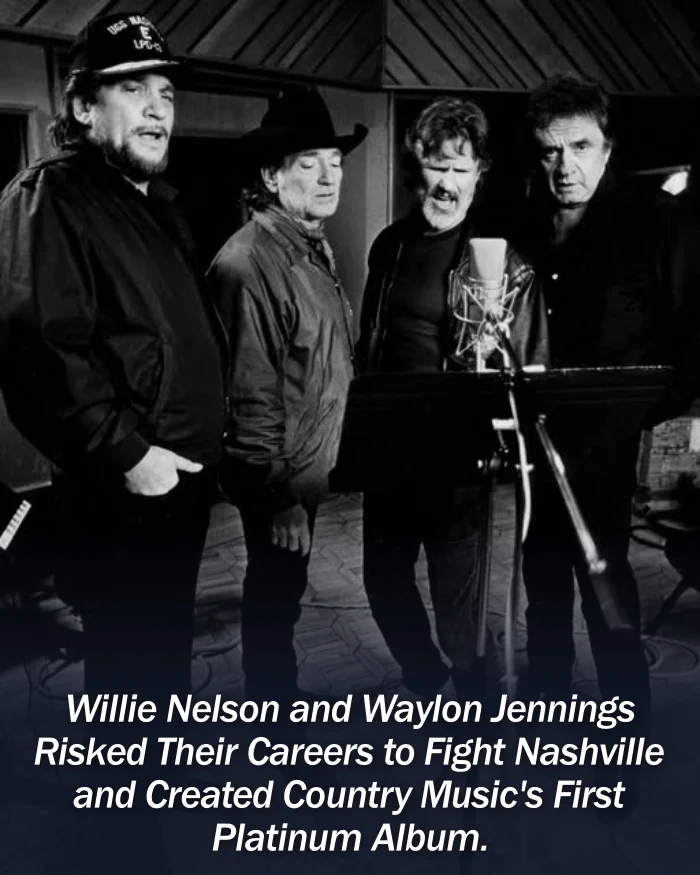
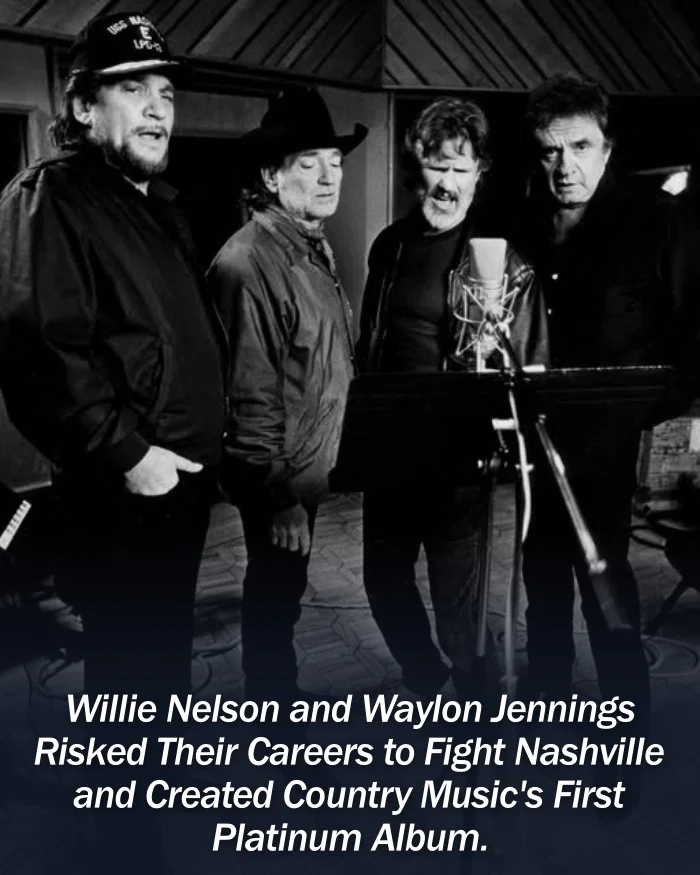
The success shifted power back to the artists who wrote the songs. It also built the foundation for a historic alliance. In 1985, Johnny Cash and Kris Kristofferson joined Nelson and Jennings to form The Highwaymen.
That gathering was not a manufactured commercial project. It was four men who had survived bruising industry battles, personal collapse, and changing eras, standing together on their own terms.
They proved that unfiltered truth could fill arenas. The outlaw movement did not only change how country music sounded. It changed who was finally allowed to make it.