
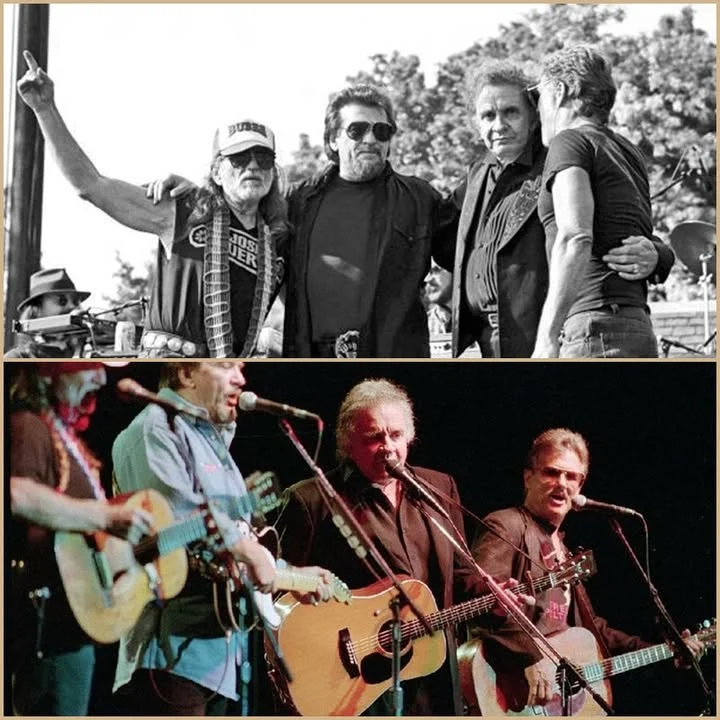
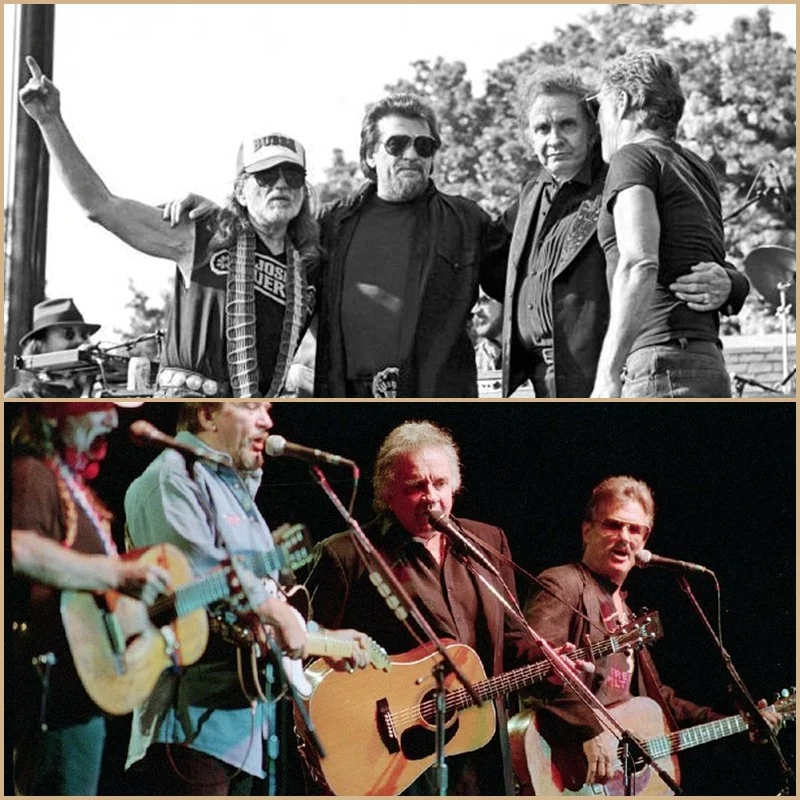
Four of country music’s fiercest frontmen stopped competing the moment they sat together in a hotel room. In the winter of 1984, Johnny Cash, Waylon Jennings, Willie Nelson, and Kris Kristofferson traveled to Switzerland to film a holiday television special. After the cameras stopped rolling, the four legends gathered in Montreux and passed an acoustic guitar back and forth. They played old songs, laughed, and felt a rare sense of rest.
They had already become iconic voices in American music, yet the industry was shifting around them. Nashville, once resistant to their outlaw reputations, was turning toward a younger generation of polished performers. Cash, Jennings, Nelson, and Kristofferson were also carrying the physical toll of aging, health struggles, and decades of relentless touring.
The Swiss trip was supposed to be simple. Play a few songs. Enjoy the scenery. Leave. Instead, the hotel session became a turning point. In that room, four men who had spent years carrying their own shows and careers stopped fighting for the spotlight.
They wanted to make a record together, even though no one knew how four distinct lead singers could share one track. That question followed them back to Nashville. In December 1984, they entered Chips Moman’s recording studio and faced a technical wall.
Their voices were too different for conventional country harmony. Cash had a booming baritone. Nelson carried jazz-inflected phrasing. Jennings brought driving grit. Kristofferson offered gravelly storytelling. Tight vocal blends did not fit their rugged individuality. After several days, the sessions lacked the magic they had felt in Switzerland.
Then Marty Stuart, a young mandolin and guitar player in Cash’s band, brought them a song. It was Jimmy Webb’s 1977 composition Highwayman. Stuart saw the solution. The song told one soul reincarnated through time in four verses. Each singer could take a separate role, and they did not need to harmonize.
Willie Nelson opened as an outlaw holding up travelers on old roads. Kris Kristofferson sang as a sailor navigating the sea. Waylon Jennings became a construction worker building the Hoover Dam. Johnny Cash claimed the final verse as a starship captain exploring the edges of the universe.
The song solved their creative problem and gave them an identity. Released in spring 1985, their version reached number one on the country charts. The success turned the collaboration into The Highwaymen, a name that would define a decade of shared stages.
For the next ten years, The Highwaymen released three studio records and played sold-out crowds around the world. The dynamic was unmistakable. No one fought for the center microphone. They stepped back, played rhythm guitar, and smiled as another legend took the lead.
They started as rebellious outsiders and ended as men who protected each other.
Behind the fame, the group became a sanctuary. Four veterans could rely on one another and shield themselves from an industry that often forgot its pioneers. The loss of Waylon Jennings in 2002 and Johnny Cash the following year closed that circle forever. Their shared catalog remains a completed era.
Their final act of defiance was not a battle against Nashville. It was a choice to stand together. A song about reincarnation gave them a name. A willingness to share the stage gave country music a legacy that will never be duplicated.