
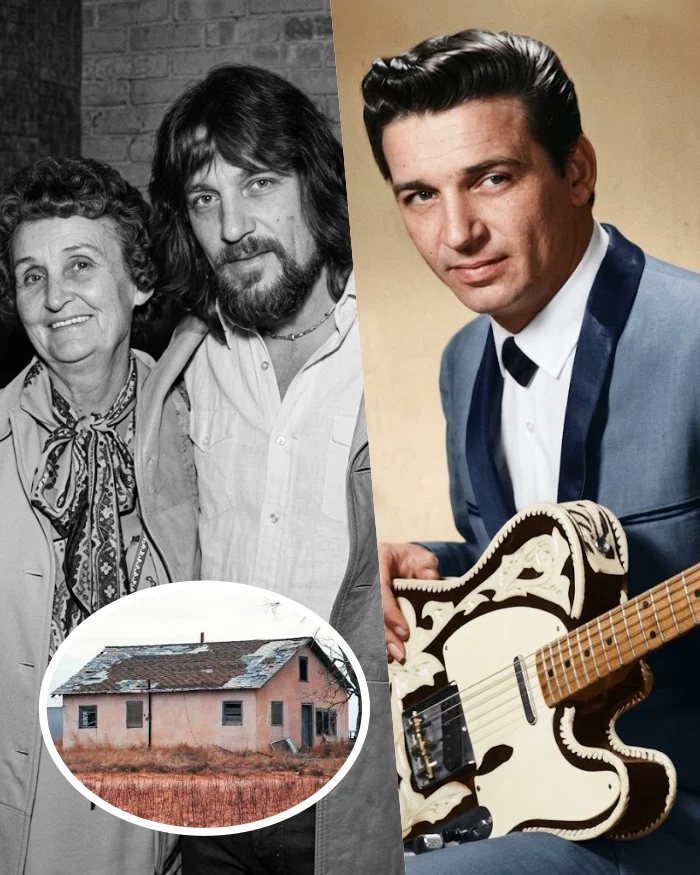
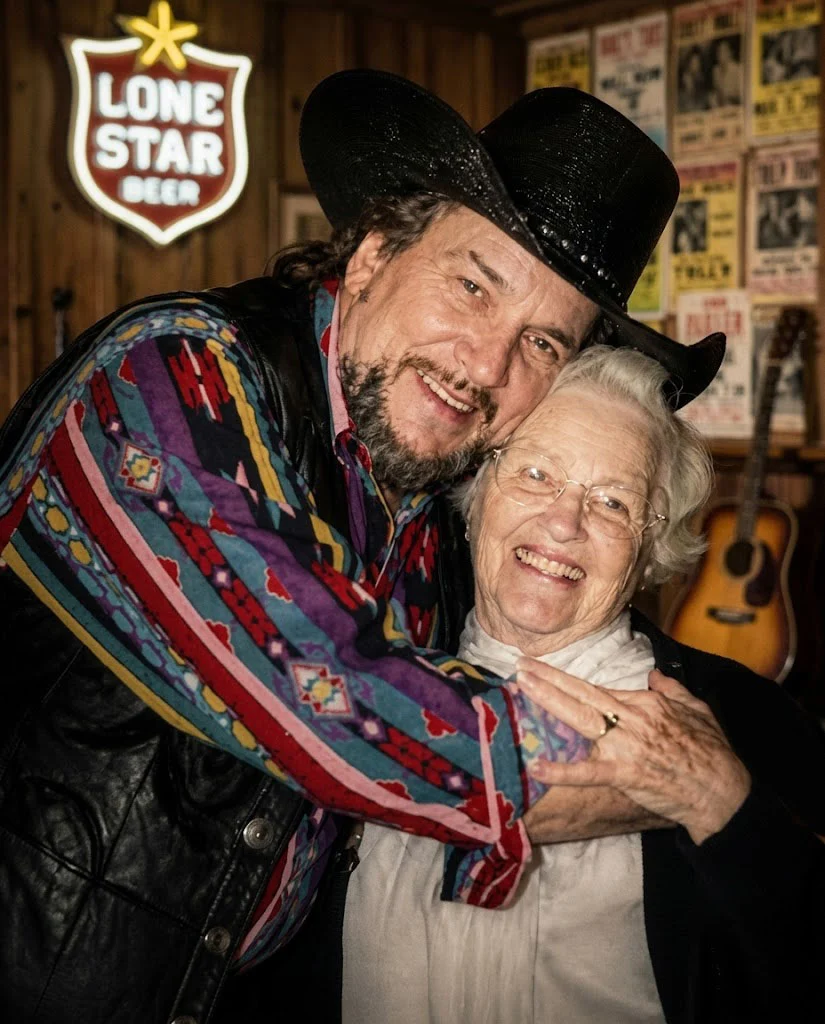
Long before forty million records, platinum plaques, and outlaw myth, Waylon Jennings was a small town boy whose mother refused to let a cruel verdict silence him.
In Littlefield, Texas, Lorene Jennings watched her son borrow guitars and feel the sting of being told he had no ability. Her answer was not a shouted protest. It was a used Stella guitar, pennies gathered from a hard life, and the first song taught with patient hands.
Then she gave him a name that carried quiet rebellion. When a preacher assumed Wayland honored a Baptist college, Lorene changed one letter on his birth certificate. She made him Waylon.
One mother’s stubborn love turned a rejected child into a man who would never bow to easy rules.
Years later, Nashville tried to put him in a polished cage. The industry wanted session players and predictable songs. He remembered the classroom door that closed on him and refused.
His defiance helped rewrite country music. He sold out arenas, collected sixteen number-one hits, and became the face of a movement the world later imagined in Nashville studios.
Yet the outlaw armor hid a deeper ache. At twenty-one, Buddy Holly hired him to play bass. On a freezing night in Clear Lake, Iowa, in 1959, Waylon gave his seat on a chartered plane to J.P. Richardson, known as The Big Bopper.
The plane fell into a snowy cornfield. Waylon lived. His hero did not. The survivor’s guilt followed him through every gritty note, every refusal, and every song that sounded like a man trying to earn the breath he kept.
He sang with gravel because the cold wind of 1959 never left his voice.
Before the records and the rebellion, the outlaw began with a mother who believed in a boy when the world said he had no talent. She bought a guitar, changed a name, and lit a stubborn flame that country music could not tame.