
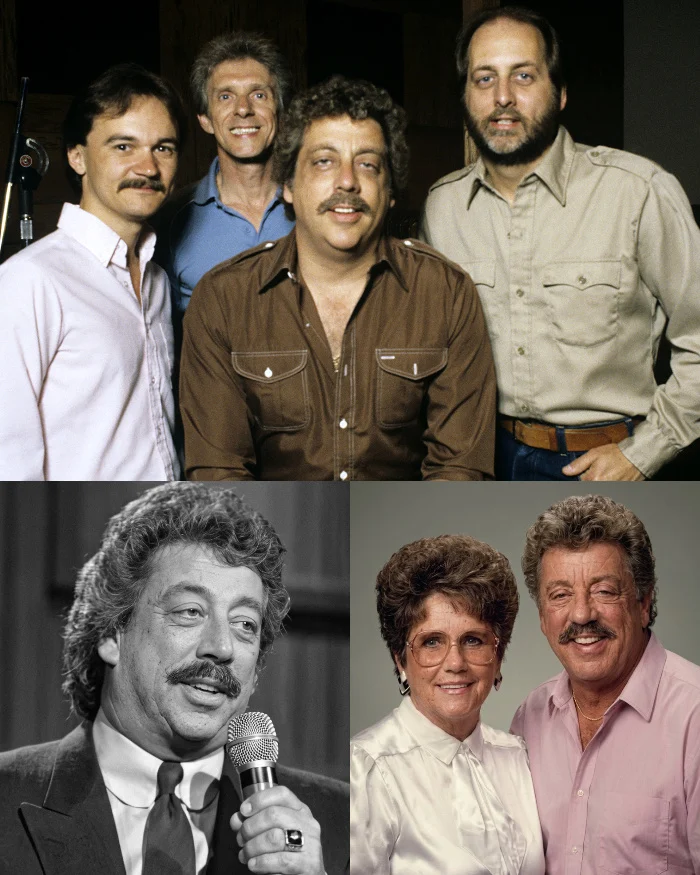

Harold Reid once sang his own marriage to the world while calling it a story about twenty-eight classmates.
That line was not fiction. It was the quiet center of a song that won a Grammy and became a country heartbreak in rhyme.
In 1972, Harold and his brother Don sat together with a legal pad and a sad idea. They wanted to capture the people left behind in memory after graduation, the ones who became teachers, factory workers, parents, and ghosts on a yearbook page.
The result was The Class of ’57, a song that did not praise fame. It named ordinary lives and let time weigh down each name.
It won a Grammy in 1973 because it told a truth many listeners felt but few wanted to say aloud. It spoke about dreams that quietly slipped away.
Twenty-eight names filled the verses. Tommy became a teacher. Harvey stayed at the factory. The other names were invented, each one a small life built from memory and imagination.
Then came the line that changed everything.
Linda married Sonny, Brenda married me.
Brenda was not a fictional classmate. She was Harold’s wife, the woman who waited while the tour bus carried him through lights and applause.
Harold did not sing her name only for a rhyme. He sang it because she was his anchor when the music stopped and the crowd went home.
The Statler Brothers could have chased the Nashville lights and become legends in a bigger house. They chose Staunton, Virginia instead.
Harold wanted his four children to grow up in the town where he had once been a boy with a guitar. He wanted a life that still felt real.
Brenda kept that home alive. She was the steady hand behind the scenes, holding the porch light while the bass voice made history on stage.
Every night, Harold leaned into the microphone and sang that one real name among twenty-seven invented lives. Many listeners never knew the truth. They heard a country song. He heard his marriage.
His deep voice eventually grew tired. Harold died on April 24, 2020, at the age of eighty. The world lost a country icon, and Staunton lost a neighbor, a father, and a husband whose love story had lasted forty-eight years.
After his passing, the song took on a new silence. The fictional names stayed frozen in the lyrics, but Brenda remained in the house they shared.
There is a quiet story about the original lyric sheet from that 1972 session. It was never displayed in a museum. It was never sold at an auction. Brenda kept it as a private bridge between the man on stage and the man on the porch.
When the song plays today, the invented classmates feel thinner. The real woman, the real marriage, and the real home become the true meaning of the music.
The Class of ’57 is not only about the people who left. It is about the man who stayed and the woman who made staying possible.