
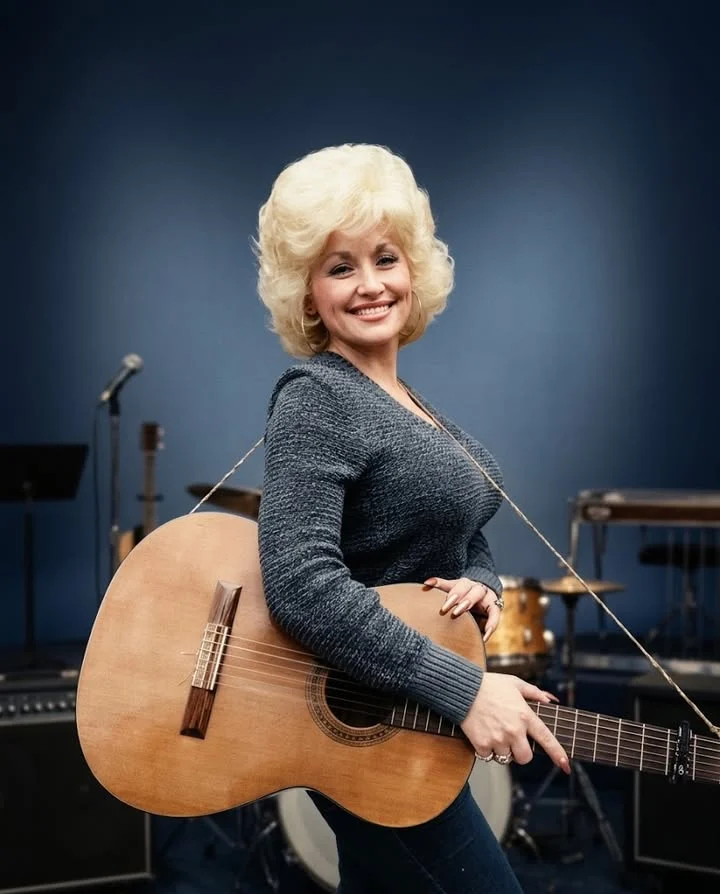
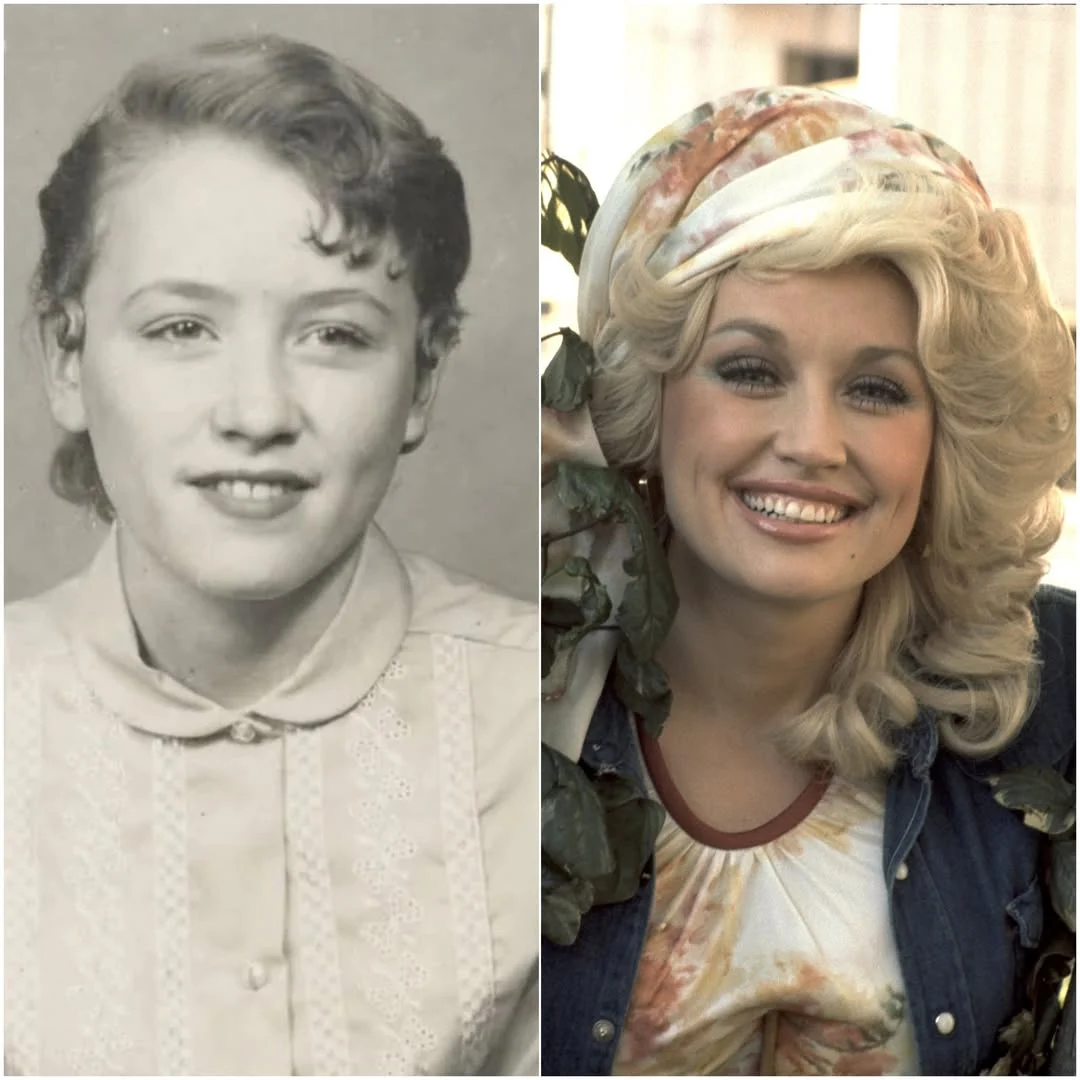
She was born in a one-room cabin where a doctor was paid with cornmeal and she grew into a woman who gave away half a billion dollars so others would not go without.
On January 19, 1946, Dolly Parton entered the world in the deep ridges of the Smoky Mountains in East Tennessee. She was the fourth of twelve children and the family lived in a tiny wooden cabin with no electricity and no running water. The winter wind slipped through the roof and the children slept four to a bed to keep warm. They bathed in a freezing creek behind the house.
Her mother Avie Lee sewed dresses from discarded feed sacks and made a patchwork coat that would later become a symbol of country music history. The poverty was real but the family carried it with quiet dignity.
The day after her high school graduation in 1964, she packed a few belongings in a cardboard suitcase, took her guitar and left the mountains for Nashville.
The decades that followed turned a local singer into a global icon. She wrote thousands of songs including enduring standards like Jolene and I Will Always Love You. She earned eleven Grammy Awards and Hall of Fame inductions and built an empire wrapped in rhinestones, towering wigs and a larger-than-life persona.
Her greatest legacy was never recorded in a studio.
Dolly always remembered her father Robert Lee. He worked tobacco fields from dawn until dark but never had the chance to learn to read or write. That pain shaped her mission. In 1995 she launched the Imagination Library. What began as a small effort to give books to local children in her home county grew into a global initiative. Before he passed away her father lived to hear local children call his daughter the Book Lady. Today the program has mailed over 200 million free books to children around the world.
Her devotion to East Tennessee became even clearer when devastating wildfires swept through Gatlinburg in November 2016. Thousands of structures were destroyed and countless families were left displaced in the ashes.
Within forty-eight hours she established the My People Fund. She promised a direct lifeline of one thousand dollars a month for six months to every family who lost their primary residence.
The recovery effort went deeper than the first promise. Because donations arrived from across the country the foundation was able to surprise families in their final month of assistance. The last distribution check was quietly increased from one thousand dollars to five thousand dollars. Nearly nine hundred families received a total of ten thousand dollars each to rebuild their lives.
When the six months ended she directed another three million dollars to fund long-term recovery teams so the community would not be forgotten when the news cameras left.
That same instinct to protect others continued into 2020. She quietly donated one million dollars to Vanderbilt University Medical Center. The funds aided early research that helped produce a life-saving global vaccine during the pandemic. She did not seek a headline for the contribution. She saw a critical need and wrote a check just as she had done for the families in the Smoky Mountains.
Behind the glittering stage costumes and the famous echoing laughter lies a woman who understands what it means to have nothing. She never hid the dirt roads that raised her and she never outgrew the people who still live on them.
The girl who once wore a coat made of rags used her fame to build permanent safety nets for complete strangers.
Her voice changed country music but her choices changed generations of lives. The empire she built out of rhinestones and melodies became a quiet shelter for anyone who needed a hand up.