
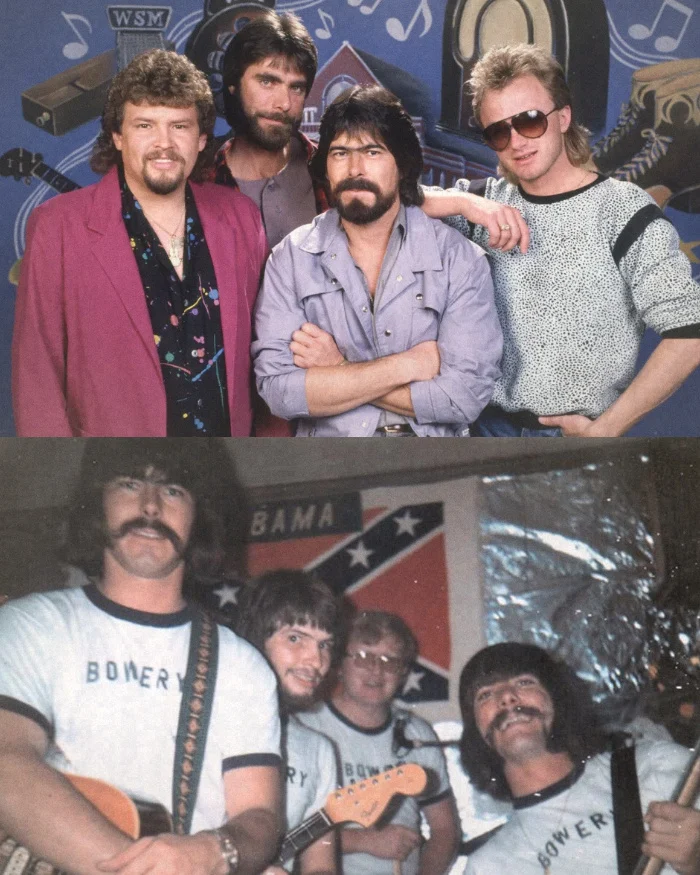
October 9, 1980 became the night Alabama forced Nashville to trust a self-contained country band. My Home’s in Alabama was not just another record. It was the sound of cotton-field cousins refusing to surrender their instruments, their harmonies, or their mountain pride.
Music Row had spent decades signing solo vocalists, choosing songs through publishing houses, and hiring polished studio players. Randy Owen and Teddy Gentry grew up in sharecropping households near Fort Payne, where autumn days meant dragging sacks through cotton rows to help pay winter bills. Jeff Cook brought a sharp ear for electronics and lead guitar. Their blood harmonies began on Lookout Mountain porches, with scratchy radio broadcasts and pawnshop acoustic guitars.
Their heritage was a badge of honor, not a punchline.
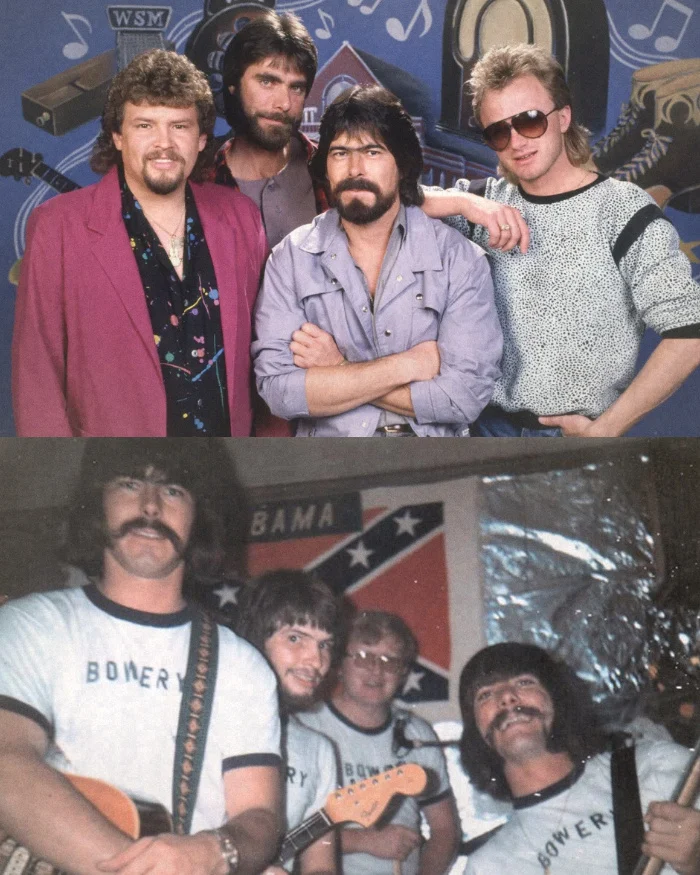
They first formed as Wildcountry in 1969. To keep the dream alive, they worked factory shifts, laid brick, and drove school buses, then practiced late into the night. By spring 1973, local weekend gigs no longer seemed enough. They left their day jobs behind and drove a beat-up van to Myrtle Beach, South Carolina.
At The Bowery, a rough honky-tonk near the Atlantic boardwalk, there was no salary. They played six nights a week, six to seven hours a night, without a setlist. They passed a plastic pitcher through crowds of vacationers, factory workers, and bikers. When tips ran thin, they split canned soup and slept in cramped boarding rooms or inside their van.
Those summers forged the Alabama identity. To hold restless beachgoers, they fused country storytelling with the twin-lead guitars, driving rhythms, and amplified muscle of Southern rock bands like Lynyrd Skynyrd and The Allman Brothers. They renamed themselves Alabama in 1977. In 1980, Massachusetts native Mark Herndon joined on drums, completing the four-piece lineup.
RCA Records signed them in 1980, but executives still wanted session players. The band stood firm and kept their own tracks on the album. The title song spoke directly to working families who understood sacrifice, regional pride, and the ache of being far from home.
The breakthrough opened one of the most dominant commercial runs in country music history. Across the 1980s, Alabama delivered twenty-one consecutive Billboard number-one country singles and filled massive sports stadiums once reserved for rock acts.
Gold records, national awards, and private tour planes followed. Still, the band stayed connected to Fort Payne. They bought back family farmland, supported local children through charitable foundations, and carried the red dirt of Lookout Mountain into the top of the world.