
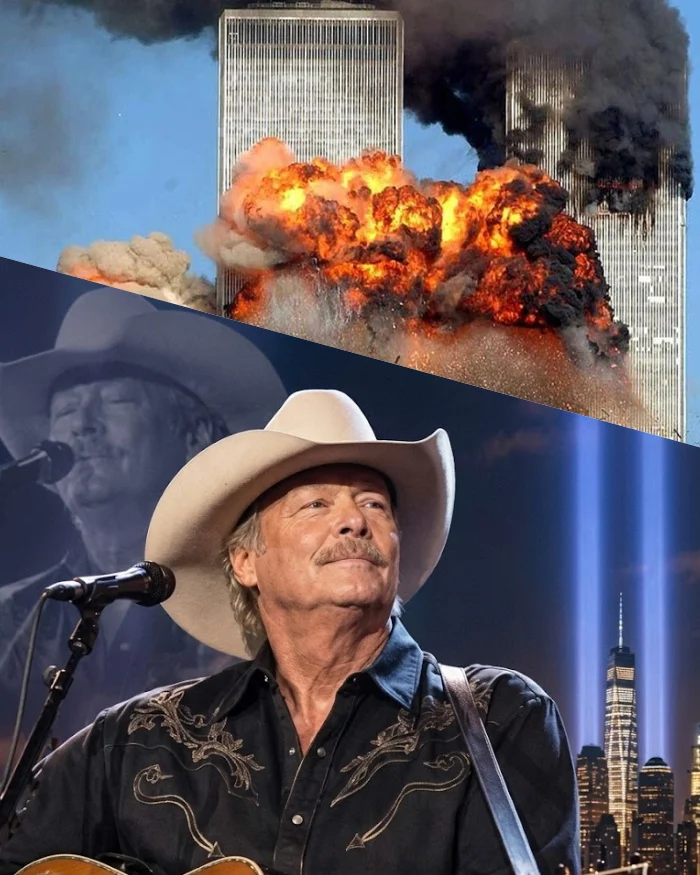
The final note faded, and the Grand Ole Opry House rose as one. Alan Jackson did not smile, did not linger, and did not chase the applause. He tipped the brim of his white Stetson, gave a slow nod, and walked into the dark wings while a grieving nation held its breath.
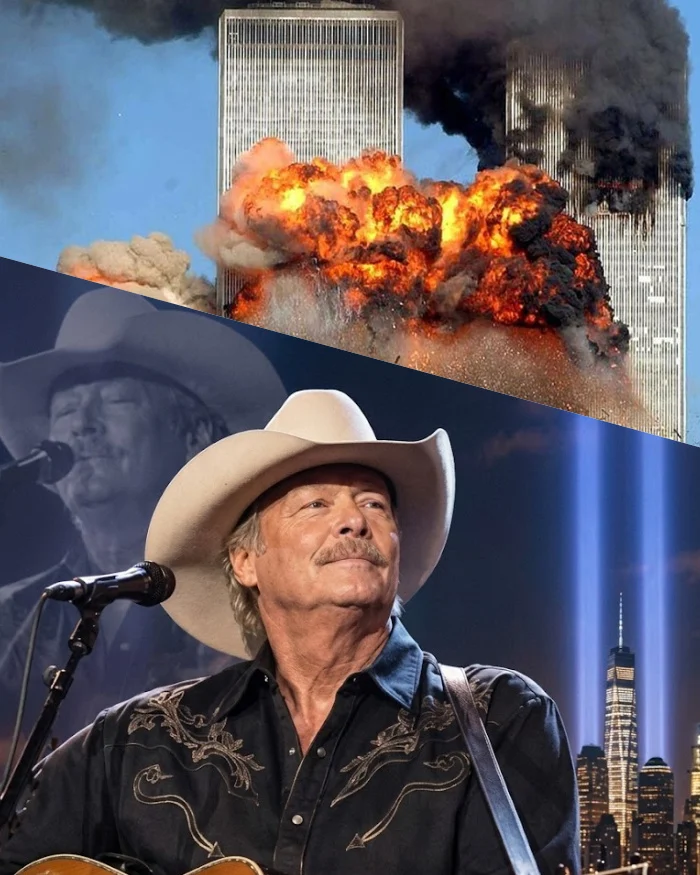
That silence became louder than any pyrotechnic. Weeks after September 11, Jackson had been scheduled to deliver an upbeat radio favorite at the 35th Annual Country Music Association Awards. Instead, he brought an unreleased song to the stage on November 7, 2001, and the room changed.
Before the broadcast, the song had arrived in the middle of the night. On October 28, 2001, Jackson woke around four in the morning in his Tennessee home with a melody and chorus moving through his mind. His wife, Denise, and their daughters were still asleep upstairs. He slipped downstairs, opened his study, and recorded the fragile melody and lyrics onto a handheld cassette tape before the thought could vanish.
That Sunday, after his family left for church, Jackson sat alone with his guitar and finished the lyrics. The country was still raw after the terrorist attacks of September 11. Many songs were rising with anger or battlefield certainty. Jackson hesitated. He told Denise that he feared people might mistake the song for an attempt to profit from national grief. He insisted he was not writing as a politician or a preacher. He wanted to speak as an ordinary citizen, recording confusion, fear, and faith in plain language.
With the encouragement of Denise and producer Keith Stegall, Jackson understood the message belonged to the public. Still, the timing felt risky. The award show was days away. His manager, Nancy Russell, brought a raw cassette demo to network and show officials. Producer Walter Miller and executives agreed to abandon the planned spectacle. The stage would be stripped back.
When Jackson appeared that evening, there were no fireworks, no video screens, and no showmanship. A single soft spotlight held him. He sat on a stool with an acoustic guitar, his white Stetson shading his eyes. Behind him waited a string section and choir. His voice trembled through measured breaths as tears pressed close to the surface.
The audience felt the restraint. George Strait sat motionless in his seat. Faith Hill and Martina McBride openly wept. Jackson raised no fist and offered no speech. The song asked honest questions about where people stood when the world fractured. Some had been driving down a highway. Some had been watching reruns. Some had been holding their children close.
“Where were you when the world stopped turning?”
When the last note ended, the standing ovation swelled. Jackson gave the hall a brief nod and left without soaking in the moment. The raw broadcast audio spread with startling speed. Radio stations across the nation recorded the live television audio that night and pushed the unmastered performance onto the air around the clock after thousands of listener requests.
The overnight demand forced Arista Nashville into a scramble. Keith Stegall and Jackson moved quickly into Sound Stage Studios to record an official studio version. Label chairman Joe Galante listened to the preliminary mix in stunned silence with company staff. Promotional discs were rushed to radio stations as the live broadcast cut continued to dominate playlists.
The song reached number one on the Billboard Hot Country Songs chart and later won Song of the Year at the Country Music Association Awards. Many stations kept alternating between the studio take and the television performance because listeners still craved the trembling honesty of the live moment.
Alan Jackson’s legacy from that night never rested on trophies or ratings. In a grieving hour, he chose humility over spectacle. His quiet voice gave ordinary hearts a place to stand, and Nashville answered with silence.