
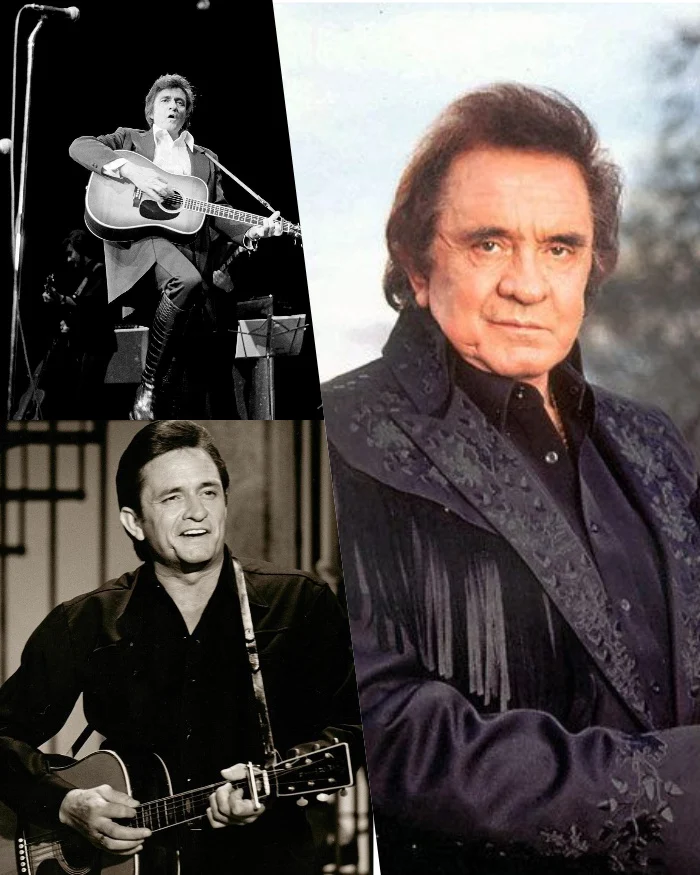
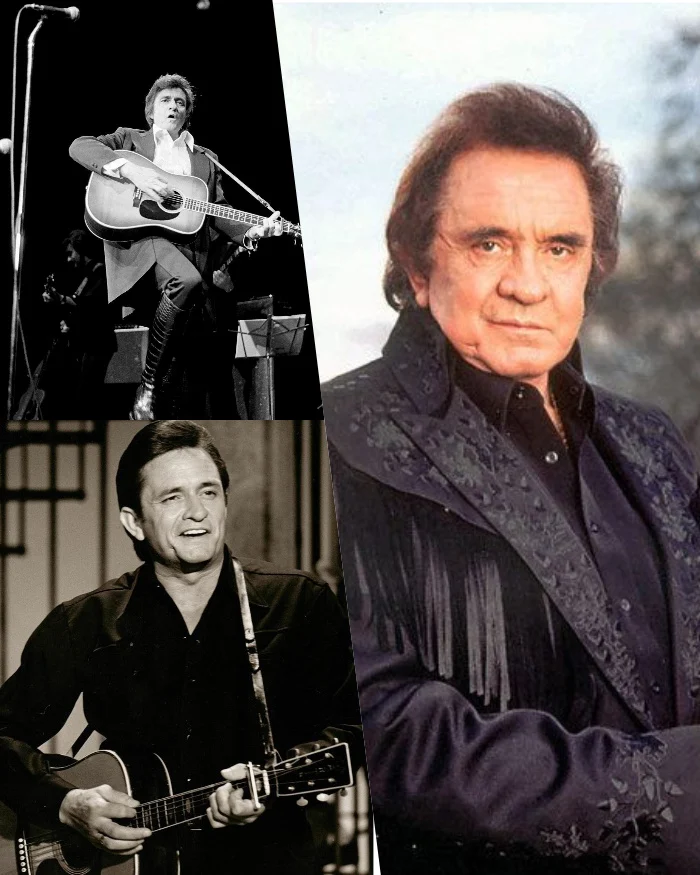
Long before the final bow, the man in black carried a quiet ache across a bright stage, and America felt the weight of every forgotten name he wore.
While Nashville dressed success in glittering rhinestones and embroidered suits, Johnny Cash stepped into national television with a dark coat and a message that cut deeper than sequins.
His weekly program from the Ryman Auditorium gave him a rare platform during a wounded era of war and civil unrest, and he used it to explain why his wardrobe had become a moral promise.
The answer began in practical road life, not politics, because black shirts hid the dust of long tours with the Tennessee Two and matched the few clothes the working musicians could afford.
That simple choice hardened into conviction after Cash survived addiction, faced his own shadows, and remembered the hard labor of childhood cotton fields that taught him the taste of struggle.
When he played free concerts inside Folsom in 1968 and San Quentin in 1969, he looked into the eyes of men society had cast aside and understood that solidarity was not a slogan.
Those prison stages helped transform black clothing from a touring convenience into a public vow to stand with the poor, the imprisoned, and the grieving mothers waiting for sons who would never return.
In a private writing session before a 1971 broadcast, Cash turned repeated questions about his attire into a defining recording, naming the overlooked people he carried with him under the lights.
He wore mourning color for hungry families on the edges of wealthy cities, for prisoners who had paid their price yet remained outcasts, and for drafted young men whose lives had been spent in a distant war.
For a country artist in a conservative era, that was a dangerous act, because many performers offered distraction while Cash forced viewers to see pain they preferred to ignore.
He chose conviction over safe applause, and his quiet black suit became a shield for those who had no voice in the spotlight.
He stood in the shadows so the forgotten could finally be seen
Decades later, through changing trends, political storms, and failing health, Cash kept the vow, even while recording his last albums in a small cabin studio dressed for a funeral society refused to hold.
The fabric was never just fabric, because the intention behind it gave millions a symbol of dignity, protest, and stubborn compassion.