
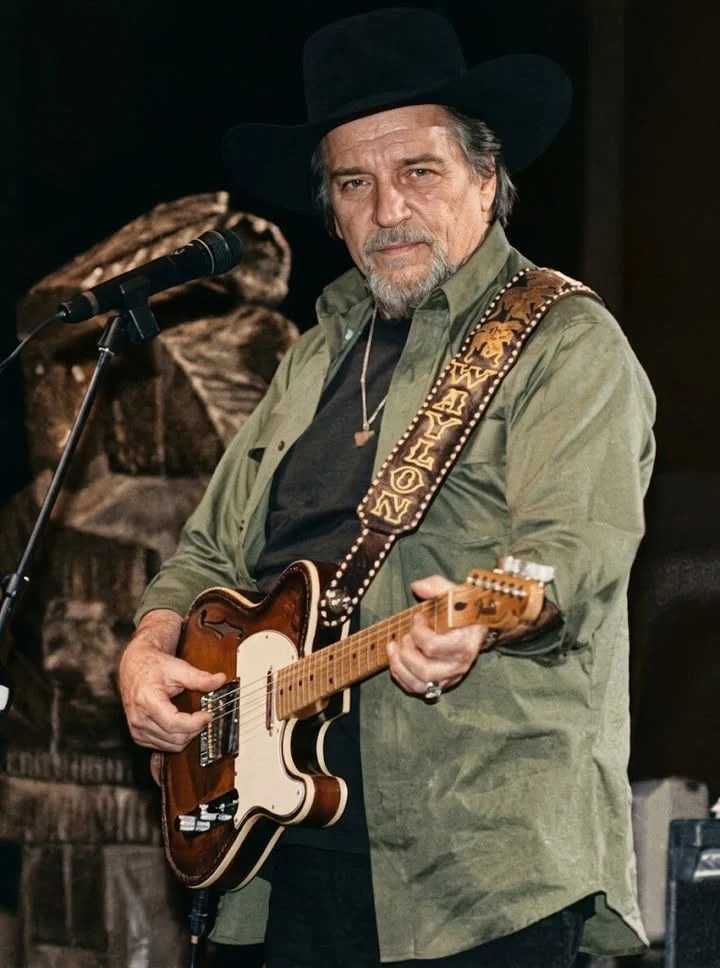
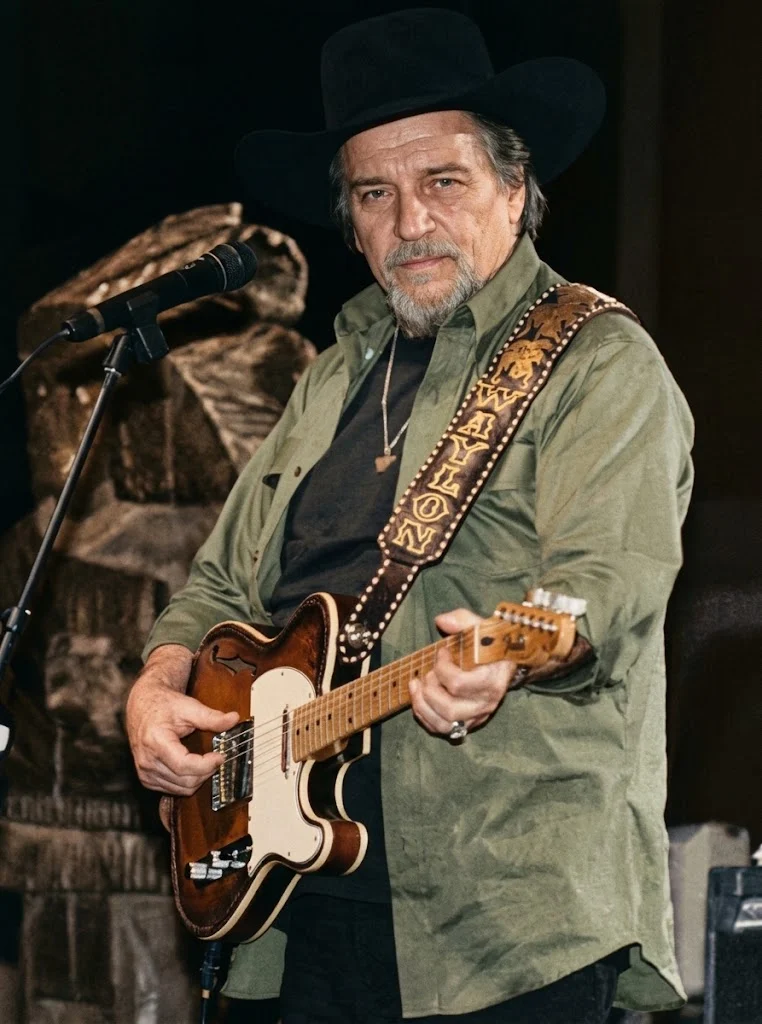
The freezing Iowa night that killed Buddy Holly nearly silenced Waylon Jennings forever. He survived only because he gave his seat to J.P. Richardson, The Big Bopper, and then made a careless joke that became a wound he carried for decades.
In the early hours of February 3, 1959, the Winter Dance Party tour had become a brutal struggle against cold buses and broken equipment. Buddy Holly chartered a small plane so the band could escape another miserable overnight trek. Waylon Jennings, then twenty-one, stepped aside for Richardson, who was sick with the flu.
At the Surf Ballroom in Clear Lake, Iowa, Holly teased Jennings about riding the bus. Jennings fired back with a passing remark that a plane might crash.
“I hope your ol’ plane crashes.”
Hours later, the aircraft went down in a snow-covered cornfield. Holly, Richardson, and Ritchie Valens died. The joke broke Jennings, and he vanished from the stage he once loved.
He retreated to Texas and worked as a radio disc jockey in Lubbock, later moving to Kool Radio in Phoenix. The microphone became a shield. He spun records behind glass, kept the bass silent, and let survivor’s guilt anchor him to the background.
But the music Holly had believed in him would not stay buried. In the early 1960s, Jennings formed The Waylors and took a residency at J.D.’s, a sprawling two-story club in Phoenix. Playing to cowboys and college students, he fused traditional country with the raw drive of early rock and roll.
His sound grew grittier, fueled by grief and defiance. Singer Bobby Bare heard the weight in his voice and called RCA Victor executive Chet Atkins. That call led to a 1965 record deal and brought Jennings to Nashville.
Nashville nearly broke him again. The city demanded polished arrangements, session players, strings, and choirs. Jennings hated the sterile formula. He clashed with producers and walked out of sessions when he felt his voice was being diluted.
His resistance reached a turning point in 1972. Exhausted by corporate control, he demanded and won the right to use his own band and produce his own records. The victory helped birth the Outlaw Country movement.
He carried Buddy Holly’s memory into every studio battle, every contract fight, and every stage he reclaimed.
Waylon Jennings did not merely survive the day the music died. He turned that survival into a roaring refusal to let anyone silence the song he had been spared to sing.