
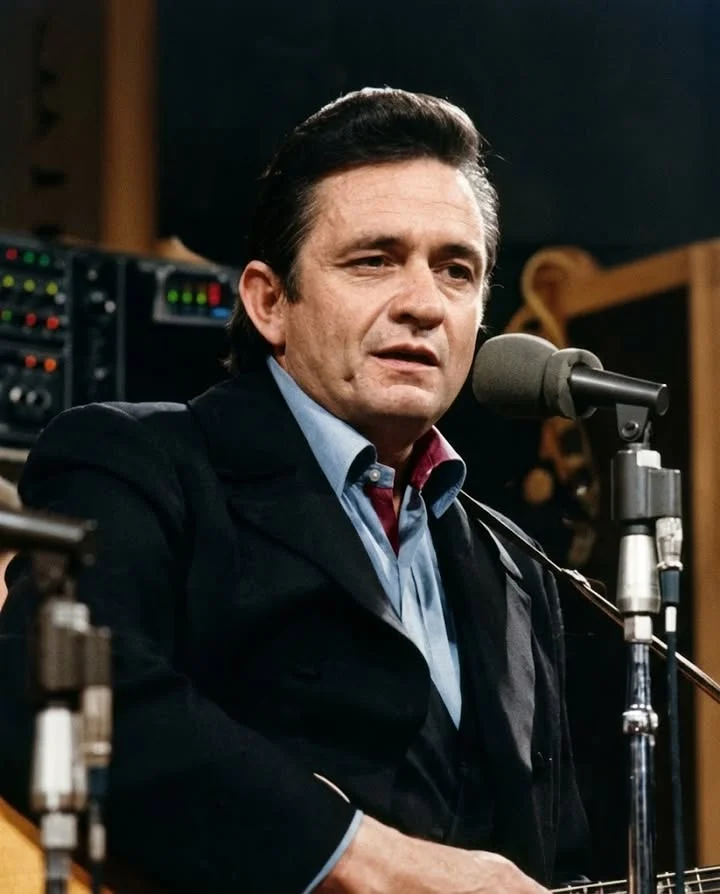
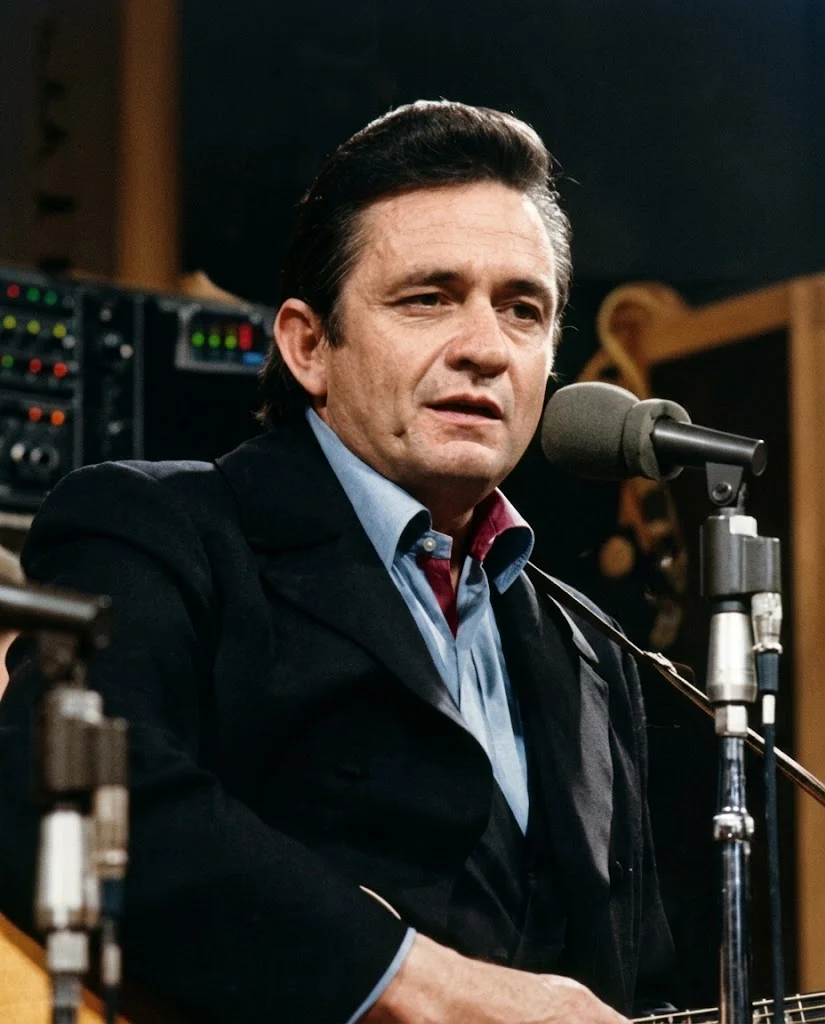
The rejection cut deep. In 1954 Memphis, Johnny Cash stood in a cramped studio with two friends and a fragile hope, waiting for a producer to decide whether his voice was worth a record.
By day he knocked on doors as a struggling appliance salesman. He carried the quiet pressure of feeding his young family. By night he stepped onto dim stages with guitarist Luther Perkins and upright bass player Marshall Grant. They wanted a sound strong enough to lift them out of exhaustion.
Cash brought Sam Phillips at Sun Records a set of traditional gospel songs. He wanted a safe and respectable entry into music. Phillips stopped him. He told Cash to go out and commit sins, then return with something the public would actually buy.
Go out and commit sins, then come back with something you can actually sell to the public.
That harsh rebuke forced Cash inward. He could not hide behind polished hymns. He had to face the streets, the bills, the fatigue, and the hunger that shaped his life.
The trio also faced a brutal technical problem. They lacked the skill for complex arrangements. They had no drummer. Their limitations became the point. Perkins dampened the strings of his Fender Esquire with his palm. Grant slapped the upright bass strings for a percussive thump.
Phillips heard the danger in that raw approach. He did not try to make it pretty. He used slapback tape echo to push the thin sound into something larger. The three men gathered around a single microphone in the small room, letting the walls bleed into the take.
Out of that desperation came the relentless boom-chicka-boom rhythm. It moved like a freight train. It sounded like a man running from an ordinary exhausted life.
By 1955 Cash was no longer the door-to-door salesman. He released self-penned tracks including “Cry! Cry! Cry!” and “Hey Porter”. His voice felt gravelly, unpolished, and real. The weight of countless rejections on front porches poured into every line.
His music resonated because it carried the working-class struggle. The gospel songs he first offered to Sun Records aimed to save souls. The rhythm of his actual life reached millions.
That rejection did not destroy him. It stripped away pretense. It forced a struggling salesman to look at his calloused hands and build a sound that would define American country music.