
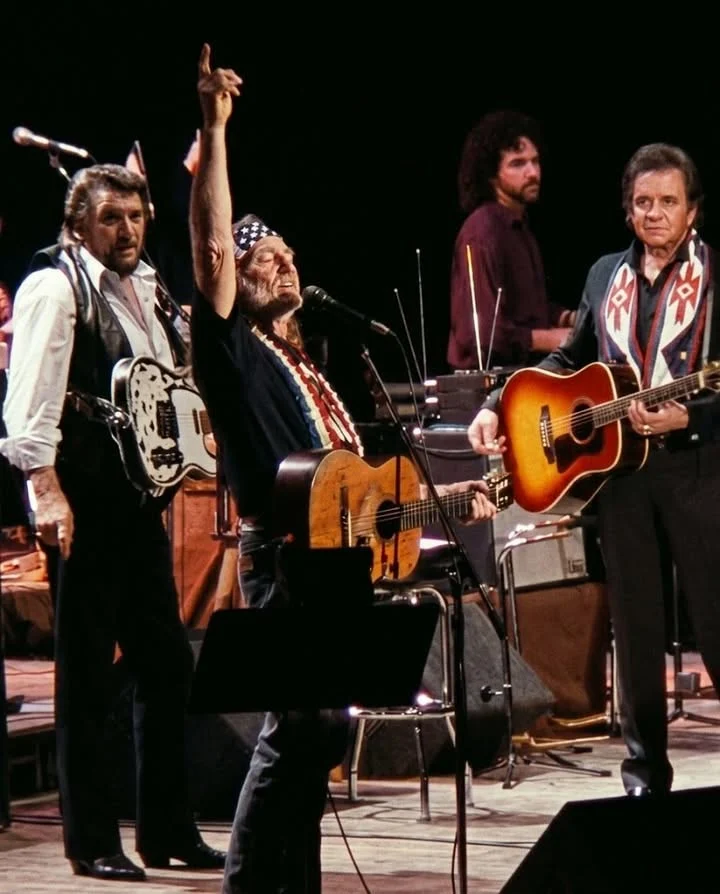
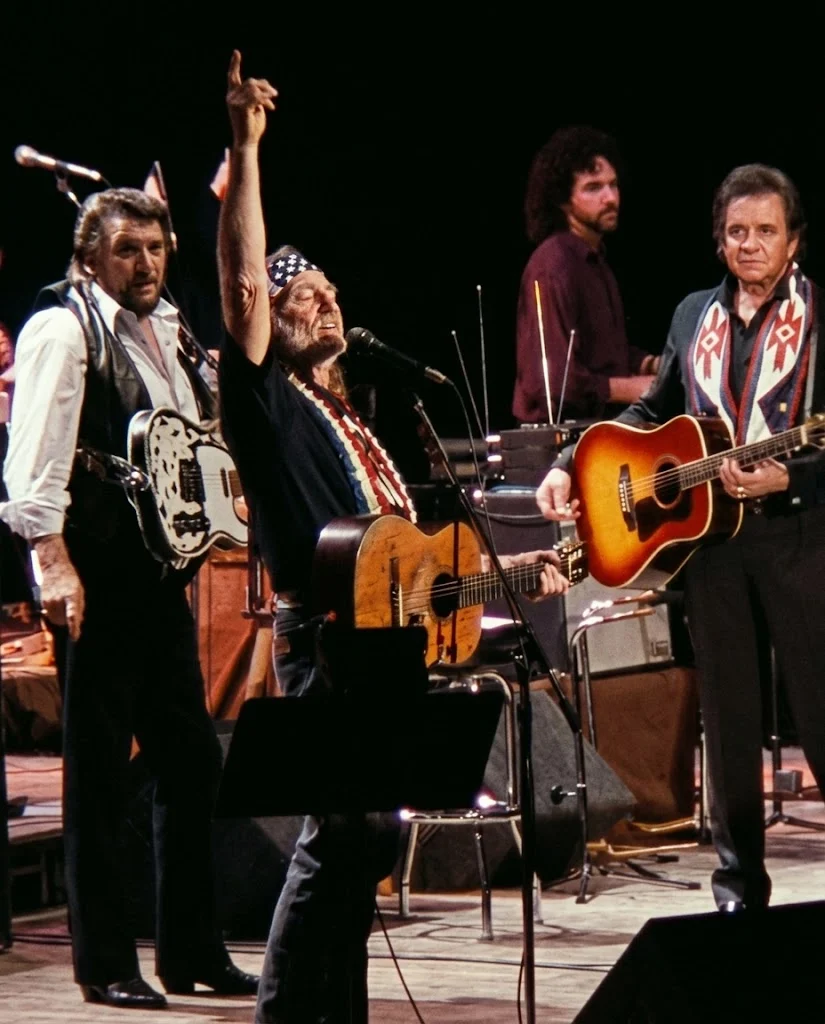
The final take stopped without a dramatic goodbye. Four legends stood away from the microphones in Hollywood and left behind the last full studio album they would ever make together. That quiet exit gave The Road Goes on Forever a weight no one in the room wanted to name.
In 1995 Johnny Cash, Waylon Jennings, Willie Nelson, and Kris Kristofferson entered Ocean Way Recording under producer Don Was. They had already made two previous records together. This time they carried a shared outlaw brotherhood into a new chapter. The sessions marked the first time the four outlaws officially stepped forward under one banner as The Highwaymen and the last time they recorded a complete studio album as a single creative unit.
These were not the young rebels storming Nashville in the 1970s. Cash was facing health problems and Jennings had slowed his punishing pace. Their voices had grown rough with miles and hard living. Yet that weariness became part of the power. They stood shoulder to shoulder like cowboys watching the horizon and found a grounded strength that could not be manufactured.
Their solo careers had built enormous egos and enormous legends. In the studio those walls came down. They became four men who understood one another deeply. They sang around acoustic guitars in a circle and treated the room like a family gathering rather than a commercial supergroup project.
Don Was chose honesty over polish. He did not hide the legends in separate booths or chase the slick country sound of the era. He kept the tape rolling while the men talked and laughed and argued gently between takes. That choice preserved something fragile. The microphones caught the friendship behind the myth and made the record feel like songs traded at a kitchen table.
They were no longer trying to prove they were outlaws. They were simply enjoying the ride with the only other men who understood the dizzying altitude of their lives.
The title song written by Robert Earl Keen became the emotional center. On paper it was a story of wild nights and endless movement. In the voices of Cash, Jennings, Nelson, and Kristofferson it became a proud reflection on survival and freedom. Each verse carried the feeling of men who had lived through a music business that tried to tame them and failed.
The blend of their voices gave the album a haunting depth. Jennings had a booming baritone and Cash had a low rumble that anchored the sound. Kristofferson brought poetic gravity and Nelson brought jazz tinged phrasing that floated above the group. They aged but unbowed and they made True Love Travels a Gravel Road and Live Forever sound lived in rather than performed.
When the lights dimmed and the tape stopped The Highwaymen left more than a final album. They left a brotherhood country music has never replicated. The road they traveled together may not have gone on forever but the honest voices captured on that tape keep the journey alive.