
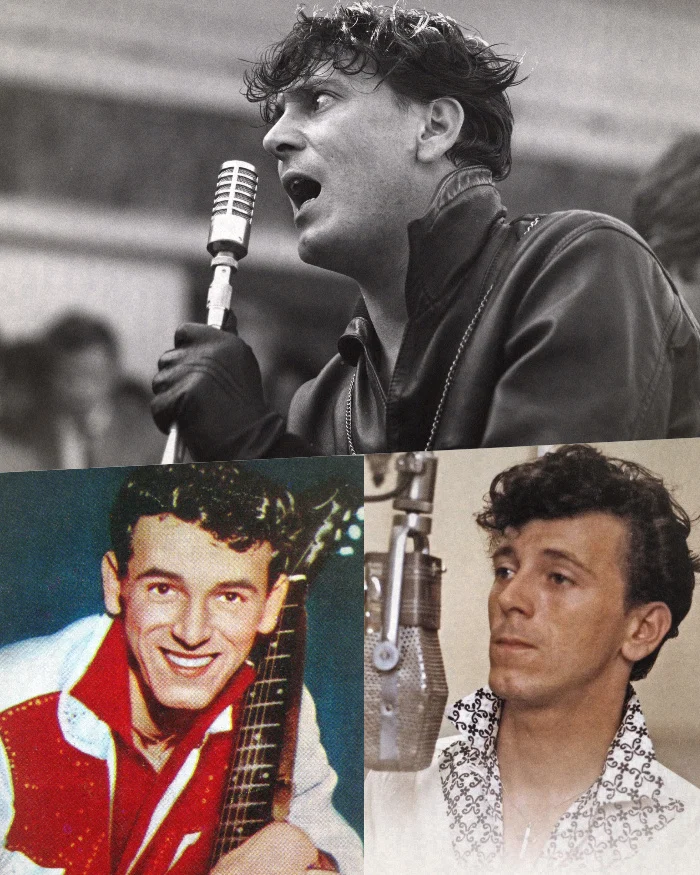
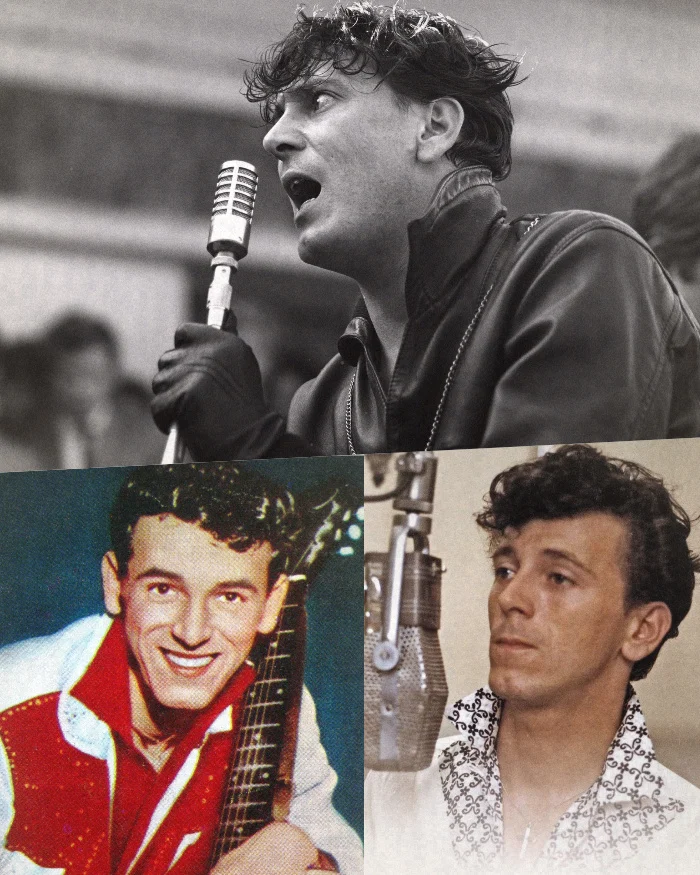
Gene Vincent dragged a braced leg across stages while carrying a sound that set the modern rock world alight.
In 1956 he and the Blue Caps cracked open American radio with Be-Bop-a-Lula and handed teenagers a raw rhythm that helped define rockabilly.
His body paid a brutal price for that fire. In July 1955 while serving in the United States Navy in Norfolk Virginia a driver ran a red light and crushed his motorcycle. The blow shattered his left leg and naval doctors urged amputation. Vincent refused. He kept the limb and accepted a lifetime of bone infections limping steps and chronic agony so he could remain a singer.
When American promoters began looking past his style in the late 1950s British television producer Jack Good brought him across the Atlantic and rebuilt his image. Good replaced bright western jackets with fitted black leather and gave British teenagers a brooding rebel. Vincent hunched over a chrome microphone stand because the pose took weight from his injured leg.
In early 1960 he toured England with close friend Eddie Cochran and found worship in working class crowds who wore his leather jacket as a uniform.
Then the road turned cruel. On April 17 1960 a private hire Ford Consul carrying Vincent and Cochran blew a tire near Chippenham Wiltshire and crashed into a lamppost. Cochran died hours later at St Martin’s Hospital in Bath from severe head trauma. Vincent survived with a broken collarbone cracked ribs and renewed damage to his bad leg.
He never fully escaped the grief of losing Eddie Cochran
He tried to outrun the loss with more grueling European club dates. In 1962 his path crossed a young Liverpool quartet at the Star-Club in Hamburg and later the Cavern Club in Liverpool. The Beatles shared multi-night bills with him and watched the older singer struggle backstage.
John Lennon and Paul McCartney studied his sharp rebellious presence. Lennon took ideas from Vincent’s black leather wardrobe and aggressive microphone technique. McCartney later recalled that sharing a dressing room with Vincent gave aspiring British musicians a masterclass in American rock and roll conviction.
His influence also reached guitarists such as Ritchie Blackmore and Jeff Beck. They studied the fingerpicking and slapback echo of Cliff Gallup and backed Vincent during British theater runs, absorbing the aggressive pulse that helped shape early hard rock.
The pain and travel finally broke him. On October 12 1971 Vincent died in Newhall California at thirty-six after a ruptured stomach ulcer.
He never found the commercial stability of many contemporaries. Yet the sound he carried across the ocean turned private endurance into the backbone of a global rock movement.