
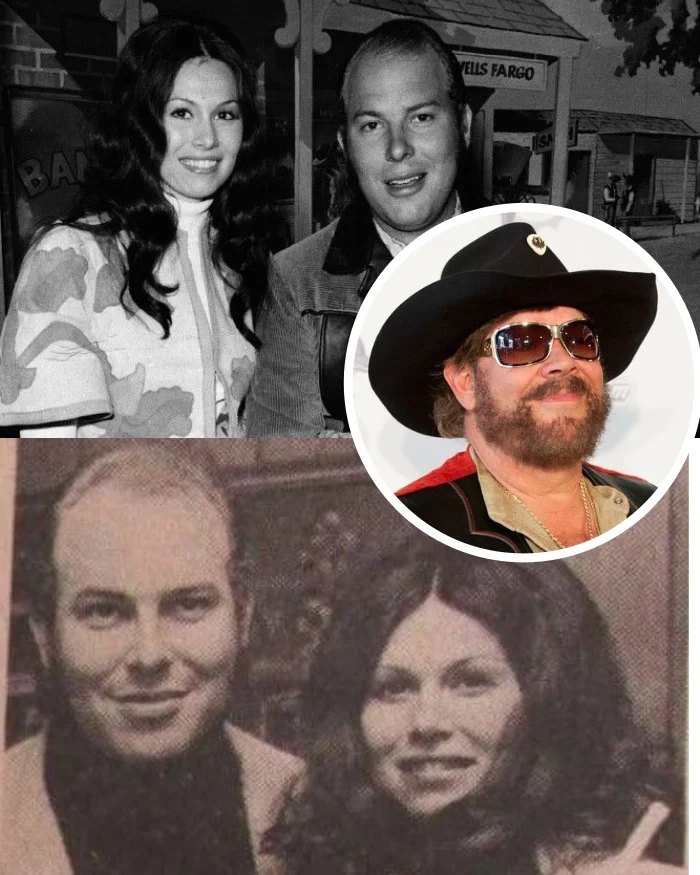
Dark glasses and a thick beard did not begin as rebellion. They began as armor.
After August 8, 1975, Hank Williams Jr. carried the wreckage of a mountain fall into a new life. He was climbing Ajax Mountain near the Idaho-Montana border when the snow under his boots gave way. He plunged nearly five hundred feet down a rocky slope, and the impact left him with severe head trauma and facial fractures that required years of surgical reconstruction.
Nashville had already tried to make him a clean-shaven echo of his legendary father. The accident ended that imitation. The man who emerged in Cullman, Alabama, had to learn to speak, eat, and hold a guitar again.
His skull had been fractured, his teeth knocked loose, and his jaw shattered. For months, solid food and ordinary conversation were beyond him. Gwen Yeargain remained beside him through the quiet humiliations of recovery, when simple tasks became steep climbs.
Looking into a mirror was another kind of ordeal. Surgical scars crossed his forehead, nose, and temples, and the bone damage was hard to accept. Yeargain did not turn away from the scars. She offered calm reassurance instead of pity.
To hide the healing face from curious eyes, Williams grew out a beard, pulled a wide-brim cowboy hat low over his brow, and put on dark sunglasses. The disguise was meant to protect him. It became part of his legend.
In the cabin, recovery turned into reinvention. With his jaw wired shut, Williams listened to Southern rock records, tried open guitar tunings, and wrote lyrics on legal pads. Waylon Jennings and Dickey Betts visited with guitars and encouragement, bringing the rough-edged rock spirit Williams had long admired.
Playing again was painful work. Nerve damage stiffened his fingers, so he reshaped his style into something heavier, punchier, and more rhythmic. That grit fed the music he carried into his 1975 breakthrough project ‘Hank Williams Jr. and Friends’, an album recorded just before the accident and refined as his declaration of independence.
When he returned to the studio and the stage, the country music world saw a different man. The polished imitator had vanished into the mountain. A weathered survivor remained, singing with a booming baritone over hard-driving drums and electric slide guitars.
The swagger that filled stadiums was paid for in broken bone and quiet grit.
The private months in Alabama shaped his sound, but the full story stayed with the few who were there.