
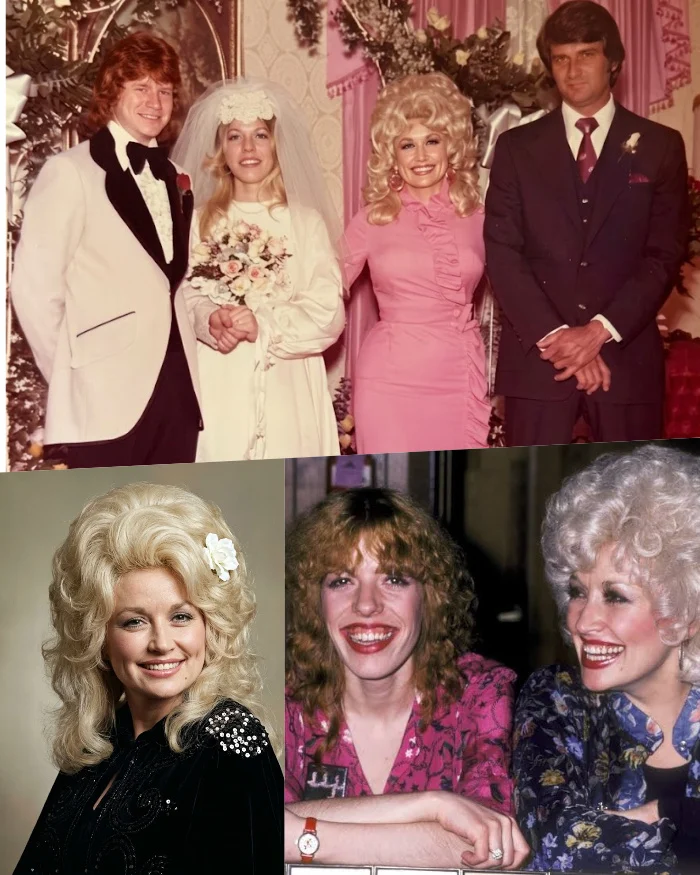
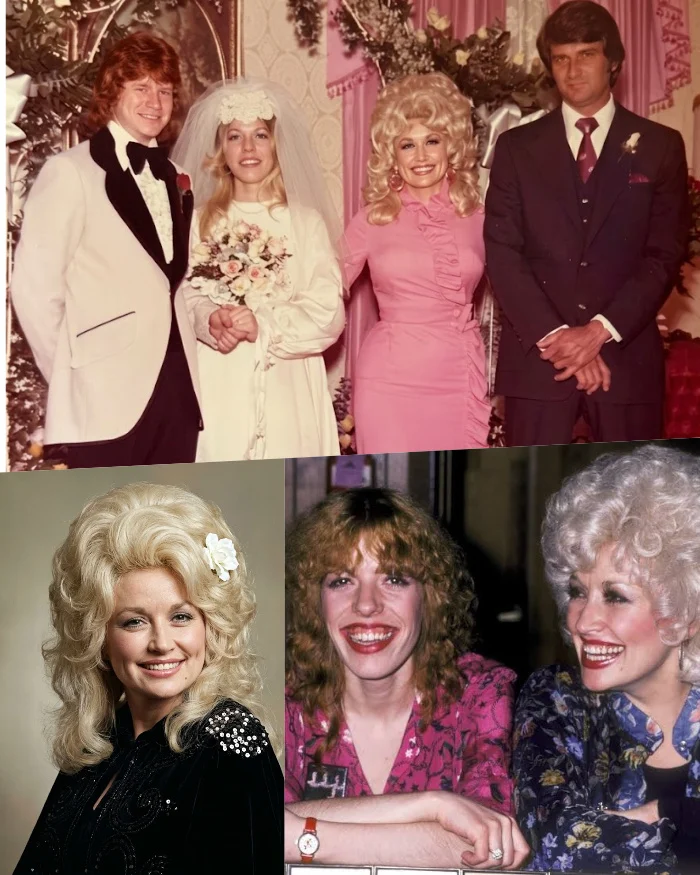
Dolly Parton stood at a French door and let the camera flashes belong to someone else.
She had spent decades building a glittering global career, yet the moment that mattered most was quiet, private, and rooted in family. Her younger sister Freida was walking toward marriage on the grounds of the Brentwood estate, and Dolly chose to watch through glass rather than step into the center of the garden.
Long before Nashville learned her name, Dolly was already carrying responsibilities far beyond her years. Born the fourth of twelve children in a rough-hewn cabin in Locust Ridge, Tennessee, she was eleven when Freida arrived. In that crowded mountain home, food was scarce, chores were endless, and love had to be shown through work.
Young Dolly spoon-fed the baby, washed diapers in basin water, and rocked the cradle by the glow of a kerosene lamp. Those early acts of care were not performance pieces or magazine stories. They were survival, tenderness, and the first language of sisterhood.
Fame did not erase that bond. When Freida prepared to marry, Dolly did not book a downtown ballroom or summon publicists. She opened the iron gates of her private home and made the living room, the garden, and the kitchen feel like a chapel built from memory.
The estate had already sheltered Freida once. As a teenager, during hard times in the mountains, she had lived behind those gates, finding a bedroom, steady meals, and safety away from poverty. The wedding afternoon carried that same warmth. Homemade Southern dishes filled the air, and family voices replaced the machinery of celebrity.
Before guests gathered outside, Dolly and Freida stood together before a mirror. Dolly smoothed the bridal veil, pinned stray locks of hair, and spoke with the steady reassurance of someone who had helped raise a younger sister. The ceremony was not about fame. It was about Freida standing fully on her own.
Dolly made sure Freida could walk down the aisle as herself, not as a footnote to a superstar.
When the music began, one of the most photographed women in country music stepped back. She let the bride have the path, the garden, and the day. Outside those gates, Dolly Parton was an international icon. Inside them, she was simply the older sister who had been there since the beginning.
The wedding closed a circle that began in dirt yards and mountain cabins. It also reflected a quieter mission Dolly carried through decades of success. She helped her brothers and sisters find independent paths, offering support, housing, and connections while guarding their privacy. The family history that never made the magazines is the one she kept most tenderly.