
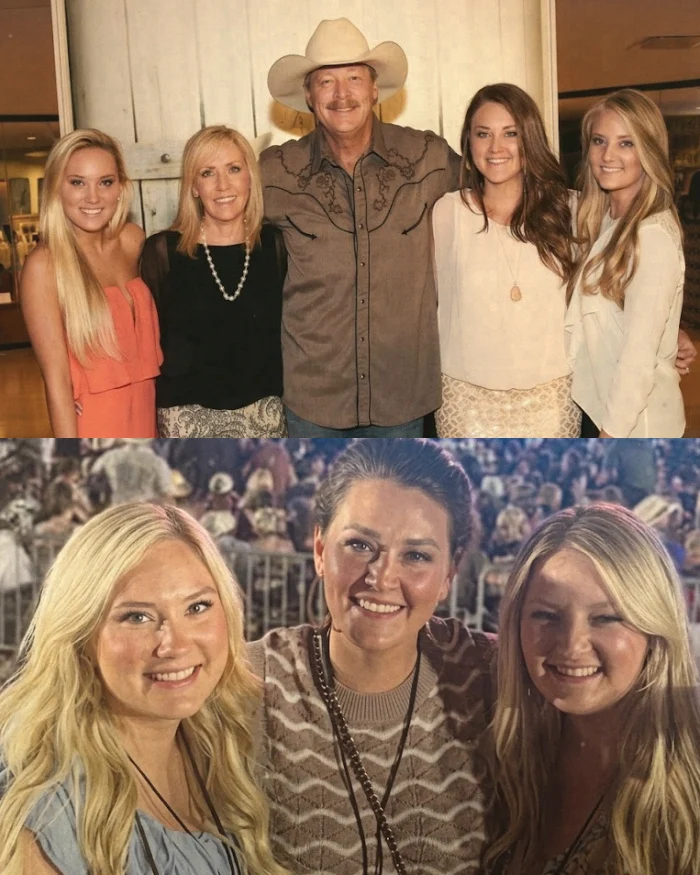
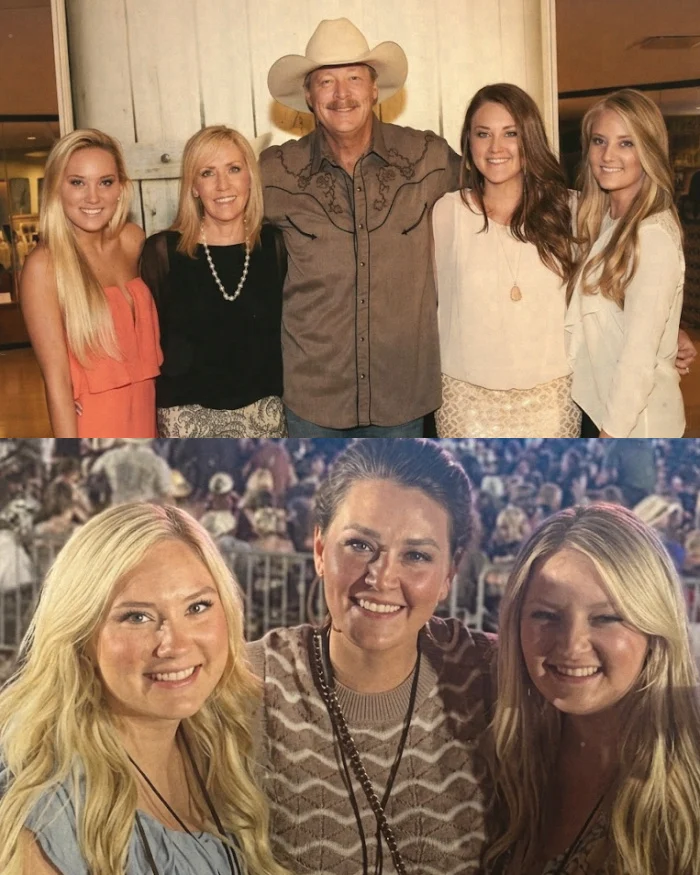
The rusted Jeep rolled across dry pasture grass while three little girls laughed and gripped an oversized steering wheel. Alan Jackson stood behind them with one hand under the rim. He was not performing grief. He was letting his father’s lesson move forward through his daughters.
On January 31, 2000, Joseph Eugene “Daddy Gene” Jackson died from an aortic aneurysm at seventy-two. His youngest son and only boy needed a way to mark the absence.
Alan Jackson picked up his guitar again and again. Each early draft became a heavy mournful ballad. That did not fit Gene Jackson. His father had spent decades as a mechanic in Newnan, Georgia. He was a quiet man who spoke through tools, grease, and engines.
So Alan Jackson set aside funeral thoughts and listed concrete memories. His father taught him how to work on old cars, how to handle basic equipment, and how to navigate dirt roads before he was old enough for a driver’s license. The song was built from an old plywood boat with an outboard motor on a lake across the Alabama state line and a hand-me-down Ford pickup with a three-speed column shifter.
When he brought the material to Castle Recording Studios in Franklin, Tennessee, producer Keith Stegall helped shape an acoustic arrangement with steady mid-tempo momentum. Alan Jackson then wrote himself into a new role. He became the guide. He put his daughters Mattie, Alexandra, and Dani on his lap behind the wheel of his old Jeep in the pasture behind their house.
Released in January 2002 as the title cut from his tenth studio album, Drive For Daddy Gene climbed to the top of the country charts by May. Its power came from the way it avoided sentimentality. Steering became a practical measure of trust.
For the visual companion, Alan Jackson worked with director Steven Goldmann. They rejected polished soundstage sets and child actors. Goldmann brought cameras to the open pasture on Jackson’s property.
The production blended pencil-sketch animation sequences created by The Illusion Factory with live footage of Alan Jackson and his daughters. Dressed in work clothes, Alan Jackson climbed behind the wheel of a rusted Jeep. He placed each daughter on his lap and let them steer across the dry grass.
The girls gripped the oversized wheel and laughed while their father kept the vehicle steady without taking away their sense of control.
The finished video felt like the kind of ordinary home footage families keep forever. It resonated with people who recognized the ritual from their own lives. At the 2002 CMA Awards, the project earned Music Video of the Year and Album of the Year for the Drive LP.
Gene Jackson had never treated fatherhood as a speech or a declaration. He had shown a boy how to hold a straight line down a red-clay road. By handing that same wheel to three young girls in a Tennessee field, Alan Jackson completed the circle. The lessons of patience, safety, and quiet devotion survived the loss.