
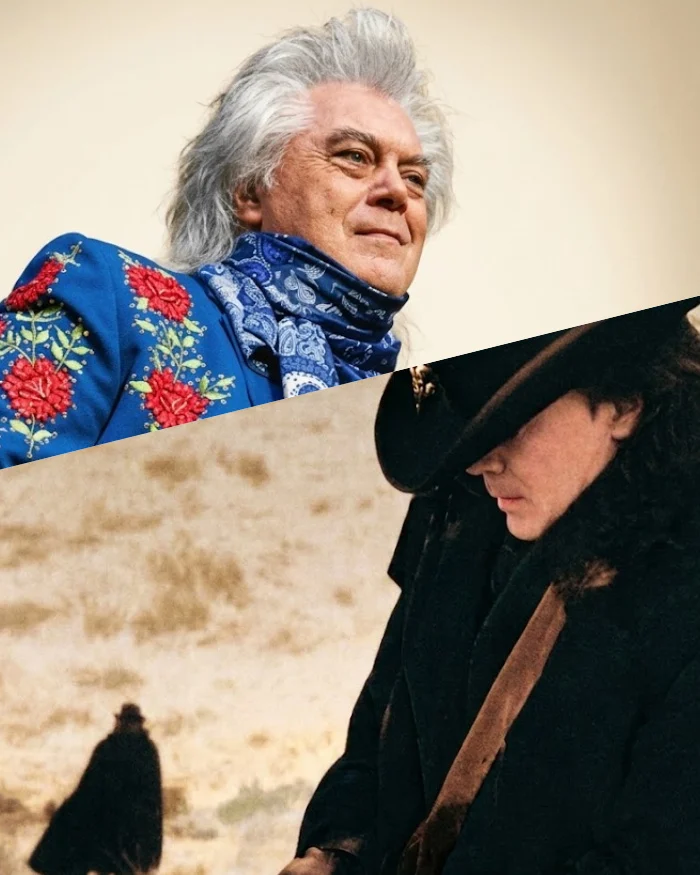
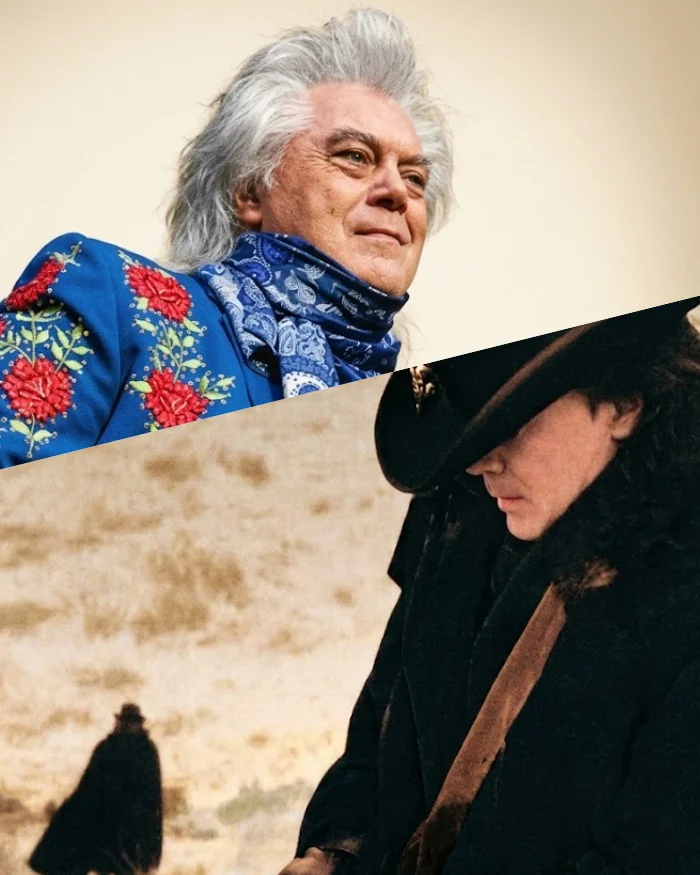
A quiet hometown tragedy became the beating heart of an album Nashville could not understand. In 1999, Marty Stuart delivered The Pilgrim to MCA executives in Nashville, and the room turned cold. The record told a true story from Philadelphia, Mississippi, where a man named Norman walked into a hospital building, confronted his estranged wife Rita and another man, handed Rita a letter, and ended his own life on the spot.
That grief had roots far earlier. In 1996, Stuart booked two days at Sun Studio in Memphis without a finished song in his pocket. He had spent a decade collecting platinum plaques, rhinestones, and high-energy radio hits for MCA Nashville, yet he stepped onto the concrete floor at 706 Union Avenue looking for something untamed. On the second day, a message arrived from Bill Monroe’s manager, saying the father of bluegrass had suffered a stroke.
Shaken, Stuart stood in the empty room and spoke four lines that surfaced without warning.
“I am a lonesome pilgrim, far from home.”
He wrote two verses on the spot, dimmed the lights, and cut the title track with his road band in a single take. That song sat alone for eighteen months before growing into a sprawling twenty-track narrative based on the actual tragedy in his hometown.
The real-world story also followed the man Rita met at a local hospital. He had not known she was married, and after the suicide he left town under a cloud of local blame. He spent months riding freight trains across the American West before finding redemption and reuniting with Rita years later.
Stuart envisioned the record not as a radio product but as an Appalachian opera built on genuine country lineage. Ralph Stanley gave the tragedy a stark, ancient vocal. Earl Scruggs added five-string banjo, while George Jones, Emmylou Harris, and Pam Tillis carried individual character arcs across string arrangements and traditional mountain instrumentation.
When Stuart needed an elder presence to frame the beginning and end of the journey, he flew with recording engineer Matt Spicher to Montego Bay, Jamaica. Johnny Cash was resting in the tropical heat. Over three days of conversation and field recording, Cash laid down spoken-word passages, including lines drawn from Alfred, Lord Tennyson’s poetry, providing the album with its solemn opening and closing benediction.
Commercial country radio refused to play it. Mainstream stations, then dominated by glossy pop-crossover arrangements, rejected every track. Early sales stalled, and the fallout ended Stuart’s decade-long partnership with MCA Nashville. He was left without a major label home.
Facing the sudden collapse of his commercial standing, Stuart chose not to chase pop trends to win back industry approval. Instead, that creative break freed him to form The Fabulous Superlatives in 2001 with guitarist Kenny Vaughan, drummer Harry Stinson, and later bassist Chris Scruggs. Dressed in tailored Manuel suits and armed with vintage instruments, the four-piece dedicated live performances and subsequent independent records to the raw stewardship of traditional country, rockabilly, and bluegrass.
Decades later, The Pilgrim is widely celebrated as an Americana masterwork. Johnny Cash’s quiet assurance in Jamaica that the record would find its true place proved accurate. What corporate ledgers recorded as a total commercial failure became the exact pivot point where Stuart stopped chasing radio formatting and committed himself fully to preserving the roots of the music.