
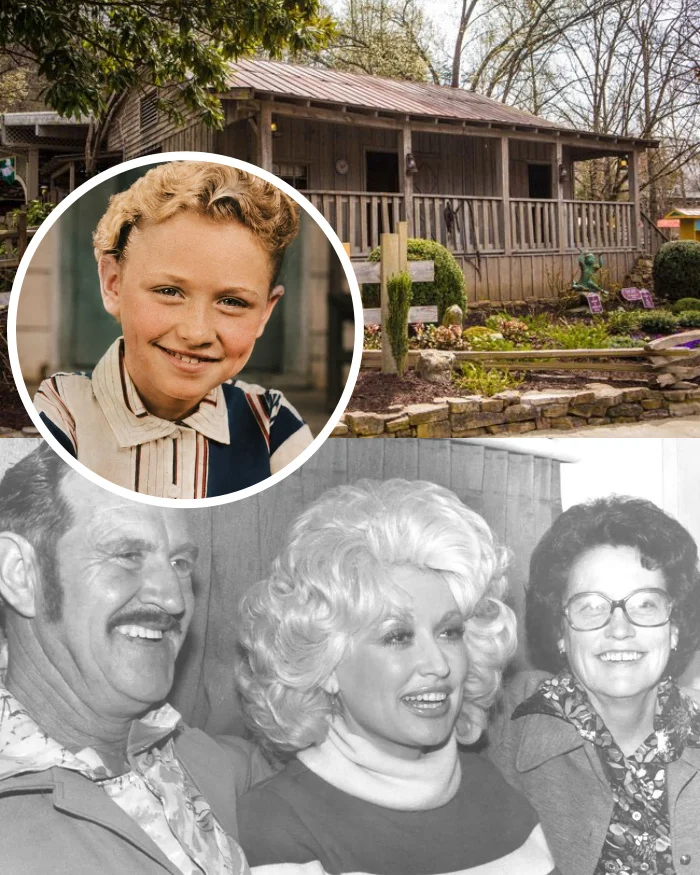
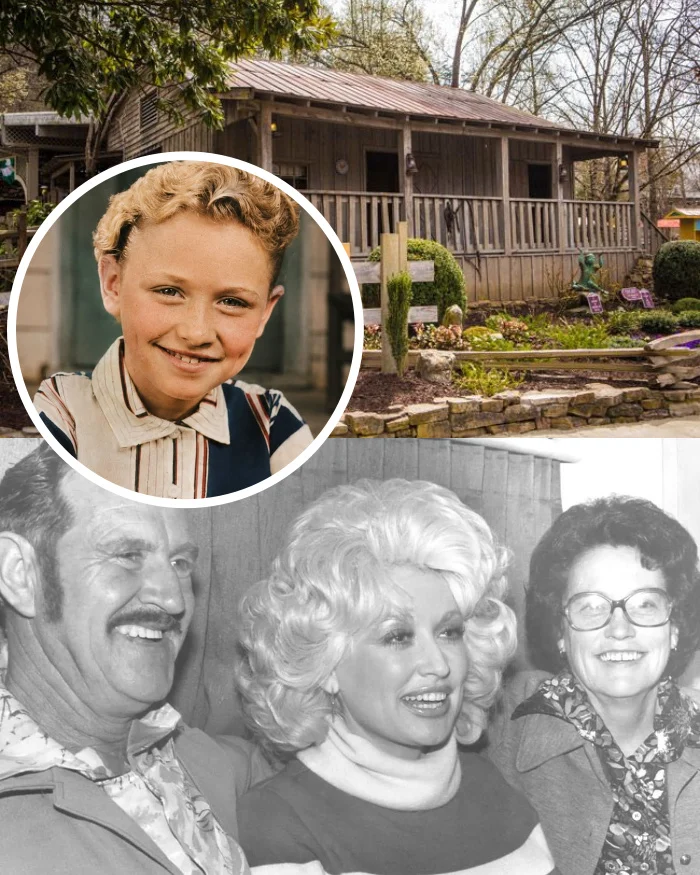
The most powerful moment in Dolly Parton’s story was not a sold out arena or a glittering stage. It was the quiet return to Locust Ridge, the mountain dirt that had once been lost to poverty.
She arrived in January 1946 as the fourth of twelve children born to Robert Lee Parton and Avie Lee Owens in Sevier County, Tennessee. There were no silver dollars in the household. Dr. Robert F. Thomas delivered the baby, and her father paid him with a sack of cornmeal.
Home was a two-room timber cabin without electricity or indoor plumbing. The children hauled water from a mountain creek, and bitter winter winds moved through the floorboards. At night they slept crowded together on straw and corn shuck mattresses, sharing hand stitched quilts and their own body heat.
When supper was thin, Avie Lee sang old ballads and told traditional mountain stories until hunger gave way to sleep. On the rough porch, a dried corncob stuck on a stick became Dolly’s first microphone. Chickens and farm animals listened as she sang melodies she made up herself.
School sharpened the pain of being poor. Her mother sewed a winter coat from discarded fabric scraps, and classmates laughed and shoved her into a school locker. That patchwork jacket did not break her. It became a moral center and later inspired one of the most enduring autobiographical songs in American music.
The morning after graduating from Sevier County High School in 1964, she packed her belongings into paper sacks and boarded a Greyhound bus to Nashville. She fought through songwriter rooms and early television on The Porter Wagoner Show while keeping her mountain upbringing intact.
Every dollar earned had a purpose rooted back home
Once consecutive country chart hits secured her career, Dolly quietly repurchased the original Locust Ridge property. She had her brother rebuild the exact cabin for visitors to see. She also kept the promise of a car for her father, a quiet repayment for the cornmeal and the hard years. The small home still stands as a reminder of where she began, and of the love that turned hardship into legacy.