
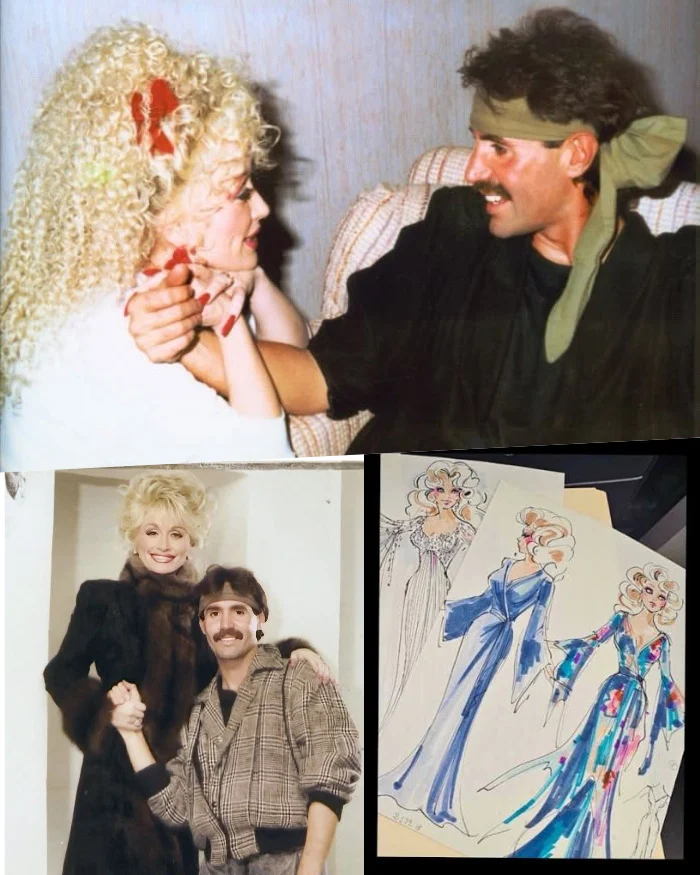
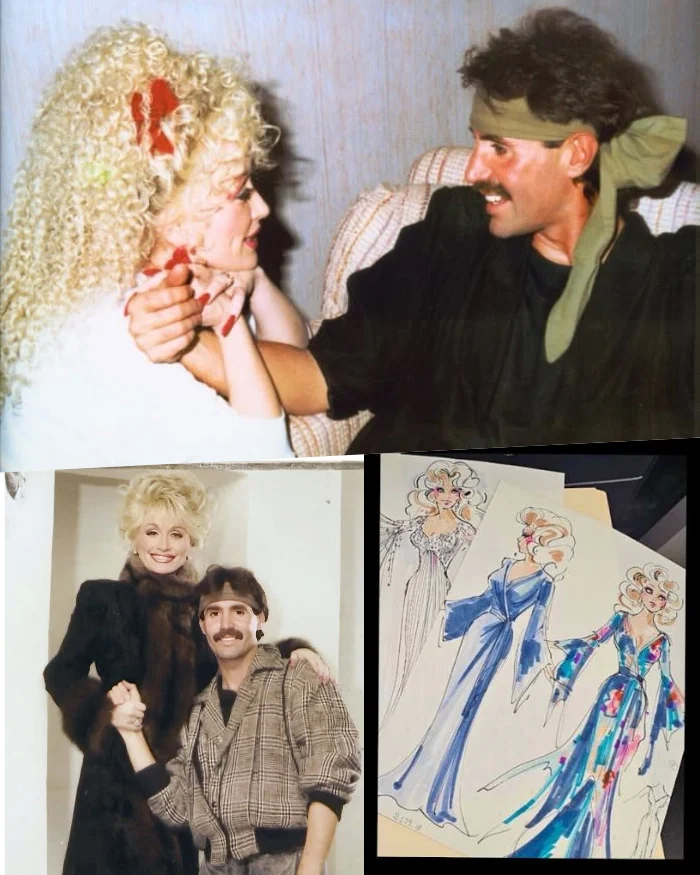
Dolly Parton walked into the spotlight long after Tony Chase died, and his hand-beaded gowns still made her shine.
For years, some of the most dazzling dresses in her touring closet carried the name of a designer who did not live to see the new millennium.
Chase began styling her in 1987. Parton was launching her ABC television variety show Dolly and moving deeper into Hollywood. She needed someone who could respect her country roots while lifting her image to prime time scale.
Before him, her wardrobe had grown from the bright Nashville looks of the 1970s and early 1980s. Los Angeles demanded a new kind of glamour. Chase brought a theatrical fashion vision that matched her ambition.
The television schedule pushed creativity to its limit. Across 22 episodes, Parton welcomed many guests and needed several costume changes for each taping. Chase built a wardrobe department that could produce custom couture on a weekly pace.
He could make a simple gingham dress for a bluegrass segment and then spend hundreds of hours hand-beading an evening gown for a closing number.
He understood the heavy craft behind a Dolly Parton outfit. The garments had to sparkle under studio lights, carry the weight of glass beads and rhinestones, and still let her sing, move, and play guitar.
Wearing a Tony Chase creation felt like putting on a protective layer of confidence tailored for her ambition.
That feeling helped her cross into mainstream fame. Under his direction, her look moved from traditional Nashville flash into a golden era of modern glamour. The change helped carry her onto the pages of Vogue and Vanity Fair.
When she hosted Saturday Night Live in April 1989, Chase designed the wardrobe for her monologue and live comedy sketches.
Their partnership reached its film peak in 1992. Chase became the costume designer for Straight Talk. He shaped the visual identity for her character Shirlee Kenyon and blended small-town Arkansas denim with Chicago radio host sophistication.
For the movie, he created pearl-studded jackets, tailored blouses, and rhinestoned outerwear that matched the character rising from a rural life into city success.
The collaboration ended in 1994. Chase died from complications of HIV/AIDS during a devastating period when the epidemic took many artists in Los Angeles and New York. Parton lost a close confidant and the main architect of her most visually defining Hollywood years.
Custom costumes often vanish into auctions, private collections, or dark archives. Parton chose a different path.
She preserved the Western suits, heavy beaded gowns, and custom jackets Chase built during their seven years together.
She did not keep them only behind glass in museum exhibits at Dollywood. She kept them in active touring rotation.
Well into the 2000s, she still pulled Chase designs for red carpet appearances and live shows. Fans who came to concerts decades later were often seeing the exact garments he had pinned and tailored in his Los Angeles studio in the late 1980s.
The pieces survived years of travel and stage wear because he built them with strong construction. Every time theater lights caught the rhinestones, his craft returned to the stage.
He had only seven years to design for her. She made sure his work outlasted his lifetime and let his art keep shining where he built it to be seen.