

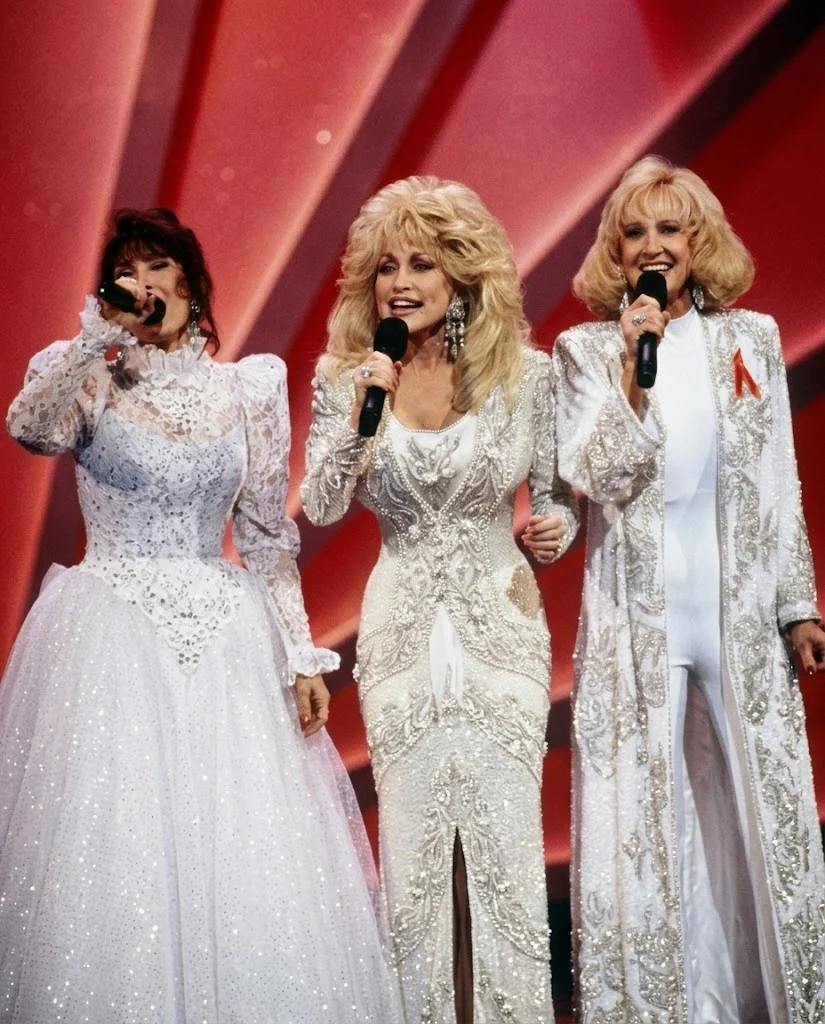
Before the final note of Honky Tonk Angels became a celebrated record, it began as a rescue mission for a wounded voice. Tammy Wynette had endured years of surgeries, chronic pain, and cruel tabloid attention, and the music world that once honored her had begun treating her struggles as disposable gossip. Dolly Parton and Loretta Lynn refused to let that happen. They built a studio around her, not around schedules, egos, or headlines.
In the early 1990s, Wynette faced severe physical challenges after dozens of major medical procedures and ongoing intestinal inflammation. Country radio and commerce were drifting toward newer sounds, and sensational coverage often overshadowed her artistry. Parton and Lynn saw a longtime friend under pressure, and they chose loyalty over distance. Parton shaped the idea for a joint recording, bringing three defining women of modern country music together under one marquee.
Released by Columbia Records in the fall of 1993, Honky Tonk Angels became a historic milestone. Produced by Steve Buckingham and Dolly Parton, the album gathered classic country material and featured guest appearances from Kitty Wells, Patsy Montana, and Brenda Lee.
Behind the scenes at Nashville’s tracking studios, the production team quietly structured the entire recording schedule around Wynette’s physical stamina. Sessions remained patient and unhurried, giving Wynette room to sing when she felt strong enough. There was no pressure, no rigid deadline, and no judgment.
Between takes, the studio became a sanctuary. Engineers arranged acoustic tracks and harmonies to support Wynette’s voice. Lynn and Parton brought home cooked comfort food into the lounge. Laughter eased the room. When fatigue came, production paused naturally.
The lead single, Silver Threads and Golden Needles, showcased the balance of three distinct voices. The video placed Parton, Lynn, and Wynette side by side in equal prominence, a visual answer to anyone who believed Wynette had been pushed aside.
True community in Nashville was built on loyalty rather than competition.
The record earned Gold certification from the Recording Industry Association of America, surpassing 500,000 sales, and received a Grammy nomination for Best Country Collaboration with Vocals. It reminded listeners that traditional country storytelling still carried emotional power. For Wynette, the triumph was more than commercial. It was dignity restored.
Parton and Lynn did not simply assemble a hit. They stood beside an old friend and made the industry listen again. Their quiet arrangements, patient sessions, and unspoken protection remain a lasting chapter in country music history.