
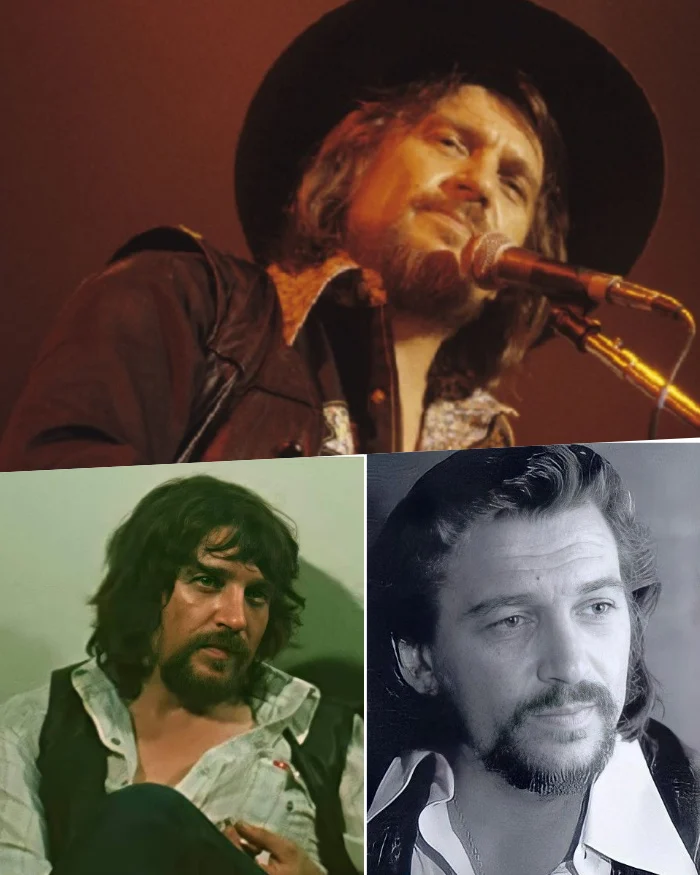
On a quiet February night in Chandler, Arizona, Waylon Jennings slipped away in his sleep at sixty-four. His wife sat near him, and the silence felt heavier than any song he had ever written. Forty-three years earlier, a freezing Iowa night had followed him everywhere.
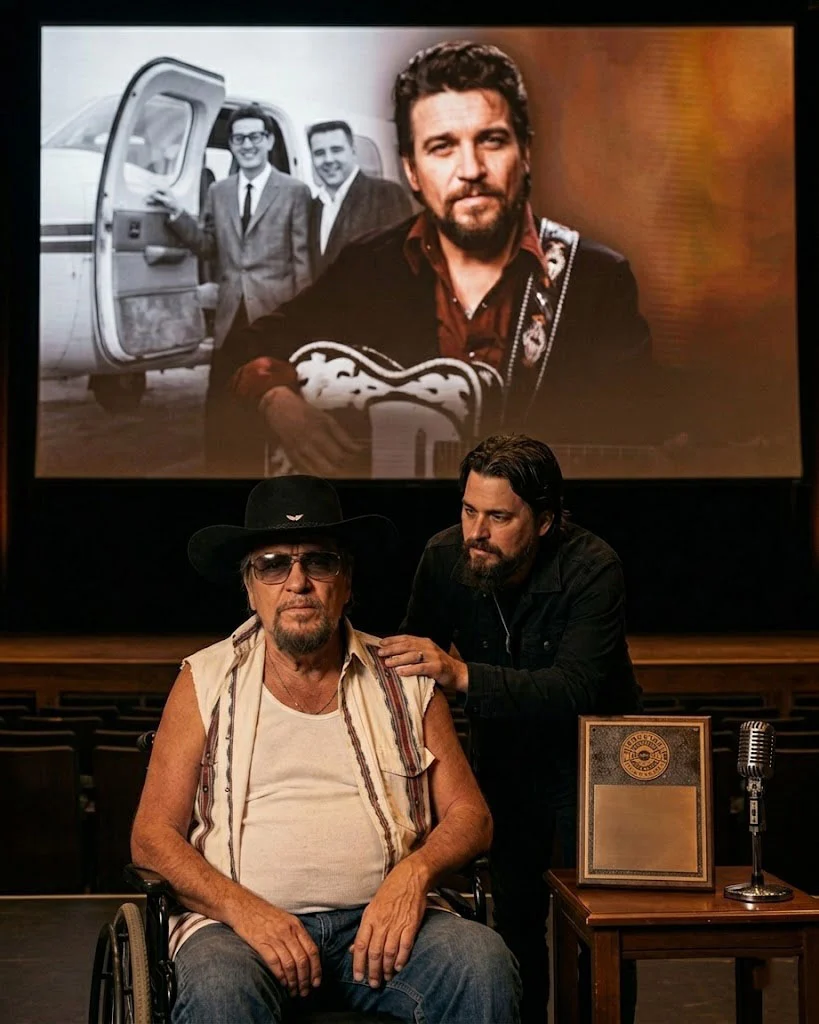
He had been twenty-one in February 1959. The Winter Dance Party Tour had turned the Midwest into a bitter test of endurance. The tour bus heaters failed, the Big Bopper was sick, and a chartered plane seemed like mercy. Waylon gave his seat away so the ailing star could rest. Buddy Holly, Ritchie Valens, and the Big Bopper never came back from the dark field outside Clear Lake.
Holly had teased him about shivering on the broken bus, and Waylon fired back a joke that sounded harmless at the time.
“I hope your ol’ plane crashes.”
Then the sky swallowed three legends, and the young bass player was left standing in snow.
Survivor guilt did not arrive with sirens. It settled into his chest, moved through his pills, his cocaine, his federal busts, and his roaring fame. It followed him while he helped build the outlaw movement. It followed him beside Johnny Cash and Willie Nelson, when he pushed country music toward a rougher honesty. It followed him through ninety-six charting singles and sixteen number-one hits.
Before the black hat and the defiant stare, he was a restless kid from Littlefield, Texas. His mother changed the spelling of his name so he would not be confused with a local college. He had his own radio show by twelve. He left school at sixteen and refused to wait for anyone to grant him permission.
In 1958, Buddy Holly heard that deep Texas voice and hired him to play bass. The break was supposed to be a beginning. Instead, it became the hinge of a life forever marked by loss.
In October 2001, the Country Music Hall of Fame finally called his name. Waylon did not attend. He sent his twenty-two-year-old son, Shooter, to stand in his place. Some choices are too personal for explanations.
Four months later, February returned, and Waylon took the flight he had once given away. The outlaw legend ended quietly, while the careless joke remained a ghost that had carried him through music, pain, rebellion, and love.