
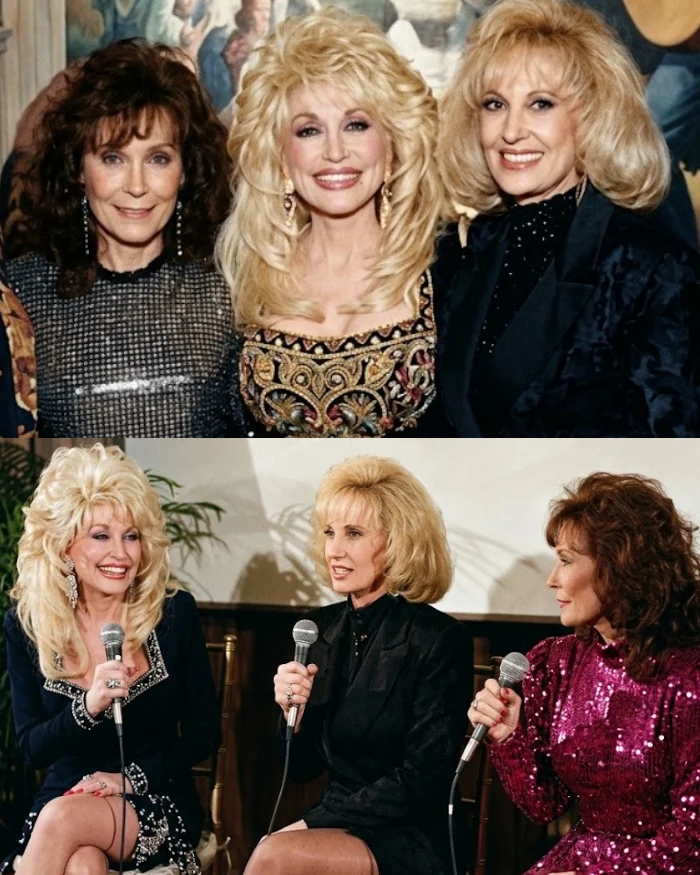
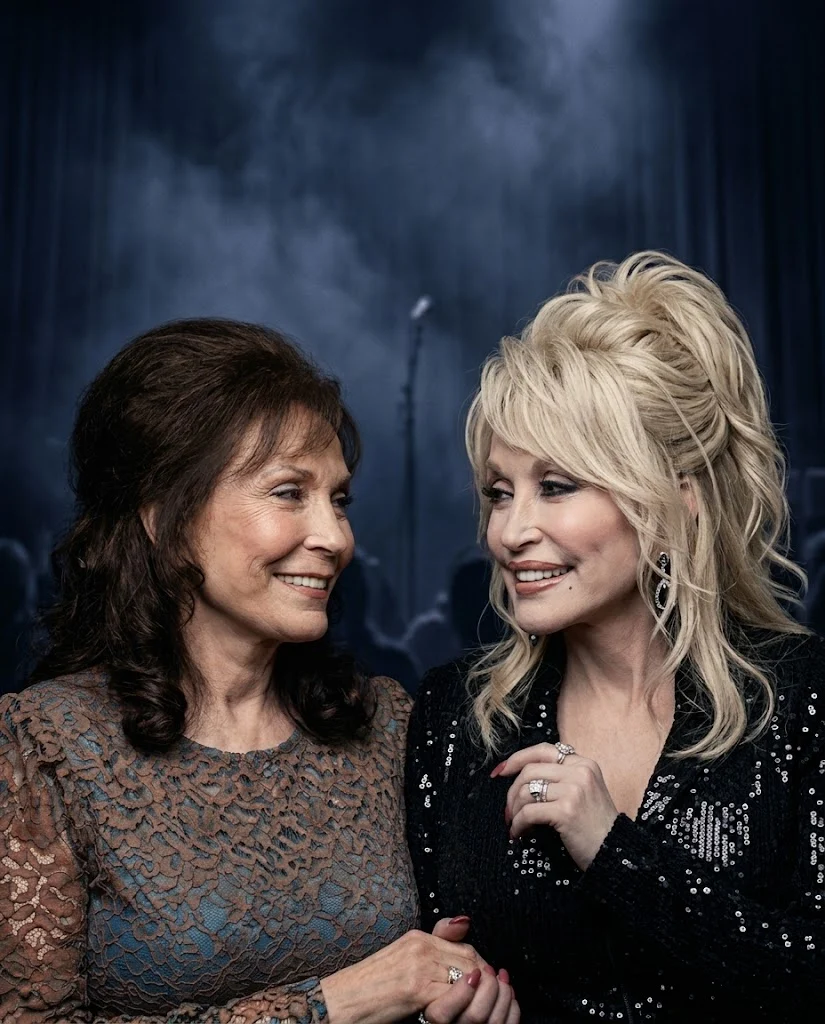
Dolly Parton built her empire with her own pen, yet she stepped to the microphone to carry another woman’s pain.
In 1993, Dolly Parton, Loretta Lynn, and Tammy Wynette entered a Nashville studio to record Honky Tonk Angels. The album became one of the most powerful gatherings in country music history.
Among the songs they cut was “Wouldn’t It Be Great,” written by Loretta Lynn alone.
The song came from the deepest turbulence in her marriage. It told the story of her husband Doolittle’s severe struggle with alcoholism and her longing for peace.
In Nashville, a singer usually leads the most personal song they have written. The industry expects the person who lived the trauma to stand in the front and deliver it.
Inside the booth, the three women chose a different path. When the red light turned on, Dolly Parton took the lead vocal. Loretta Lynn, who had lived every word, stepped back and harmonized with Tammy Wynette.
Parton was already one of the greatest writers in music history. She could have filled the project with her own songs. Instead, she sang Lynn’s composition and lifted her colleague’s craft before the world.
That choice also created shelter. By carrying the difficult lead vocal, Parton absorbed the emotional weight of the story. Lynn could breathe and harmonize with her own survival instead of reliving the exhaustion in the spotlight.
The grace extended to Wynette as well. The legendary voice behind country music’s biggest heartbreak anthems arrived while battling physical decline and chronic pain. In that room, there were no clashing egos. They were simply three women offering each other support.
Creating that quiet space required a fierce business battle. Parton had spent years trying to bring the three women onto one master tape. She hit the invisible walls of the music industry again and again.
Executives protected their exclusive contracts. Lynn had been tied to MCA Records, while Parton and Wynette operated under different banners within the Sony corporate umbrella. Parton refused to let the project die in a boardroom. She used her power as a co-producer to force the competing labels to cooperate, demanding legal waivers and equal billing for all three artists.
When the labels finally cleared the path, the women could record as an unbreakable alliance rather than rivals fighting for one radio spot.
Honky Tonk Angels earned Gold certification, proving the commercial power of their authentic storytelling even as country radio shifted toward a younger pop-country sound.
The session also took on heavier meaning over time. Wynette passed away five years later in 1998, turning the 1993 master tapes into a permanent and irreplaceable document of their shared legacy.
Parton did not just use her leverage to bring her friends into the room.
“She used her voice to carry the weight so they would not have to stand alone.”