
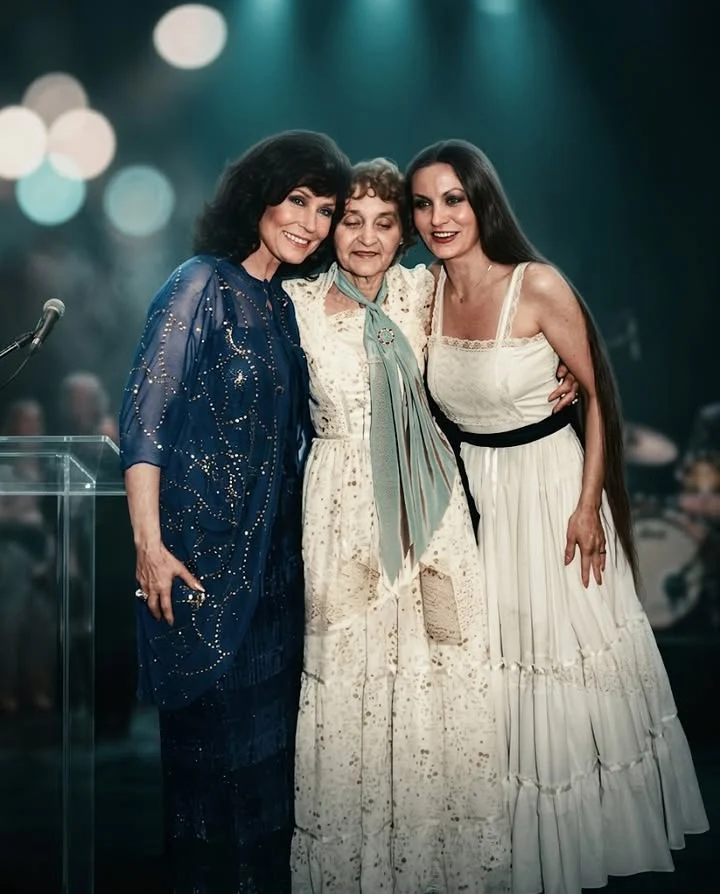
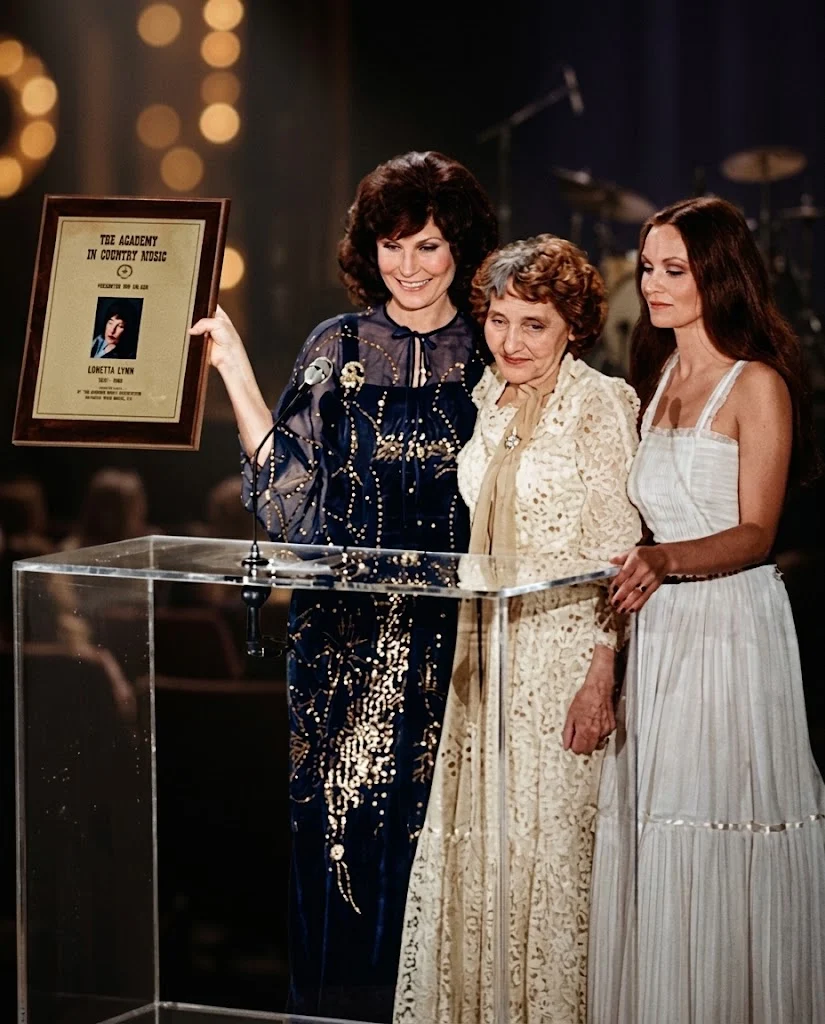
Backstage after the lights went down, working-class housewives pulled Loretta Lynn aside in tears and whispered that her songs were their lives.
That quiet confession carried the weight of a rickety porch in Butcher Holler, where her mother Clara Marie sang about the Titanic and taught her that storytelling could become survival.
Long before Nashville made Loretta an institution, folk ballads were the news in the Appalachian mountains, and a mother’s voice opened a coal miner’s cabin to a wider world.
When she carried a guitar into 1960s recording studios, she did not sing about distant ships, she sang about the shipwrecks happening inside ordinary kitchens.
While female artists were usually handed smooth ballads written by men, she turned her notepad into a blunt diary and refused the polite formula.
She wrote “Don’t Come Home A-Drinkin’ (With Lovin’ on Your Mind)” and “Fist City” from her turbulent marriage to Doolittle Lynn, naming drinking, wandering, and anger without hiding them in poetry.
She sang about birth control in “The Pill” and divorce in “Rated ‘X’”, and dozens of radio stations banned her, yet the censorship failed because the songs echoed harsh reality.
“That is my life.”
Every stage appearance continued Clara Marie’s legacy, because Loretta transformed the struggles of everyday women into American epics and gave silenced women a voice.