
Dolly Parton and Carl Dean built a quiet promise inside a small Georgia church, and that promise helped her survive six decades of fame.
On May 30, 1966, a twenty year old Dolly Parton traveled from Tennessee to Ringgold Georgia. Her record label had warned her that marriage could derail her rising career. They wanted a single country singer for the public to idolize. They believed a wedding could damage her image and her future.
She crossed state lines anyway. The location helped keep her marriage license away from the watchful eyes of Nashville newspapers.
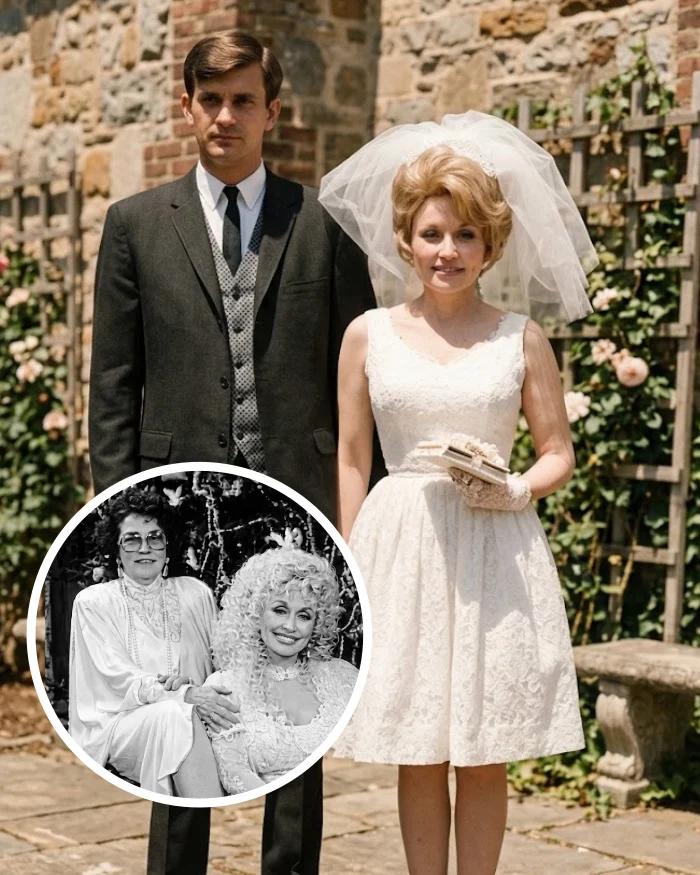
Inside the small Baptist church, there was no massive crowd. There were no flashing cameras. There was no elaborate bridal gown. Dolly wore a simple short white lace dress she had bought herself. She held a small bouquet and a Bible carefully decorated by her mother Avie Lee.
Avie Lee was the only family member present. She made the trip so her daughter would not face the sacred moment alone.
Carl Thomas Dean waited at the altar. He understood the life he was joining. He agreed to marry a woman who belonged to music. He demanded no public recognition. He never asked Dolly to choose between him and her guitar.
She traded a massive dream wedding for the man who became her anchor.
That quiet afternoon created a boundary that would define the next half century. To the world, Dolly remained Dolly Parton, the glittering country star wrapped in rhinestones and larger than life charm. In private, she became Dolly Raye Parton Dean.
Carl protected their marriage by staying invisible to the industry. While his wife became one of the most recognizable women on earth, he quietly ran an asphalt road paving business in Nashville. He attended exactly one music industry event early in her career. It was a BMI awards dinner where she was being honored. After that, he told her he wanted her to have everything she dreamed of, but he would never go to another red carpet.
By stepping away from the spotlight, Carl gave Dolly something precious. He gave her a normal reality. He did not care about Billboard charts, sold out arenas, or Hollywood movie premieres. He kept her grounded when global fame threatened to pull her away.
They spent anniversaries taking their camper on quiet road trips. They pulled up to local fast food drive thrus in their RV. They found rural spots where Dolly did not have to wear towering wigs or heavy stage makeup.
Carl loved the girl from the Smoky Mountains, not the global brand she had built. That separation allowed her to give everything to fans on stage, knowing she had a shielded quiet life to return to when the curtain fell.
She never changed her professional name. Her marquee and album covers still read Dolly Parton. Her passport, signing contracts, and private identity carried Dolly Raye Parton Dean.
The Nashville establishment warned her that a husband would ruin her career. Instead, he became the reason she survived it.
The music industry gave her a legacy. A quiet man in Georgia gave her a home.