
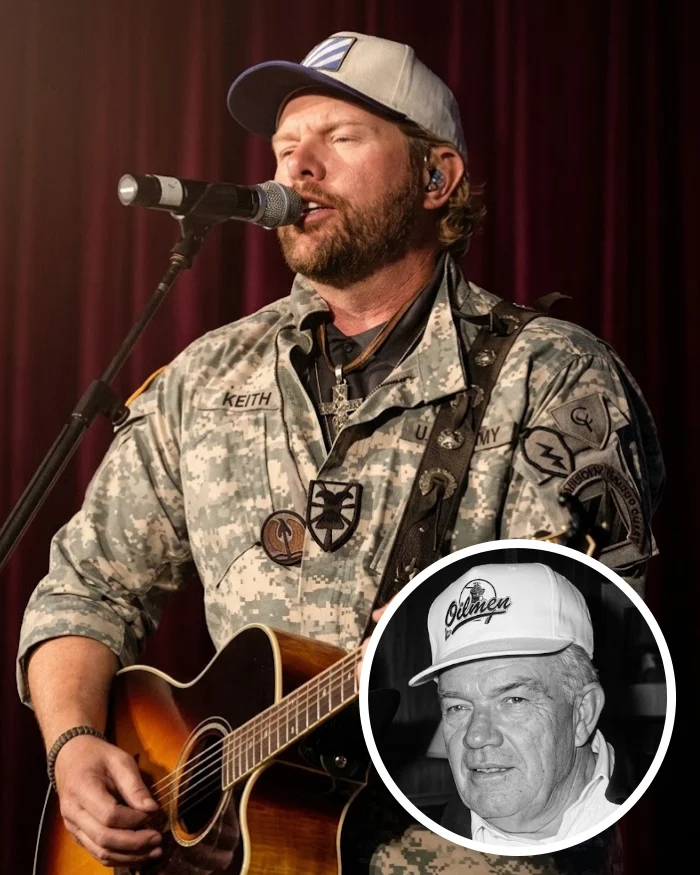
The pen bit into the fantasy football scrap before the country singer could speak. Toby Keith pressed hard into a crumpled sheet of paper as the morning news unfolded, and the private ache he had carried since his father’s death poured out in words that would later echo across America.
His father, H.K. Covel, had been an Army veteran who lost his right eye during his service. He died in a tragic traffic accident six months before the September 11 attacks. For decades, the man had raised the American flag in the front yard of their Oklahoma home, and Keith still felt that loss like a wound when he sat alone watching the television in the fall of 2001.
What began as a quiet routine of checking sports stats shattered in minutes. The images from New York and Washington demanded a response. Keith reached for the nearest pen and the discarded sheet meant for a fantasy football draft. The paper became a makeshift altar for grief, fear, pride, and rage.
The song was not born for radio. It was born from a son mourning a veteran father and a citizen watching his homeland tremble. Keith wrote a fierce tribute to service, a promise of resilience, and an uncompromising declaration of defense. The words carried the protective instinct of a family watching a nation under threat.
Because the emotion felt too raw and too personal, Keith kept the music away from the industry. He refused to commercialize it. For a long stretch, record executives never heard the track. The song lived only in his memory and on his guitar, waiting for the right moment to meet the people who needed it most.
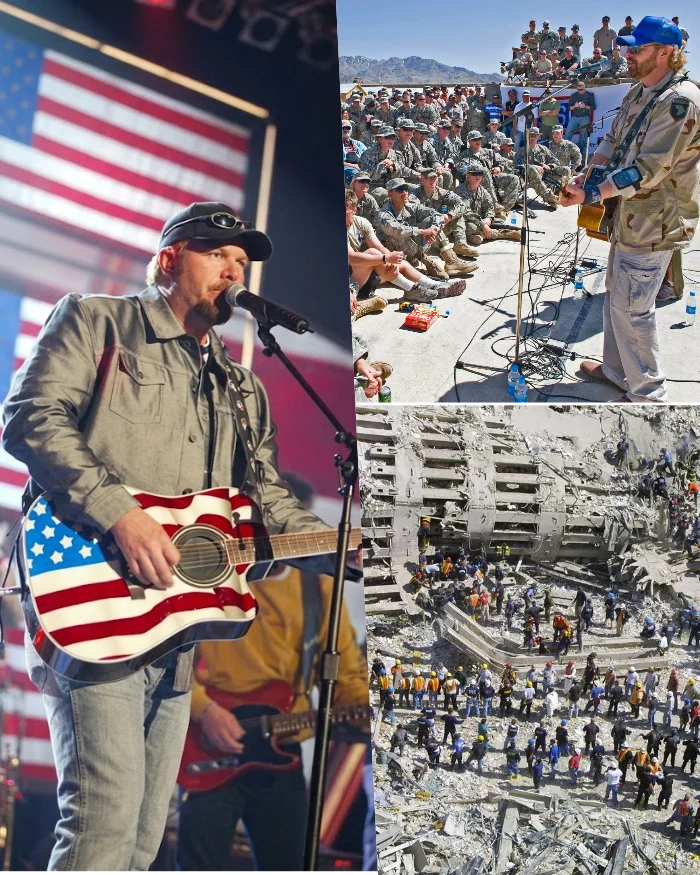
That moment came on USO stages. Keith packed his acoustic guitar and traveled to military bases and combat zones, where he performed the unpolished verses for service members. There was no polished production and no Nashville boardroom. There was only a man, a guitar, and a truth heavy enough to change the room.
The troops did not merely listen. They answered the song with tears, clenched jaws, and quiet gratitude, and Keith understood that the lyrics had found their true audience.
The decisive call came from General James L. Jones, Commandant of the Marine Corps. He heard a live performance overseas and saw the profound effect the song had on his troops. He pulled Keith aside and told him it was his duty as an American citizen to record the track and share it with the entire nation.
Keith finally agreed. He carried the song into the studio and preserved the fierce, unapologetic energy that had moved soldiers on dusty stages. The release bypassed ordinary country single routes and became a cultural monument, sounding from rural porches to national stadiums while America still struggled with immense sorrow.
Yet the heart of the anthem stayed anchored to that quiet Tuesday morning. Toby Keith did not set out to write history. He tried to speak for a veteran father who was no longer there to see the flag flying in his yard. A crumpled piece of fantasy football paper became a lasting memorial, and a private grief became a public voice.