
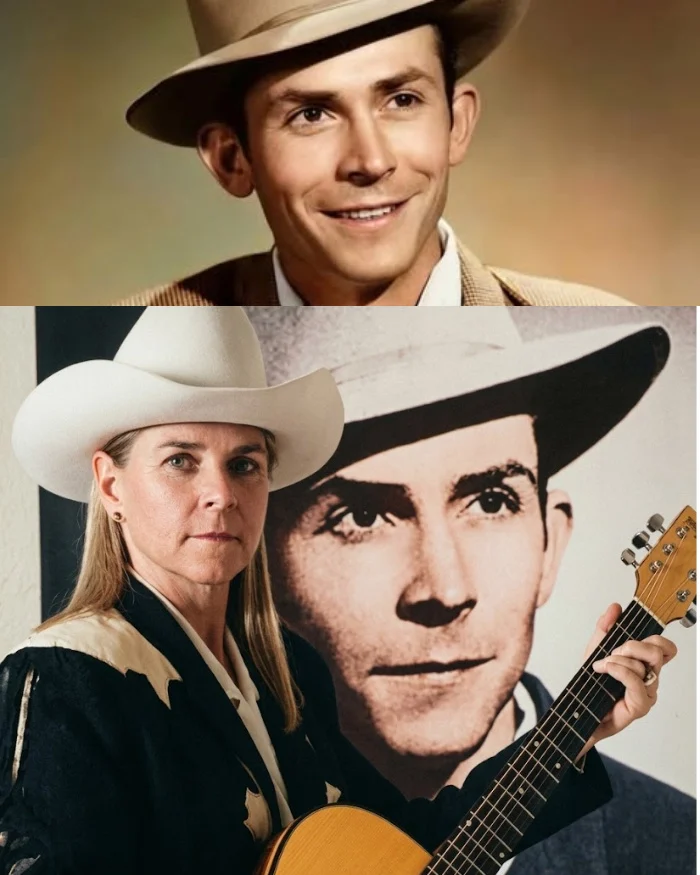
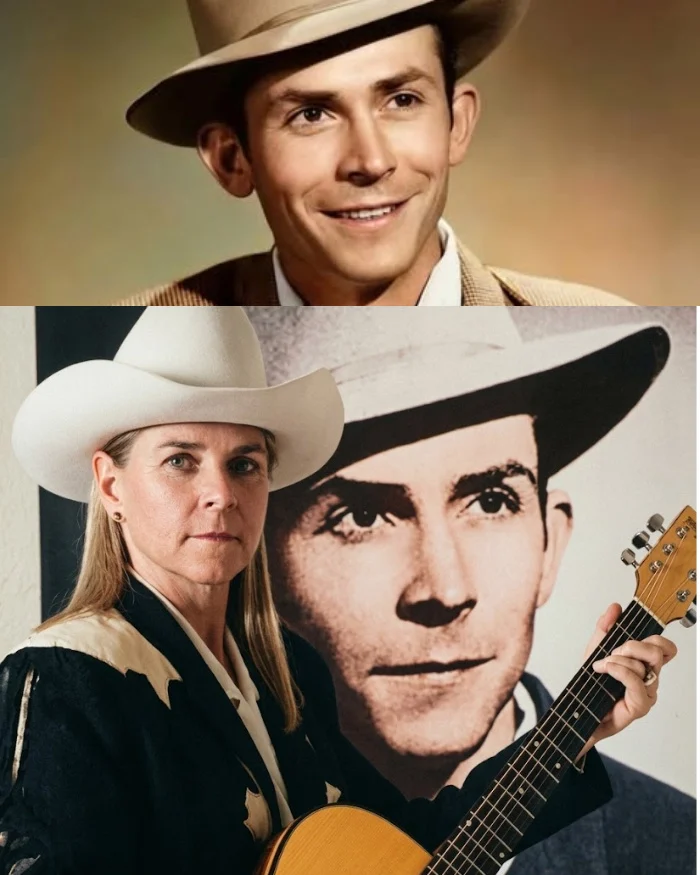
Five days after a blue Cadillac carried a dying country legend into history, a tiny crib sat waiting in Montgomery Alabama for a daughter who would never meet the man who had promised to protect her.
In October 1952 Hank Williams knew his marriage to Bobbie Jett was not coming. His touring life was brutal. His back pain was relentless. His health was failing. Still he signed a quiet legal contract that promised full prenatal medical care continuous living support and official fatherhood for the child Bobbie was expecting.
That paper became a lifeline. Ten weeks later on New Year’s Day 1953 the twenty-nine-year-old singer died of heart failure in the back seat of his blue Cadillac near Oak Hill West Virginia. Antha Belle Jett arrived five days after his death while thousands gathered at his funeral service in Montgomery. She entered a world where the nursery was ready but the hands that had bound themselves to her future were already gone.
Lillian Stone stepped in to honor her son’s wishes. She legally adopted the newborn and brought her home. That shelter lasted barely two years. When Lillian died in 1955 the toddler became a ward of the state and entered foster care. Wayne and Louise Deupree adopted her at age three and raised her in Mobile as Cathy Deupree.
Cathy grew up with a loving home and no knowledge of the name humming from regional jukeboxes. Her true parentage was buried beneath court seals and changing names. On her twenty-first birthday her adoptive parents told her that her biological father had been a famous entertainer. Yet the full truth stayed locked behind sealed adoption files probate dockets and the commercial gatekeepers guarding the Williams estate.
The little girl grew up as Cathy Deupree while the contract her father signed waited inside courthouse records for three decades
In the early 1980s Cathy hired investigative help and launched a legal battle to unseal her childhood records. Her attorney Keith Adkinson searched old probate archives and estate correspondence across Alabama and Tennessee for concrete proof of paternity.
The breakthrough came from a forgotten vault. The October 1952 agreement bore Hank Williams’ own signature and recognized the child with explicit promises of custody and paternal financial support. That document gave Cathy a bloodline the world tried to erase.
Its discovery triggered years of fierce litigation against estate trustees and music publishers who had long known of the girl’s existence. The legal war continued through 1989 and became one of Nashville’s most contested courtroom histories. The woman who once arrived as Antha Belle Jett and grew up as Cathy Deupree eventually fought to stand as Jett Williams and claim the father who had promised her a future.