
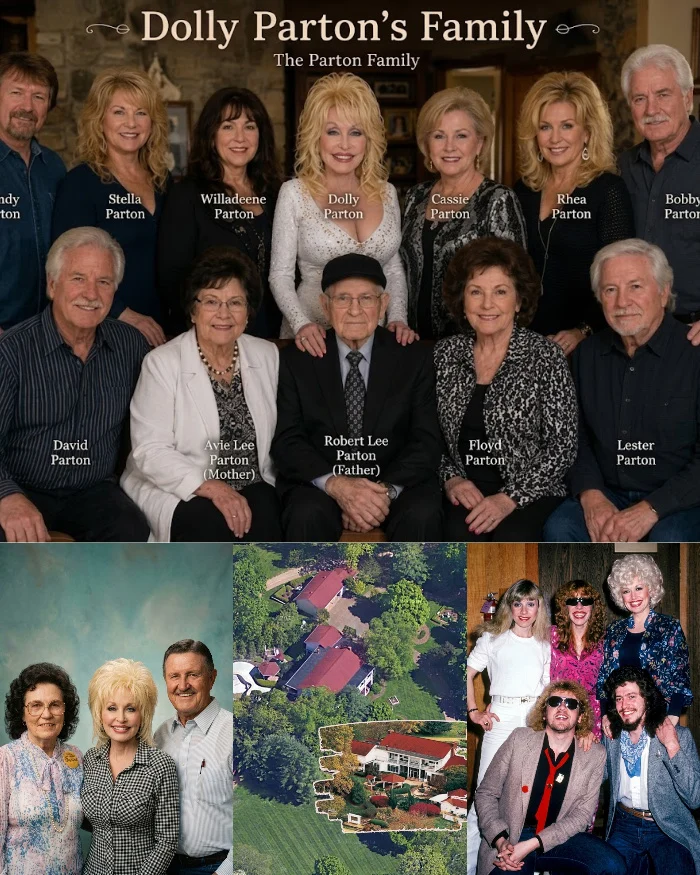
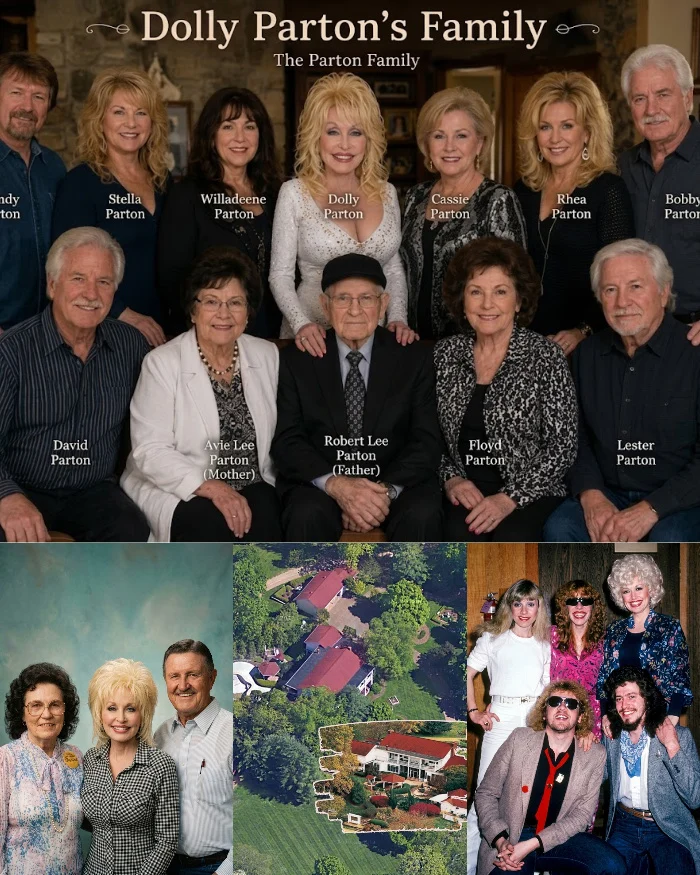
Warm water ran over the hands of Avie Lee Parton and changed everything. She had spent decades hauling freezing creek water into a mountain cabin. Now the kitchen faucet gave her comfort without pain.
By the late 1960s, Dolly Parton was appearing weekly in front of millions on The Porter Wagoner Show. Her voice carried the warmth of Sevier County into living rooms across America. Yet she did not spend her early television money on a grand life in Nashville. She gathered savings and purchased a spacious farm near Sevierville, Tennessee. She moved her family out of the cramped mountain cabin at Locust Ridge.
For years, fourteen people had shared two small rooms without indoor plumbing or electricity. Old newspapers covered cracked walls against winter mountain winds. Her father, Robert Lee Parton, had spent decades working land he could never own. Her mother, Avie Lee, had carried iron pots of freezing water for meals and laundry.
It was never an investment portfolio or a display of country music stardom. It was a daughter making good on the hard years her parents had spent shielding twelve children from rural poverty.
The new farmhouse changed daily reality overnight. It came with central heating, an electric stove, and indoor running water. Robert Lee stood beside his own fence line with quiet dignity. The farm offered fertile land and sturdy barns where he could tend crops with proper tools.
Dolly did not stop with one homestead. She continued buying back tracts of family land across the foothills. She kept relatives rooted together and protected their history. Her success became a shield for the family who raised her.
She later built entertainment empires, sold tens of millions of records, and earned high cultural honors. Yet long before the world knew the full reach of her name, her finest accomplishment stood in East Tennessee. It was warm, secure, and surrounded by the family she refused to leave behind.