
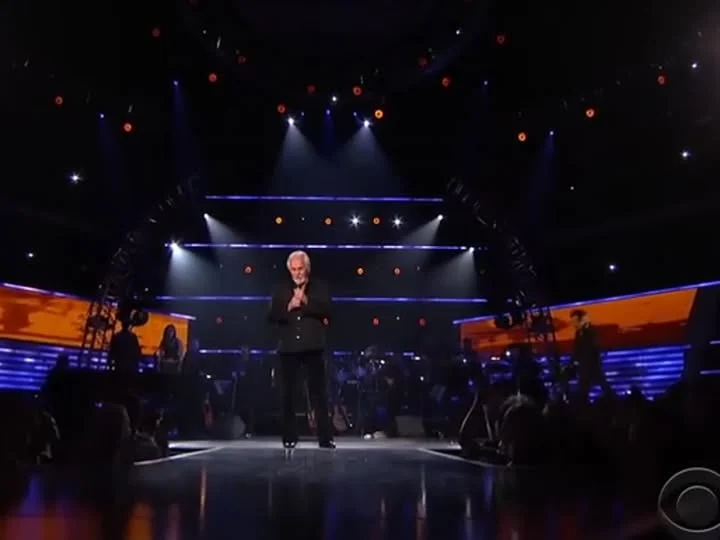
It was a Las Vegas dressing room, a slightly out-of-tune piano, and a songwriter scrambling to make an impression. Lionel Richie, nervous and fresh from the airport, began playing a demo he had originally written for the Commodores. They had turned it down. As the melody filled the room, Kenny Rogers, the country legend with the velvet baritone, began talking about his new bride, Marianne Gordon. “I married a lady, a real lady,” Rogers confided. “A country boy like me from Houston, Texas, what am I doing with a lady… she’s got such taste, such class, such style.” Then, with a knowing glance, he asked what the song was called. Richie, in that moment of perfect improvisation, changed the title from “Baby” to “Lady.” As he later laughed, “I’m no fool.”
That spontaneous pivot gave birth to one of the most enduring love songs of the early 1980s. Released in 1980 on the compilation album Kenny Rogers’ Greatest Hits, “Lady” became a cultural phenomenon. It made history as the first record of the decade to chart on all four of Billboard magazine’s singles charts: Hot Country Songs, the Billboard Hot 100, Adult Contemporary, and Top Soul Singles. While it climbed no higher than No. 42 on the soul chart, it reigned supreme on the Hot 100 for a stunning six-week stretch, hitting No. 1 just two months after its release.
Lionel Richie, who had already found massive success with the Commodores, initially struggled to find a home for the song. During an exclusive interview with Rolling Stone, Richie recalled the pressure of pitching it. “I’m not used to pitching songs, but I had this song called, ‘Baby,’” he said. “I land in Vegas, and all I prepared is the first verse, the way I would normally do it for the Commodores.” Rogers’ road manager, Garth Shaw, was the bridge, telling Rogers there was a songwriter eager to play him something. Rogers, intrigued, immediately flew to meet Richie.
What unfolded next was a moment of pure, unscripted artistry. As Richie played his out-of-tune piano, Rogers, still riding the joy of his new marriage, unwittingly reshaped the song’s very essence. The rest of the writing session became a legendary, almost chaotic, scramble. On the day they were set to record, a crisis emerged: there was no second verse. Rogers later recalled the scene with a mixture of disbelief and humor. “So, we’re in the studio recording the song, and I said, ‘Where’s the second verse?’” he remembered. “They said, ‘Lionel’s in the toilet writing it right now.’ I go, ‘What?’ And they said, ‘Yeah, he can’t write unless he has the pressure to write.’”
The result was a soaring ballad, steeped in the mythos of a knight in shining armor and the promise of eternal devotion. With lines that speak of being “lost in your love” and a longing to “hold you in my arms forevermore,” the song captured a universal yearning. It became more than a hit; it was a testament to the chemistry between two musical titans—a country crooner who could reach across genres and a pop-soul genius who knew how to pen a love story.
Lady, I’m your knight in shining armor and I love you. You have made me what I am, and I am yours. My love, there’s so many ways I want to say I love you. Let me hold you in my arms forevermore.
The full lyric, a tender narrative of finding completeness after years of searching, still resonates with listeners of all ages. Its emotional weight, paired with that unforgettable melody, ensures that “Lady” remains a staple of romantic playlists, a song that makes you believe in the power of a well-crafted promise. Decades later, it stands as a monument to a chance meeting, a quick-witted title change, and the creative spark that happens when two legends find their perfect match.