
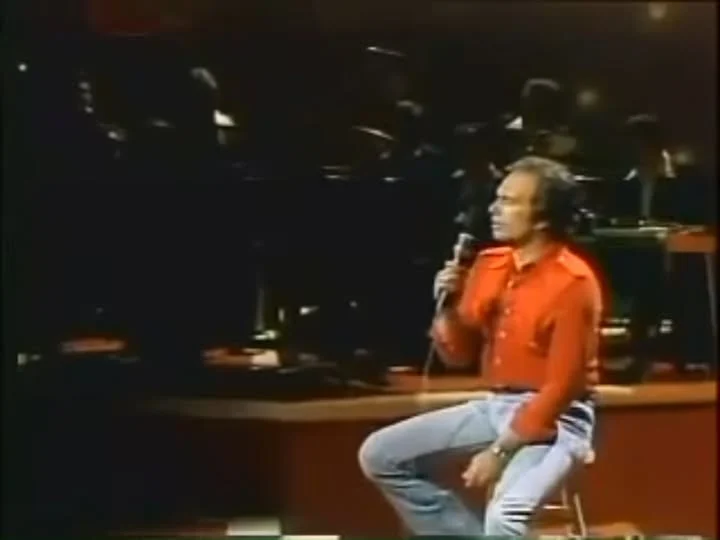
There is a quiet revolution in the idea that love does not always roar. It can hum. It can settle into the fabric of a morning coffee and the flicker of a television screen. Merle Haggard, the Bakersfield outlaw whose voice carried the weight of a thousand highway miles, understood this truth better than most. In August of 1972, he released a song that did not whisper about passion or scream about heartbreak. Instead, it offered something far more enduring: an honest shrug at a relationship that was It’s Not Love (But It’s Not Bad).
That title track became the lead single for Haggard’s fifteenth studio album, and within weeks it climbed to the top of the Billboard country charts, holding the number one spot for a full week and lingering in the rankings for twelve total weeks. The achievement was no accident. It cemented Haggard’s place as a titan of the genre, a storyteller whose baritone could turn the mundane into the monumental. Yet the song itself was not a grand declaration. It was a masterclass in understatement, written by the duo Hank Cochran and Glenn Martin, two craftsmen who knew that the truest songs often live in the spaces between extremes.
The narrator describes a relationship that lacks the fiery passion of love but offers a comfortable companionship. There is no mention of grand declarations or heart-stopping gestures. There is only quiet acceptance, a sense of two souls finding a niche in each other’s lives.
Haggard delivered those lyrics with his signature deadpan humor, a wry smile hiding beneath the gravel. The song’s genius lies in what it does not say. It acknowledges that love is not always a whirlwind; sometimes it is the unspoken understanding that grows over time, the solace found in routine. This resonated deeply with a generation of country music fans who saw their own lives reflected in Haggard’s depiction of a mature, practical kind of affection. It was not a ballad to tug at the heartstrings, but a song that lingered in the memory long after the last note faded.
Behind that memorable sound stood Haggard’s exceptional backing band, The Strangers. Their tight instrumentation provided the perfect canvas for his vocals. Roy Nichols’ Telecaster twanged with a familiar bite, while Norman Hamlet’s pedal steel guitar wept and soared in all the right places. Producer Ken Nelson, who worked with legends like Willie Nelson and Waylon Jennings, ensured a crisp, polished production that let both the song’s humor and its underlying sentiment shine through. The result was a track that perfectly encapsulated Haggard’s signature style: a potent blend of Bakersfield twang and introspective lyricism.
It’s Not Love (But It’s Not Bad) may not be a song that screams for attention, but it commands respect. It is a testament to Merle Haggard’s ability to find poetry in the everyday, to celebrate the quiet victories and unspoken bonds that make up so much of life’s journey. In a world that often romanticizes love, Haggard reminded us that sometimes “not bad” is all you really need. And that, perhaps, is the most profound truth of all.