
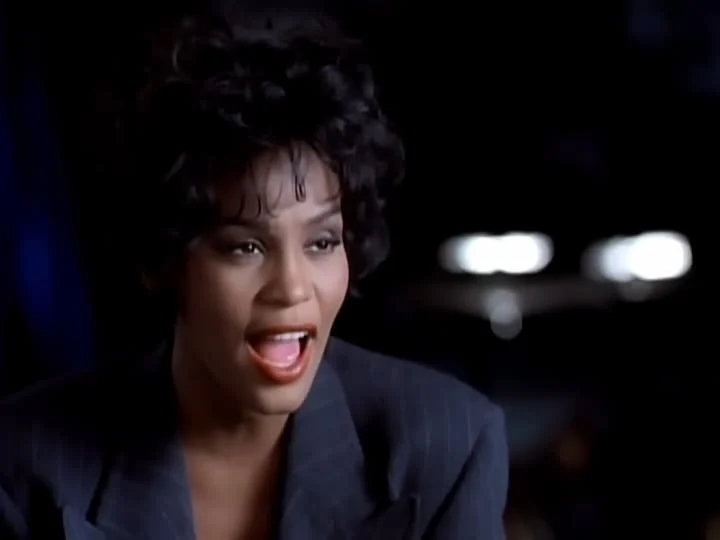
When the final key change arrives, it does not merely climb. It ascends like a tidal wave of emotion, carrying every listener to a place where technical perfection meets raw, devastating feeling. This is the moment that defines an era. In 1992, Whitney Houston transformed a simple country farewell into a pop monument. The song did not just top charts. It redefined what a ballad could be.
The opening remains one of popular music’s most audacious gambits. A single voice, unadorned by any instrument, hangs in silence for a heartbeat before the melody begins. In a decade obsessed with glossy production, that unaccompanied entrance was a dare. David Foster, the producer at the helm, later revealed that Kevin Costner suggested the a cappella start during a recording session. That spontaneous decision changed everything. It forced audiences to lean in, to quiet their own noise, and to listen with complete attention.
The track served as the lead single for The Bodyguard soundtrack. The film itself was a hit, but the soundtrack became a cultural juggernaut largely because of this one song. Whitney Houston, already a superstar, reached a new plateau of fame. The song stayed at number one for fourteen weeks on the Billboard Hot 100, a record at the time. It earned Grammy Awards for Record of the Year and Best Female Pop Vocal Performance.
The brilliance of the arrangement lies in its calculated deployment of silence and sound, ensuring that when the vocal Everest arrives, its impact is absolute.
Before Houston touched the song, it belonged to Dolly Parton. Parton wrote “I Will Always Love You” in 1973 as a bittersweet goodbye to her professional partner Porter Wagoner. Her version was delicate and restrained, a heartfelt letter set to acoustic guitar. Houston and Foster took that fragile original and rebuilt it from the ground up. They transformed a quiet farewell into an architectural marvel of soul and pop dynamics.
The arrangement follows a masterful arc. After the iconic a cappella verse, a piano enters with soft, understated chords. The melody sketches itself lightly, leaving the spotlight on Houston’s phrasing. The rhythm section joins gradually, first a gentle pulse then a deeper groove. Background vocals layer in like waves. Every element builds tension slowly, deliberately. The listener senses the eruption to come, but the song makes us wait, savoring the intimacy.
Midway through, the structure pivots. The bridge introduces a full orchestral swell. Strings pour into the melody. The percussion shifts from a hesitant touch to a confident backbeat. An electric guitar adds bright fills that shimmer through the chorus. David Foster understood that power ballads require weight, not just volume. The layering is dense yet clear, a lesson in the art of subtraction within addition.
The key change in the final chorus is the song’s crowning achievement. Houston moves into her highest register with a force that is both technically flawless and emotionally devastating. The sustained notes hang in the air, their reverb tail slowly decaying. It is the sound of pure catharsis. What began as a solitary voice becomes a monument of sound.
This song reshaped Whitney Houston’s legacy. It tied her permanently to the gold standard of vocal ability. For decades after, every aspiring singer on reality competition shows used this track as the ultimate benchmark. The complexity of the a cappella opening and the soaring crescendos made it a compulsory study for voice students. Piano players learning the sparse accompaniment found a masterclass in ballad structure. Sheet music sales exploded. The song became a rite of passage.
Its resonance endures because it speaks to a universal experience. A dignified separation. Choosing self-respect without sacrificing love. Whether heard through studio headphones during a late-night commute or soundtracking a major cinematic drama, the message remains clear. I am leaving, but I wish you only joy. It is the highest form of mature farewell, rendered with the most emotionally charged vocal performance of its era.
For those seeking adjacent listening experiences, these tracks share the mood, era, or arrangement of this iconic piece.
Celine Dion – “Because You Loved Me” (1996). David Foster’s production polish meets a grand cinematic vocal performance about enduring love.
Mariah Carey – “Vision of Love” (1990). An early 90s R&B and pop vocal benchmark that showcases a similar dynamic range and melismatic approach.
Luther Vandross – “Here and Now” (1989). A quintessential slow jam with a mature, powerful voice and a lush strings-heavy arrangement.
Toni Braxton – “Un-Break My Heart” (1996). A massive R&B and pop ballad that masterfully combines restraint with growing desperation.
Boyz II Men – “End of the Road” (1992). A soundtrack-driven R&B and pop hit from the same era, built on passionate multi-layered vocal harmonies.