
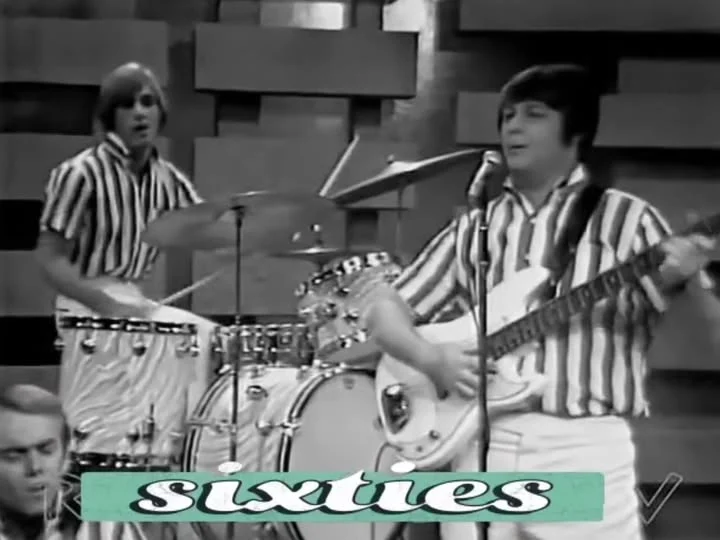
Some songs are less like tracks and more like open doors to another era. From the first round of “ba-ba-ba” the listener is no longer a passive observer. In that instant, the song becomes a shared joke, a communal dance, an invitation to let go. That is the strange and beautiful magic of Barbara Ann by The Beach Boys.
This little track started life in 1961 as a modest single by The Regents. It might have faded into history if not for a loose, off-the-cuff recording session four years later. When The Beach Boys threw their harmonies behind it, the song took on a life of its own. The result was an accidental smash that still makes audiences grin today.
The band behind the phenomenon began in Hawthorne, California, in 1961. The Beach Boys built a legacy around the sound of endless summer. Songs like Surfin’ USA, Good Vibrations, and Wouldn’t It Be Nice carried the optimism and freedom of a generation. Their rich vocal blends and vivid storytelling defined an era. Yet Barbara Ann found a special place in that catalog because it felt so unforced. It was not a polished masterpiece. It was a perfect, candid snapshot of people having fun.
The story behind Barbara Ann is one of beautiful accidents. Fred Fassert wrote the song, and The Regents first introduced it to the world in 1961. But it was not until The Beach Boys recorded it for Beach Boys’ Party! in 1965 that the song truly connected. The session was raw, playful, and remarkably casual. Dean Torrence of Jan and Dean joined in, and the final take captured the easy energy of a living room get-together rather than a traditional studio session.
That spontaneity translated into radio magic. The song climbed to number two on the Billboard Hot 100, surprising everyone and proving that sometimes the most natural moments make the strongest impressions.
Part of the song’s appeal lies in its sheer simplicity. The chorus is built on repetition, and that repetition is exactly what makes it so easy to join. The “ba-ba-ba” hook does not require a great voice or knowledge of the lyrics. It only asks for a little willingness to sing along. Add the rock-and-roll energy in lines about rocking and reeling, and the track becomes an automatic call to dance.
The recording itself is far from perfect. Laughter slips through. Someone shouts encouragement. The instruments stumble slightly before finding the groove. Instead of hurting the song, that loose humanity makes it feel alive. It sounds like a moment captured, not manufactured. That is rare in popular music and even rarer in a hit single.
Why does Barbara Ann still find new listeners in every generation? The answer may be in the way it offers a release from the ordinary. In an age of heavy production and complex arrangements, this song is refreshingly unadorned. It does not ask to be studied. It asks to be felt. It also carries a deep sense of nostalgia, even for people who were born decades after the sixties ended. It paints a picture of a carefree world where the biggest concern is a dance floor and the next song.
For older listeners, the track brings back memories of record players and summer nights. For younger fans, it is a glimpse into a playful era that no longer exists. The song has become a bridge between generations, a shared piece of musical sunshine.
There are a few details that make this story even more charming. The song was never supposed to be a major single. It came together while The Beach Boys were working on other material, and the party atmosphere of the session was almost accidental. The raw recording style gives it a sense of intimacy that sets it apart. And because the song remains so beloved, marketers have turned to it again and again when they want to evoke joy and nostalgia. From advertisements to film soundtracks, Barbara Ann continues to do what it has always done best. It brings people together.
That crossover into pop culture is no small thing. In advertising, music is a shortcut to emotion. A familiar tune can make a product feel friendly, optimistic, and trustworthy. Barbara Ann does exactly that. Its upbeat bounce and communal chorus make it ideal for campaigns aimed at families, travelers, and anyone chasing a good time. The song does not need a visual to create an image. It already carries the feeling of summer, friendship, and pure delight.
What explains the enduring importance of Barbara Ann in a world of ever-changing musical trends? Perhaps it is because joy never goes out of style. The song does not rely on complicated metaphors or heavy production. It uses simple tools, a memorable hook, and a group of voices celebrating together. In those three minutes, listeners are invited to leave their worries behind. That invitation is timeless.
It is not just a song. It is a feeling that reminds us of the power of simplicity in music, the beauty of harmony, and the joy of singing together.
In the end, Barbara Ann is not just a Beach Boys classic. It is a small piece of happiness that has been passed from generation to generation. It is a reminder that music can be easy, playful, and deeply human. Whether heard at a party, on a road trip, or in a quiet room, it delivers the same message every time. Let go, sing along, and share the moment.
The Lyrics
Wasn’t it? (That’s right) I can’t harmony (Ah, bar, bar)
What? No (Let’s go), once was enough
Bar, bar, you don’t know how to sing
Baa (Baa), baa (Baa), black sheep, have you any wool?
(Yes sir) I’m gon’ sing this just a little more (Now)
Ooh, aw, that was cuteA bar, bar, bar, bar, Barbara Ann
Bar, bar, bar, bar, Barbara Ann
Barbara Ann (Bar, bar, bar, bar, Barbara Ann)
Take my hand (Ah, bar, bar, bar, bar, Barbara Ann)
You got me rockin’ and a-rollin’, rockin’ and a-reelin’
Barbara Ann, bar, bar, bar, Barbara AnnWent to a dance, looking for romance
Saw Barbara Ann, so I thought I’d take a chance
On Barbara Ann, Barbara Ann (Bar, bar, bar, bar, Barbara Ann)
You take my hand (Bar, bar, bar, bar, take my hand)
You got me rockin’ and a-rollin’ (Ho-oh), rockin’ and a-reelin’
Barbara Ann, bar, bar, bar, bar, (C’mon, black sheep)
Barbara Ann, bar, bar, bar, bar
A bar, bar, bar, bar, Barbara Ann
Bar, bar, bar, bar, Barbara Ann
Barbara Ann (Bar, bar, bar, bar, Barbara Ann)
Take my hand (Ah, bar, bar, bar, bar, Barbara Ann)
You got me rockin’ and a-rollin’, rockin’ and a-reelin’
Barbara Ann, bar, bar, bar, Barbara Ann
Let’s go now, ow! Baby, take it out, let’s see
Take it in, Carl
Hal, and his famous ashtray!
Get out of her, man (You’re a big dude)
You smell like Rocky, you’re always scratchin’ it
Hey, come on!
Scratch it, Carl, scratch it, baby, right over there
Ah, down a little lower, down a little lower!
Saw—, tried—
Tried Peggy Sue, tried Peggy Lou
Tried Mary Lou, but I knew she wouldn’t do
Barbara Ann, Barbara Ann (Bar, bar, bar, bar, Barbara Ann)
Take, Barbara Ann (Bar, bar), woo (Take my hand)
You got me rockin’ and a-rollin’, rockin’ and a-reelin’
Barbara Ann, bar, bar, bar, Barbara Ann
Barbara Ann (Bar, bar, bar, bar, Barbara Ann)
Take my hand (Bar, bar, bar, bar, Barbara Ann)
Well, Barbara Ann (Bar, bar, bar, bar, Barbara Ann)
You got me rockin’ and a-rollin’, rockin’ and a-reelin’
Barbara Ann, bar, bar, bar, Barbara Ann
Barbara Ann, Barbara Ann (Oh)
Barbara Ann, Barbara Ann (Oh, yeah)
Barbara Ann, Barbara Ann
Barbara Ann, Barbara Ann
You got me rockin’ and a-rollin’, rockin’ and a-reelin’
(Ah, I don’t know) Barbara Ann, bar, bar, bar, Barbara Ann
Let’s try that again one more—
You got me rockin’ and a-rollin’, rockin’ and a-reelin’
Barbara Ann, bar, bar, bar, Barbara Ann
Oh, that was fun (I think it’s great)
You got me rockin’ and a-rollin’, rockin’ and a-reelin’
Barbara Ann, bar, bar, bar, Barbara Ann
Let’s try it once more (One more time, baby)
With more artistic flavor (One more time)
You got me rockin’ and a-rollin’ (Reelin’), and rockin’ and
Oh, Barbara Ann, whoa
You got me rockin’ (Rockin’), you got me rollin’
(Oh, my) Barbara Ann
(Thank you very much!)
(Thanks, Dean) (Heavy)
That’s not bad