
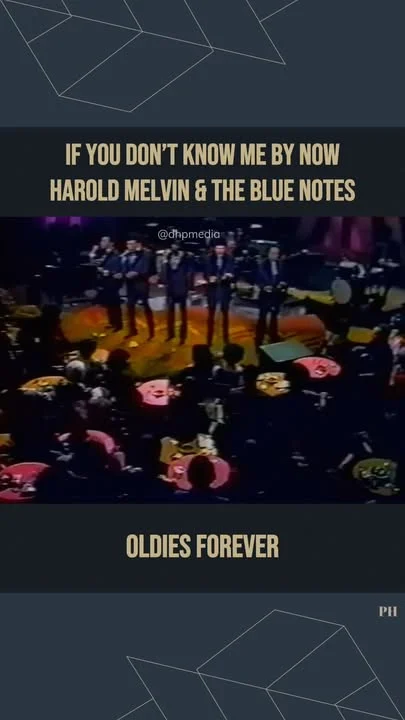
There are songs that whisper, and there are songs that declare. And then there’s the rare masterpiece that seems to hold a mirror to the very soul of human longing. Harold Melvin & The Blue Notes’ “If You Don’t Know Me By Now” is precisely that kind of record—a profound, aching ballad that refuses to let go long after the final note fades. Released in 1972 as the lead single from the album I Miss You, this Philadelphia soul jewel has transcended its era to become a universal anthem of love, mistrust, and the quiet desperation of wanting to be truly seen.
What makes this track so arresting isn’t just its lyrical genius—it’s the way every instrument, every harmony, and every breath of Teddy Pendergrass’s baritone aligns into one devastating emotional current. Decades later, it still possesses the power to stop you mid-step, whether you’re hearing it on a crackling radio or through a high-fidelity playlist. Let’s pull back the velvet curtain and dissect the magic that has made this song immortal.
The Turning Point: Inside I Miss You
To understand the seismic impact of “If You Don’t Know Me By Now,” you have to look at where it came from. I Miss You wasn’t just another LP in 1972; it was the group’s explosive debut under the legendary production duo Kenneth Gamble and Leon Huff, at their newly minted Philadelphia International Records. This album didn’t merely introduce a sound—it helped define the entire Philadelphia soul subgenre, a lush, orchestral cousin of Motown that prioritized vulnerability and cinematic arrangement over simple pop hooks.
The record was a springboard for the band’s then-drummer turned frontman, Teddy Pendergrass, whose raw, gospel-infused voice brought an unprecedented dimension to the group. While the album explores themes of longing and regret throughout, it’s “If You Don’t Know Me By Now” that anchors the project, a song that doesn’t just save a relationship—it interrogates the very foundation of intimacy. It was the track that catapulted the Blue Notes from local Philadelphia staples to national icons, and it remains the emotional core of the album to this day.
The Anatomy of a Heartbreak: Instruments and Arrangement
Gamble and Huff were master architects of musical emotion, and this track is their crowning blueprint. The arrangement is deceptively simple—yet every layer is meticulously placed to amplify the pain in the lyrics. It’s not just a song; it’s a slow, molten fusion of sound and sentiment.
From the very first second, a delicate, ruminative piano invites you into the singer’s intimate world. Those ivories aren’t just playing notes; they’re sketching a mood of introspection and heartfelt confession. The chord progressions roll forward with a gentle persistence, as if the pianist is trying to soothe a restless heart.
As the verses unfold, a rich tapestry of strings enters—violins and violas that swell and recede like waves against a shore. This orchestral layer is where the song’s cinema lives. It builds during the climactic refrains, turning quiet despair into a dramatic, almost operatic plea. This is unmistakably Philadelphia soul: sophisticated, elegant, and unafraid to wear its heart on a string section.
Break it down further, and you’ll find the rhythm section doing more than just keeping time. The bass is a quiet, steady anchor, providing a subtle groove that keeps the song grounded even as the strings soar. The guitar, meanwhile, is the unsung hero—its muted strums and little melodic licks add an organic warmth that counterbalances the orchestral grandness. It’s the everyday conversation happening behind the symphony.
But none of this would matter without the true star: the voice. Teddy Pendergrass doesn’t just sing these lyrics; he lives them. His voice carries a low, gravelly urgency that shifts between gentle pleading and raw frustration—sometimes within the same line. The supporting harmonies from The Blue Notes add a church-like depth, a collective chorus of support that echoes the gospel roots of soul. Together, they create a soundscape that feels both polished and profoundly human.
The Universal Cry: Themes and Emotional Resonance
Let’s be honest—who hasn’t felt the sting of being misunderstood by someone they love? The song’s central refrain, “If you don’t know me by now, you will never, never, never know me,” isn’t just a clever hook; it’s a devastating verdict on the limits of communication. Pendergrass sings of a partner who doubts his intentions, who sees only his actions and not the heart behind them. He oscillates between frustration and a desperate need for trust, culminating in a line that feels both like a threat and a resignation: “What good is a love affair when you can’t see eye to eye?”
This is what separates the song from a typical breakup ballad. It doesn’t wallow in sadness; it examines the slow erosion of a connection built on mutual misunderstanding. The emotions are raw—frustration, longing, a quiet ultimatum—and that complexity is why it still resonates across generations. Whether you’re a teenager experiencing first love or a grandparent reflecting on a long marriage, the song’s central plea is universally understood. It’s the sound of a heart screaming for validation.
Musical Companions: Tracks That Share the Same Soul
If “If You Don’t Know Me By Now” moves you, there’s a deeper catalog waiting to be explored. These records occupy the same emotional and sonic landscape, each a perfect companion:
“Let’s Stay Together” by Al Green offers a smoother, more optimistic take on commitment, yet it shares that same lush, 70s soul production and deeply personal vocal delivery. It’s a tender counterpoint to the Blue Notes’ more anxious tension.
“Me and Mrs. Jones” by Billy Paul is another Gamble and Huff masterpiece. It’s a slow-burning narrative of a forbidden affair, wrapped in the exact same orchestral sophistication and biting emotional realism. The pain here is quieter, but the ache is just as loud.
For something a little older but equally intense, “A Change Is Gonna Come” by Sam Cooke channels a similar level of soul-stirring urgency. Though its subject is social and personal, the vocal rawness and the sense of a torch being carried through darkness make it a perfect spiritual sibling.
And if Pendergrass’s voice is what captured you, his solo work is essential listening. “Love T.K.O.” is a masterclass in vulnerability, featuring that same mixture of tender fragility and unshakeable strength, backed by an arrangement that knows exactly when to hold back and when to let go.
An Enduring Legacy: From Philadelphia to the World
The song’s reach didn’t stop in 1972. Simply Red famously covered it in 1989, introducing it to a new generation and topping charts across the globe. But while that version is polished and respectable, it never quite captures the desperation and grit of Pendergrass’s original performance. The authenticity of the first recording remains a towering benchmark, a reminder that some emotional truths can’t be replicated.
Beyond the charts, the track solidified the reputation of Philadelphia International Records as a powerhouse in shaping the soul sound of the 70s. It bridged the gap between the raw energy of R&B and the sheen of the upcoming disco era, while still feeling grounded in the church, in the bedroom, and in the streets. Its influence can be traced through countless soul ballads that followed, from Teddy’s own solo work to the quieter, more introspective moments of hip-hop and neo-soul artists today.
A Timeless Masterpiece
To call “If You Don’t Know Me By Now” a song feels like an understatement. It’s a memory, a confession, a mirror held up to our most fragile moments. The careful interplay of piano, strings, guitar, bass, and that unforgettable voice creates a texture you can almost touch. Every listen reveals something new—a crack in Pendergrass’s voice, a subtle swell of the orchestra, a harmony you hadn’t noticed beneath the surface.
As part of I Miss You, it didn’t just define Harold Melvin & The Blue Notes—it redefined what soul music could express. And in doing so, it built a bridge between the pain of the 70s and the hearts of any listener who has ever felt unseen. If you haven’t yet surrendered to its power, do yourself a favor. Press play, close your eyes, and let the song speak for you.
Watch the Magic
Embed the original performance or lyric video here to enhance the experience.
The Lyrics that Cut Deep
If you don’t know me by now
You will never, never never know meAll the things that we’ve been through
You should understand me like I understand you
Now boy I know the difference, between right and wrong
I ain’t gonna do nothing to upset our happy home
Don’t get so excited if I come home a little late at night
And we only act like children when we argue, fuss, and fightIf you don’t know me by now
You will never, never, never know meWe’ve all got our own funny moods, I’ve got mine
And boy, you’ve got yours too
Just trust in me like I trust in you
As long as we’ve been together
It should be so easy to do
Please get yourself together or we might as well say goodbye
Cause what good is a love affair when you can’t see eye to eyeIf you don’t know me by now
You will never, never never know me
If you don’t know me by now
You will never, never never know me