
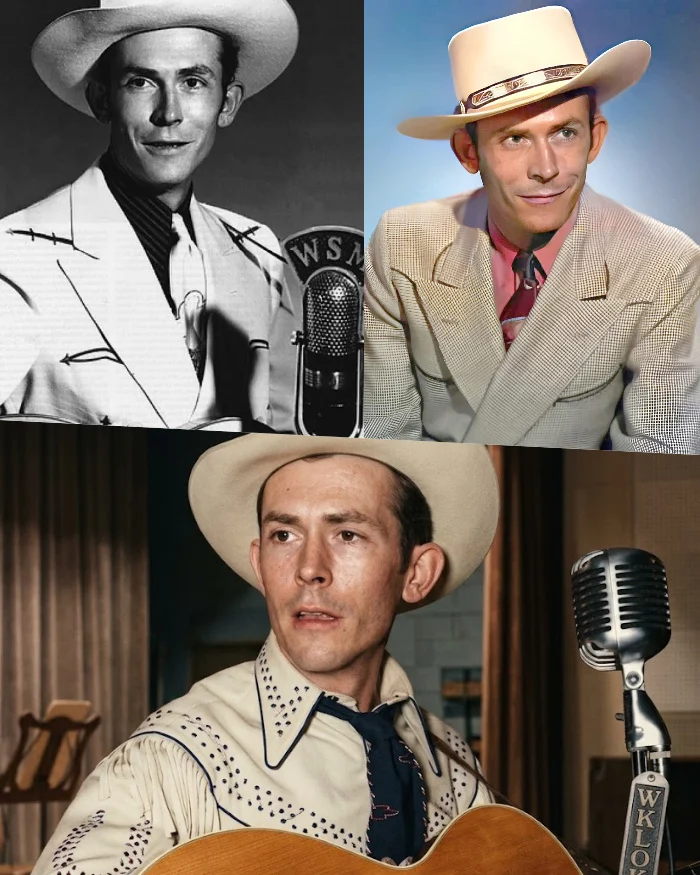
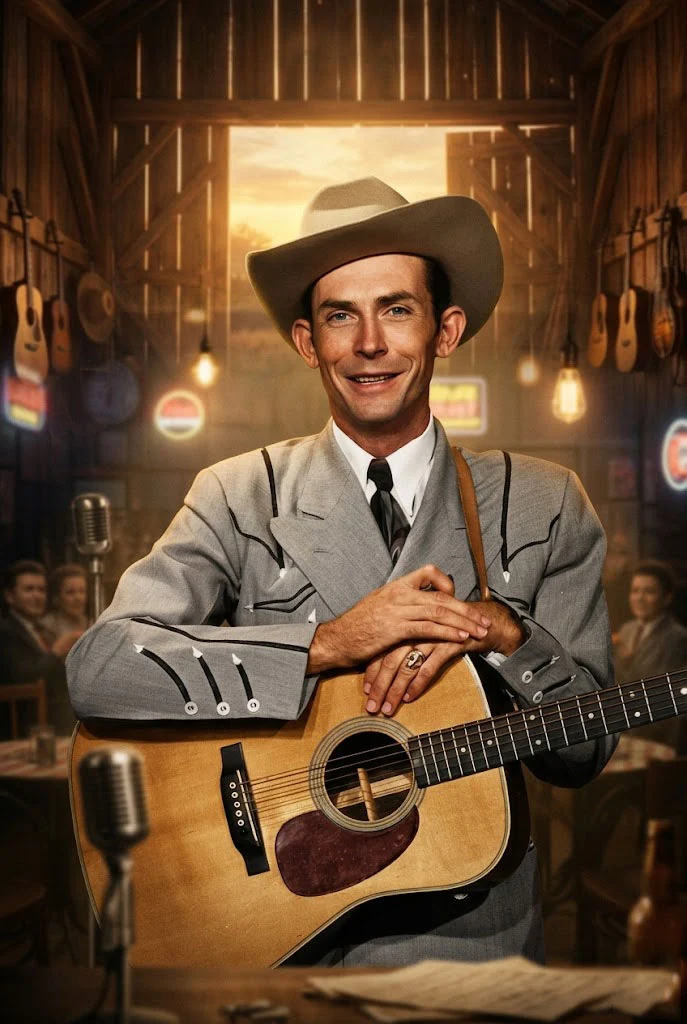
For decades, the world has remembered him as the lonesome saint of country music—the tragic figure who poured his heartbreak into every ballad. But hidden beneath that sorrowful legend lies a completely different story, one that reveals the true, joyful spirit of Hank Williams.
It wasn’t a grand, tear-jerking ballad that defined him. It was a rustic, unfiltered hoedown called “Bile ’em Cabbage Down” that showed the world a different side of the man. In those fast-paced, breathless strings, you don’t hear a doomed legend. You hear the sawdust floors, the worn-out fiddles, and the joyful heartbeat of the Southern dirt that raised him.
When Hank and his Drifting Cowboys tore into this classic dance tune, the haunting sorrow in his voice completely stepped aside. For those two wild minutes, he wasn’t the broken, lonesome saint. He was a country boy who knew exactly how to make a room come alive.
“Bile ’em Cabbage Down” was pure, unfiltered rural tradition—a song that proved Hank Williams was more than just a tragic figure. He was a master musician who understood the delicate balance of the working-class spirit.
Hank Williams didn’t get to live a long life. He was given just twenty-nine short years, and in that burning window, he wrote and recorded over a hundred songs of profound regret and midnight despair. People expected him to hurt. Fans paid good money to stand in dark auditoriums and listen to his voice crack with the heavy weight of the world.
But that devastating image was only a fraction of the truth. The world remembers the heartbreak because it is always easier to romanticize a tragedy. Yet, in those two minutes of joyous string-picking, you hear a young man frozen in time, capturing the exact, joyful heartbeat of the rural dirt roads that raised him.
He was not just a hollow vessel for human suffering. He was a country boy from Alabama who knew exactly how to be happy. The best remedy for the weight of the world isn’t a sympathetic tear—it’s letting the fiddle play as loud and as fast as it can.