
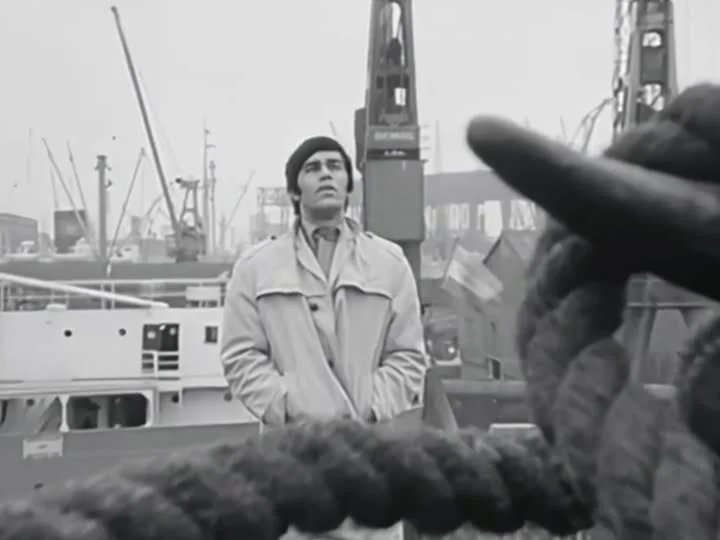
There are moments in music history when a voice arrives that seems to carry the weight of an entire generation’s unspoken fears. One such moment unfolded in 1968, when a 21-year-old New Zealander stepped into the international spotlight with a song that would define his career and touch the hearts of millions. The track was “If I Only Had Time,” and the voice belonged to John Rowles.
Listening to it today, through the warm glow of a quality audio system, the recording still possesses that rare cinematic gravity that separates enduring art from fleeting pop. There is something hauntingly beautiful about the way the opening piano notes hang in the air, tentative and fragile, as if they are unsure whether to proceed. And then Rowles begins to sing, and the world seems to slow down.
It is not merely a love song. It is an existential plea whispered into the ear of eternity.
The Birth of an International Star
Rowles’ journey to this defining moment was no accident. His Australian-born manager, Peter Gormley, had a clear vision. Gormley, whose roster already included legends like Cliff Richard and Olivia Newton-John, recognized something special in his young protégé. He saw a vocalist who could stand shoulder to shoulder with the continental balladeers who dominated the charts, artists like Engelbert Humperdinck. But Rowles needed the perfect vehicle, a song that could showcase the extraordinary depth and control of his voice.
The answer came from an unexpected source. French singer Michel Fugain had scored a hit in 1967 with “Je n’aurai pas le temps,” a melancholic meditation on mortality and love. With new English lyrics by Jack Fishman and production by the legendary Mike Leander, the song was transformed into something entirely new.
Leander was no stranger to musical ambition. His credits spanned from The Beatles to Marianne Faithfull, and he understood how to blend classical sophistication with mainstream appeal. Under his guidance, the track became a masterclass in emotional architecture, rising from intimate verses to a towering chorus that seemed to reach for the heavens.
When “If I Only Had Time” hit the airwaves, it was an immediate phenomenon. The single climbed to number three on the UK charts, and its success echoed across Europe, Australia, and New Zealand. Rowles had arrived, and the world was listening.
The Craft Behind the Emotion
The true genius of this recording lies in its arrangement. Leander built the track with the precision of a master architect, understanding that emotional impact requires structural integrity. The opening is deceptively simple: a lonely piano introduces the harmonic foundation while a brushed snare drum provides a gentle, almost hesitant pulse. This restraint focuses every ounce of attention on Rowles’ voice, which enters with deliberate, aching subtlety.
Then comes the transformation. As Rowles launches into the title phrase, a lush curtain of strings rises behind him, swelling with breathtaking crescendo that mirrors the emotional intensity of the lyrics. The strings are not merely decorative; they are the very heartbeat of the song, pulsing with urgency and longing. The brass section enters with sparing yet poignant counter-melodies, adding a metallic edge to the velvet warmth of the strings.
Throughout the track, the rhythm section remains exquisitely subtle. The guitar work is minimal, a faint arpeggio occasionally emerging from the texture, never distracting from the vocal performance. The close microphone technique on Rowles captures every subtle vibrato, every breath, creating an intimacy that makes the listener feel like a confidant to his private lament.
The dynamic range demands attention. It is the kind of recording audiophiles use to test their equipment, yet it never sacrifices soul for spectacle.
A Universal Lament
The lyrical content transcends its 1968 origins. The singer is not pleading for wealth or fame. He is begging for something far more precious: time. “If I only had time, only time, so much to do / If I only had time, they’d be mine,” he sings, his voice rich and full, yet laced with a poignant fragility that seems impossible for someone so young.
The song’s enduring power comes from this fundamental tension. The orchestra sounds eternal, majestic, sweeping across emotional landscapes like a cinematic score. But the voice reminds us of our mortality, of the simple, finite tragedy of the human clock. The arrangement is vast, yet the emotional core remains deeply personal.
“The grand, sweeping sound is merely the frame for a voice facing down the most elemental of human anxieties: running out of time.”
Rowles never over-sings. His performance is a masterclass in controlled catharsis, allowing the natural strength of his tone and phrasing to carry the weight. He deepens the melancholy in the quieter bridge sections before leaning into the soaring moments where melody and arrangement unite in glorious release. It is the sound of restraint yielding to raw, yet always elegant, emotion.
The final sustained note fades with the reverb tail of the strings, leaving a silence that echoes with all the unspent years the singer dreamed of sharing with his beloved. In that silence, the listener feels the weight of what has passed.
More Treasures for the Curious Listener
For those who find themselves drawn to the sweep and sincerity of this classic, there are other recordings that capture a similar spirit of orchestral longing:
“The Impossible Dream (The Quest)” – Richard Kiley (1965) shares the same dramatic, aspirational scale that defined mid-60s Broadway-to-Pop transitions. “Can’t Take My Eyes Off You” – Frankie Valli (1967) follows a comparable journey from intimate piano-led opening to thunderous orchestral finale. “Love Story (Where Do I Begin)” – Andy Williams (1971) offers similar lush arrangements and heartfelt vocal delivery. “Release Me” – Engelbert Humperdinck (1967) showcases the powerful crooner style Rowles was challenging. “It Must Be Him” – Vikki Carr (1967) is another stunning English-language cover of a French torch song. And “MacArthur Park” – Richard Harris (1968) demonstrates the era’s appetite for grand, ambitious pop statements.
Time is an inevitable, often cruel passage. Yet for the duration of this remarkable recording, John Rowles and Mike Leander created a golden refuge against its relentless march. For those precious minutes, the dreams you might never pursue feel close enough to touch, and the strings tell a story that words alone could never capture.
Turn it up once more. Let the music wash over you. And remember that some voices, some songs, manage to outlast time itself.