
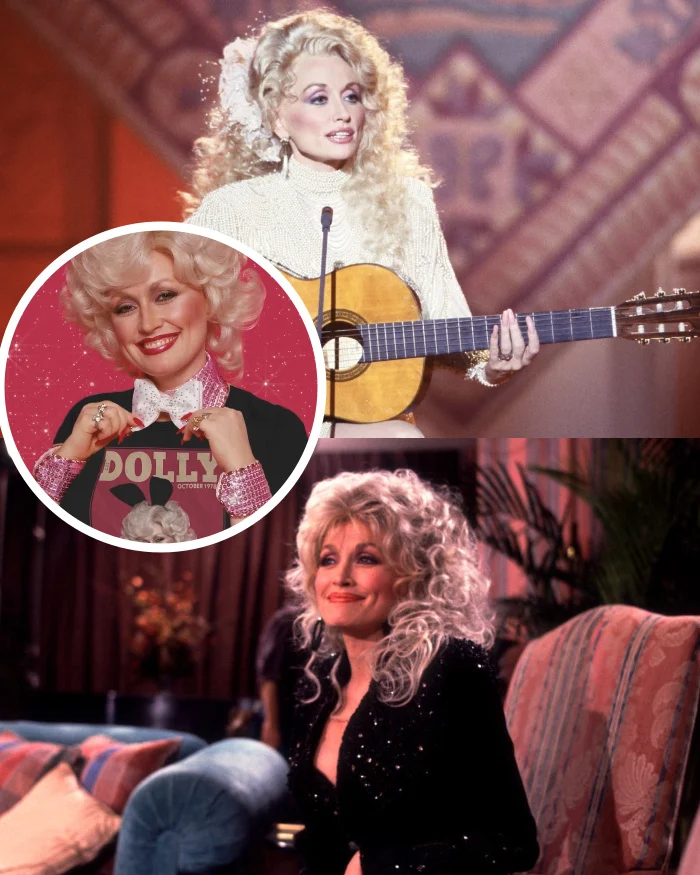
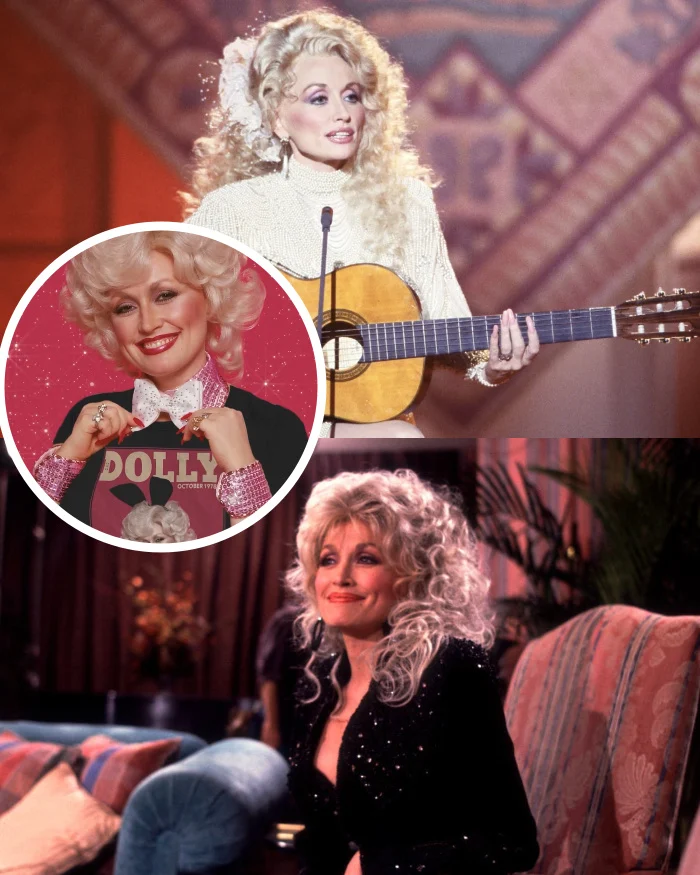
Before she was a global icon, before she had a guitar that cost more than a family’s monthly income, Dolly Parton was just a little girl with a fierce dream and a makeshift instrument.
In the early 1950s, in the remote Appalachian hollows of Locust Ridge, Tennessee, a young Parton lived in a single-room cabin with her family. She was one of twelve children, and a factory-made guitar was a luxury entirely out of reach. But that didn’t stop her.
When she stumbled upon a discarded, stringless mandolin, she saw not a broken instrument, but a canvas for her ambition. Salvaging two mismatched bass strings, she fitted them onto the small wooden frame迥异. The thick strings were so heavy they left her fingertips blistered and bleeding as she pressed them against the fretboard. Yet, she persisted, inventing an open-tuning style that allowed her to barre a single finger across the frets, producing full, resonant chords.
Her uncle, Bill Owens, saw the dedication and the raw talent. When she turned eight, he bought her a real, small-bodied acoustic guitar. That simple act of generosity gave her the tool she needed to take her voice beyond the hollow, to radio stations and television programs in Knoxville.
The unique open-tuning technique she developed on that homemade contraption became her signature. It allowed her to play rhythmically and cleanly across the fretboard, giving her the freedom to perform intricate patterns on stage, even while wearing her signature long acrylic nails. It became an essential part of her sound during recording sessions at RCA Studio B in Nashville.
By the late 1960s, Parton had joined Porter Wagoner’s syndicated television show, bringing her distinct mountain rhythm style to national television screens. Her playing provided the underlying rhythmic foundation for early career milestones, including “Coat of Many Colors” and “Jolene.”
Over the decades, that childhood adaptation transformed into a defining musical trademark. The simple solution of a mountain child trying to make two heavy strings ring out across the hollow helped shape a catalog of songs that defined American country music.