
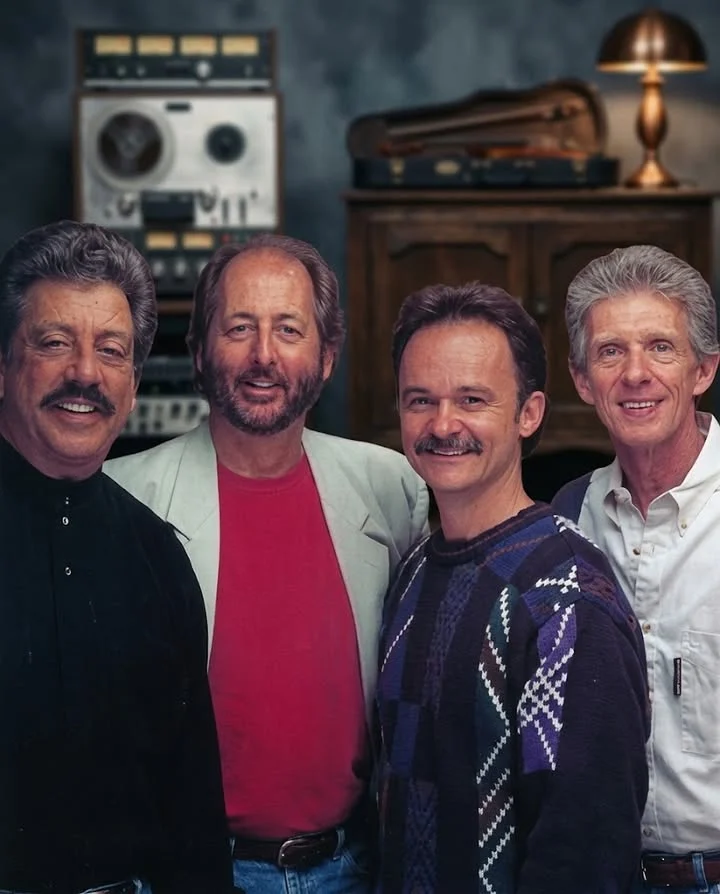
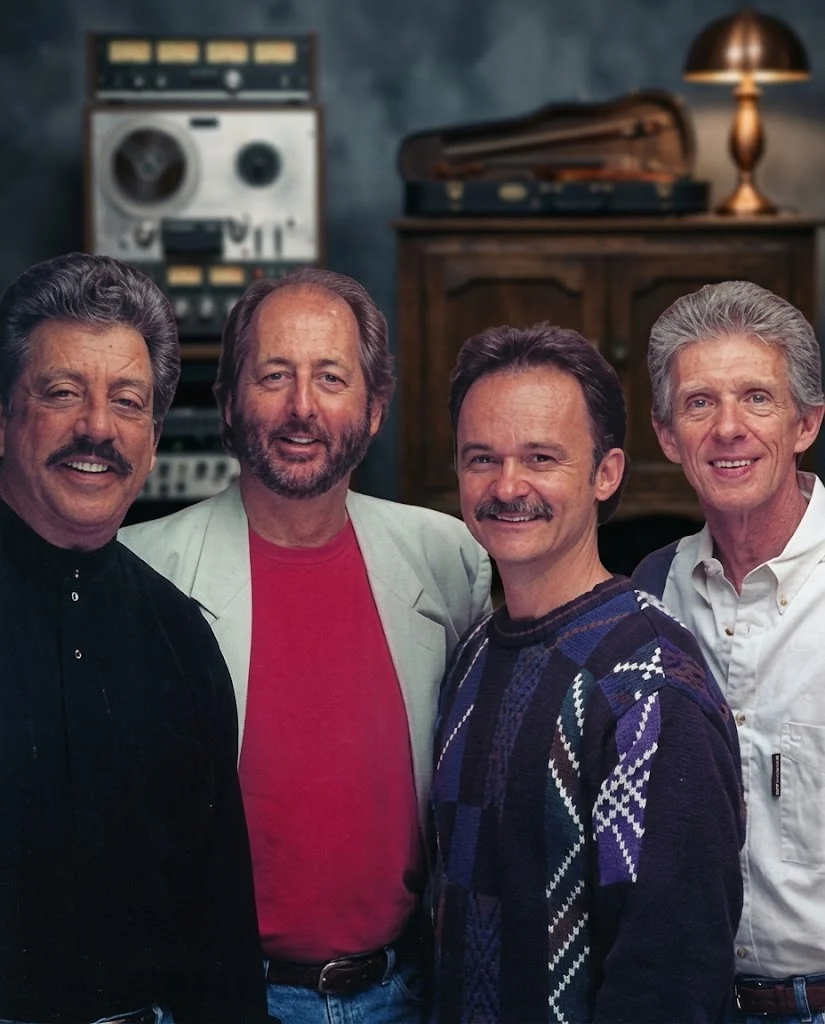
Two Hall of Fame inductions in two consecutive years—a feat so rare it places The Statler Brothers in the company of legends. But for these four Virginia natives, the true triumph was never about the trophies. It was about staying true to the harmonies they first learned as boys in a small Shenandoah church.
In 2007, they entered the Gospel Music Hall of Fame, followed just one year later by induction into the Country Music Hall of Fame in Nashville—joining an exclusive circle of only six acts in American history to achieve both honors.
Harold Reid, Don Reid, Phil Balsley, and Lew DeWitt—later joined by Jimmy Fortune in 1982—earned three Grammys, nine CMA Vocal Group of the Year awards, and multiple Dove Awards across four decades. Their sound was a seamless blend of commercial country and sacred worship, proving that faith and chart-topping success could coexist.
Yet their signature four-part harmony was never manufactured in a studio. It was born in the pews of Lyndhurst Methodist Church, where the boys gathered around an upright piano, blending tenor, lead, baritone, and bass until their voices moved as one. When they entered professional studios in the 1960s, they made a deliberate choice: they insisted on singing live together around a small set of microphones, preserving the acoustic clarity and upright bass drive of their childhood rehearsals.
That authenticity caught the attention of Johnny Cash in 1964, who immediately brought them on tour as his opening act and backup vocalists for eight formative years. Cash championed their crossover appeal, encouraging them to record original songs like “Flowers on the Wall” alongside traditional spirituals without diluting either genre.
Even at the height of their fame, headlining arenas and hosting their own variety show on TNN during the 1990s, the group refused to relocate to Nashville. They kept their homes and headquarters in Staunton, Virginia, staying rooted in the community that had shaped them.
When their farewell tour ended in 2002, they walked away on their own terms, leaving behind a catalog of over 50 albums where faith and everyday storytelling stood side by side.
Standing on those induction stages in 2007 and 2008 didn’t change who they were. It simply confirmed that the harmonies born in a Shenandoah church had become an enduring cornerstone of American music.