
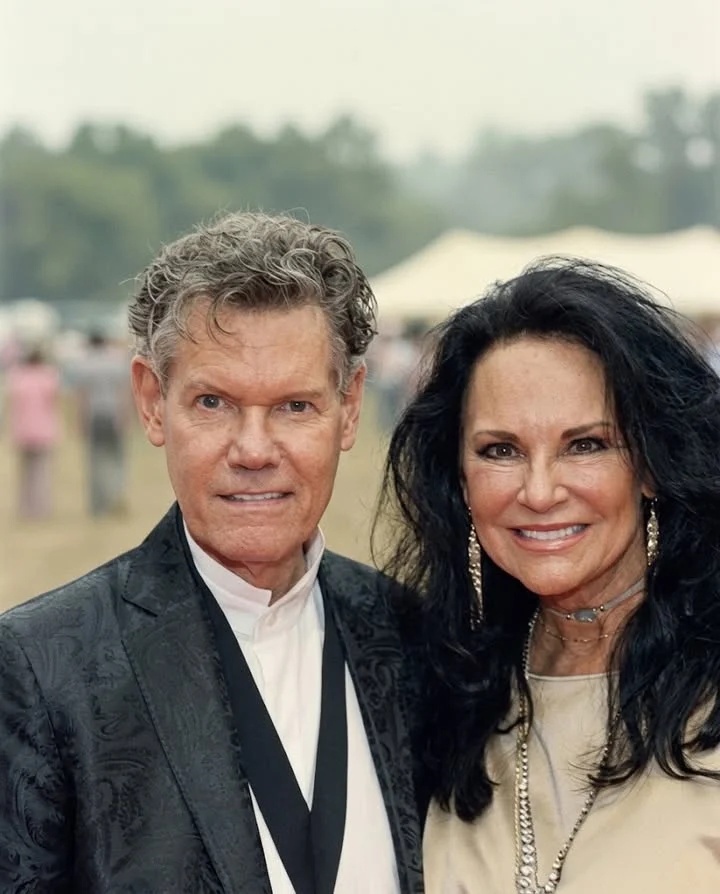
In the sterile quiet of a Dallas intensive care unit, a diamond ring became more than a promise of a wedding—it became legal armor. In July 2013, a viral heart infection triggered a catastrophic stroke that left country music legend Randy Travis in a deep coma. Doctors delivered a devastating verdict: less than one percent chance of survival.
As medical staff gently suggested removing life support, his fiancée, Mary Davis, refused. Armed with the legal authority of her engagement, she stood firm, refusing to let the monitors be turned off.
She chose to keep fighting for the man who had given a generation of country music its soul.
Travis spent months in the hospital, enduring multiple brain surgeries and secondary infections, rebuilding his entire life from the ground up. When the couple finally wed in March 2015, the ceremony in Texas was far from the grand affair they might have imagined. A local pastor officiated a private gathering with only close friends and family present.
Travis navigated severe physical limitations that day. Instead of traditional vows, their commitment had already been proven through sterile hospital rooms, grueling therapy sessions, and a shared refusal to surrender. Aphasia had taken away the deep baritone that once filled arenas, leaving him largely unable to speak. Mary stepped into an entirely new role: his interpreter, his fierce protector, and his voice to the outside world.
This partnership was on full display during his 2016 induction into the Country Music Hall of Fame. She stood closely beside him at the podium, providing physical stability and emotional anchor. She delivered the acceptance speech so he wouldn’t struggle, preserving his dignity in front of his peers. That night, he shocked the audience by singing a few verses of a hymn—a sheer act of will made possible by the woman holding him steady.
But the most profound chapter of their marriage unfolded far from cameras, back on their Texas ranch over the following decade. Stripped of his famous vocabulary, the couple built a quiet, unspoken language of their own. Mary learned to read his subtle micro-expressions, the changing light in his eyes, and the slight movements of his hands. While his verbal responses were reduced to simple syllables, they found ways to hold entire conversations without a single complete sentence.
Music remained central to their home, serving as a bridge when words failed. Though his right side was severely affected, Travis would form guitar chords with his left hand while listening to old records, and Mary understood exactly what memory he was reliving. She anticipated his needs before he voiced them. She didn’t stay out of obligation or speak for him out of pity. She stayed because the man behind the microphone was always more important to her than the legend on the stage.
He spent his career singing about enduring devotion, but he never had to write a song to prove it. Mary Davis simply lived it, giving the man who voiced the heart of country music a love that didn’t need words to be heard.