
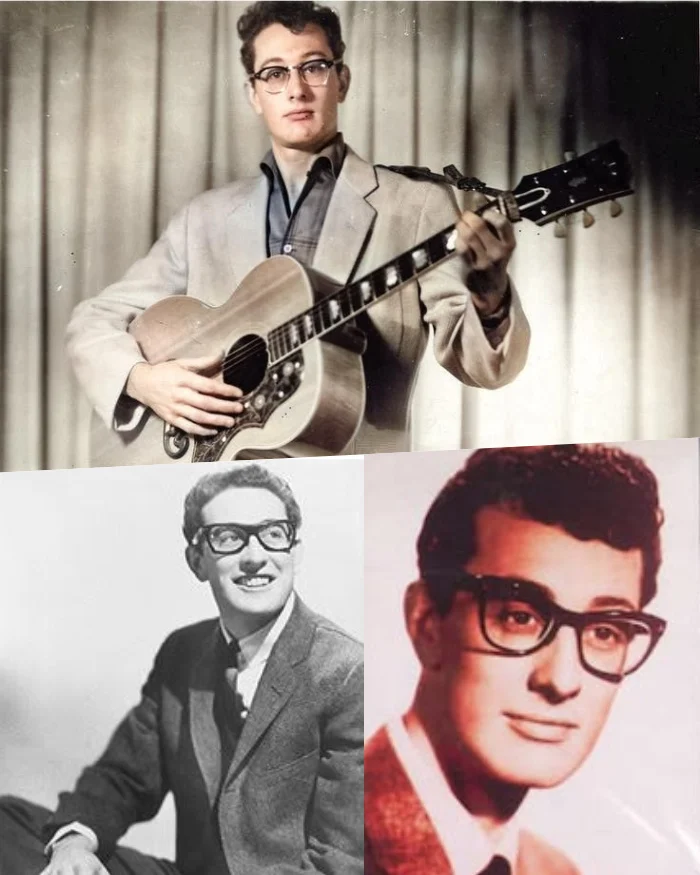
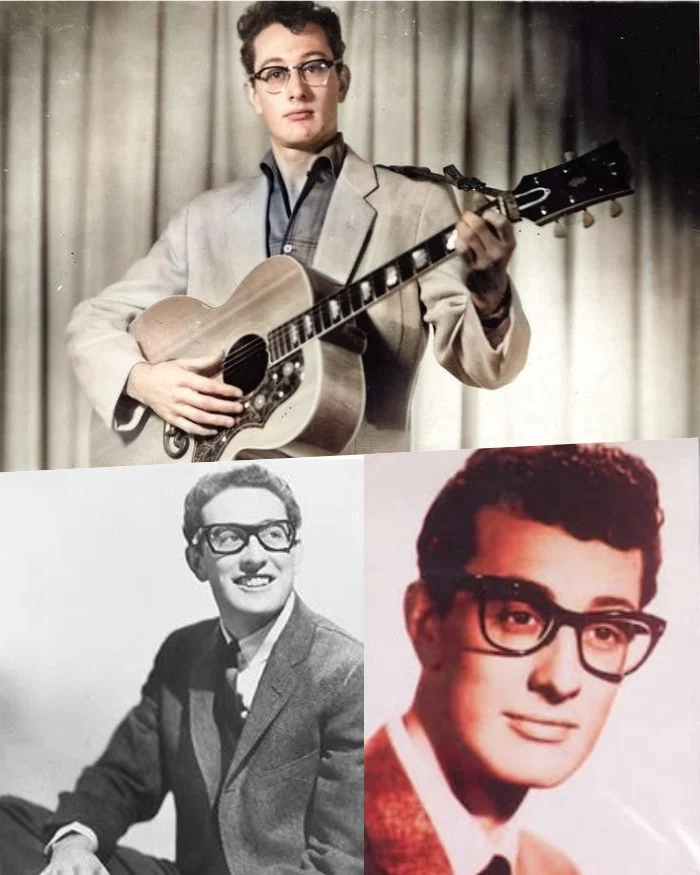
Inside a museum gallery in Lubbock the dark leather above a Gibson’s soundhole is worn smooth by the sweep of a teenage wrist. That small polished patch is the quiet heart of a story about a skinny kid in thick glasses who used a mallet and a needle to protect the only future he believed in.
In the mid 1950s Charles Hardin Holley owned very little of commercial value except a sunburst 1943 Gibson J-45 acoustic guitar. He had scraped together the money through odd jobs in Lubbock and the instrument felt like his entire ticket out of West Texas tractor lots. Hard shell travel cases were an unaffordable luxury for an eighteen year old playing dusty West Texas honky tonks community centers and roadside dance halls. Inspired by country stars such as Hank Snow Holly turned to his older brother Travis who ran a small leathercraft business in town.
With borrowed heavy hand tools swivel knives and thick sheets of raw cowhide Holly sat under a bare work lamp night after night. He traced the contours of the dreadnought body and soaked the hide in water so it could stretch tightly around the spruce top mahogany sides and arched back. Using wooden mallets he hand tooled classic Sheridan floral scrollwork across the face stamped his full name into the upper bout and pressed the outline of Texas near the bridge. As his regional radio profile grew he added the titles of his earliest Decca recordings “Blue Days – Black Nights” and “Love Me.” Thick saddle stitching held the skin firm and created a protective jacket built to survive rough gravel highways and rattling car trunks. His calloused hands took cuts from swivel knives and stitching needles but the result was a piece of working class craft that shielded the wood across long rattling drives to early studio sessions.
That heavy leather jacket did more than shield the lacquer from buckle rash and weather. It fundamentally altered how the guitar behaved in front of a microphone. In early 1956 Holly traveled to Nashville for historic sessions at Bradley Film and Recording Studios overseen by legendary producer Owen Bradley. Bradley’s engineered sound favored bright ringing acoustic timekeeping. When Holly stepped up to the microphones with the encased Gibson the dense stitched cowhide choked the vibration of the spruce top. It swallowed the instrument’s natural sustain and high end overtones and produced a dry percussive thud that baffled Nashville engineers accustomed to polished country rhythm.
The dense stitched cowhide choked the vibration of the spruce top and swallowed the instrument’s natural sustain and high end overtones.
That muffled tone gave Holly’s early Decca cuts a distinct dry acoustic snap. While Nashville executives pushed him to sound like an orthodox country crooner the percussive attack of the leather bound instrument foreshadowed the heavy rhythmic drive he would soon unleash on solid body electric guitars. When Holly purchased a Fender Stratocaster in 1955 and pivoted toward the driving electric tempos of The Crickets the Gibson J-45 remained a cherished personal possession rather than an obsolete relic. He kept it close through the breakthrough tours that took him from Lubbock to national television broadcasts and preserved the very wood that had anchored his earliest living room dreams.
Following Holly’s death in the February 1959 plane crash in Clear Lake Iowa at age twenty two the encased guitar passed through private hands. In 1978 actor Gary Busey portrayed the musician in The Buddy Holly Story and later acquired the instrument. At a high profile Sotheby’s auction in New York in 1990 the guitar sold for over $240,000 and eventually found a permanent home in Lubbock’s Buddy Holly Center.
Inside the museum gallery the dark leather still bears the physical record of Holly’s teenage labor. The tooled floral petals remain sharp but the finish just above the soundhole is smoothed flat by the repeated sweep of his right wrist. How that handmade cover shaped the guitar’s muffled acoustic tone during his early Nashville recordings remains one of the fascinating technical chapters behind his first recorded sound.
Long before national stages heard his voice a working class kid used a mallet and a needle to protect the only future he believed in.