
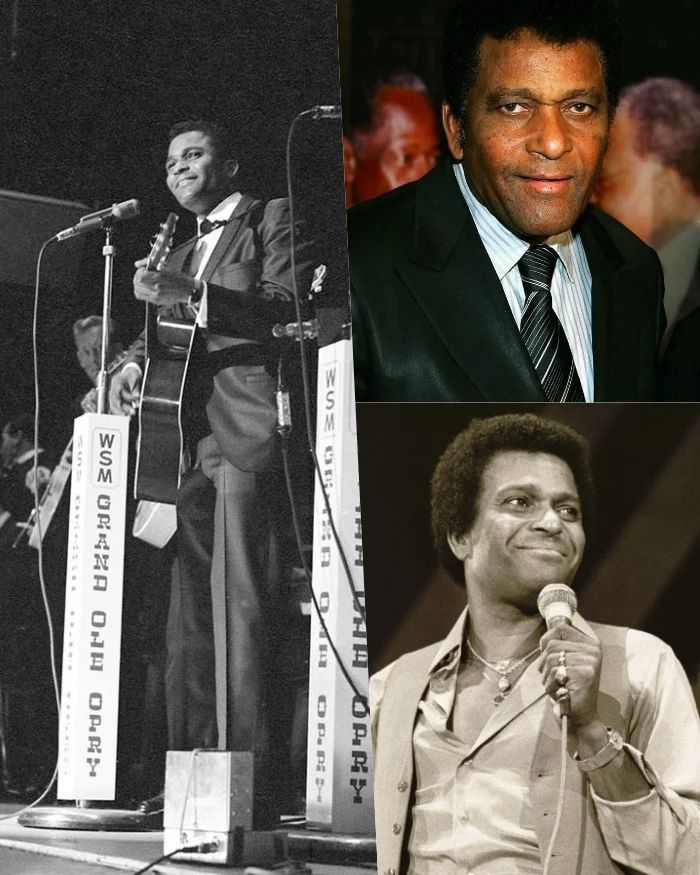
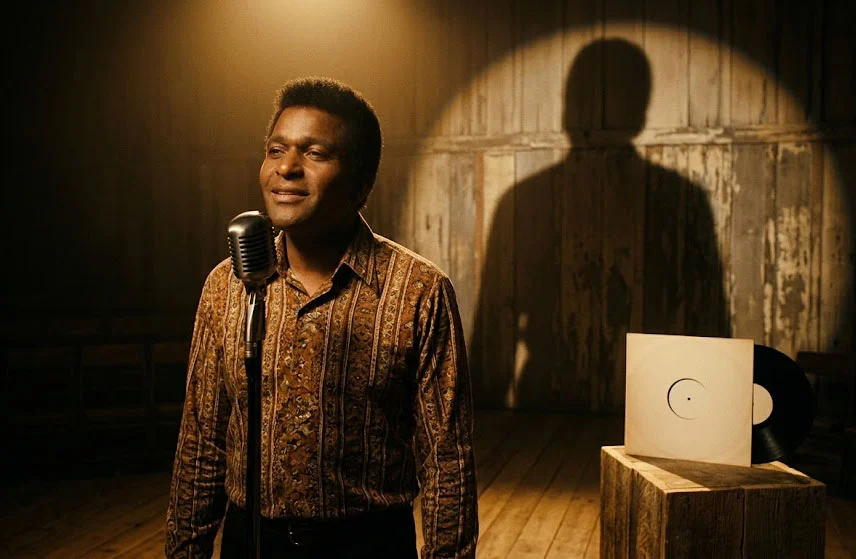
By the time America learned that the warm baritone on the radio belonged to a Black man from Mississippi, his records were already in their homes.
That was the strange and painful strategy behind Charley Pride’s rise. When RCA Records signed him in 1965, the label removed his photograph from singles and press kits. Executives were afraid that white country fans would turn away from a Black voice singing the music they treated as their own.
Pride did not answer with a protest anthem. He answered with work, with dignity, and with a song about a brokenhearted drifter hitchhiking through the rain on Route 66, searching for a place to start over and belong.
The most powerful country songs do not announce their revolution. They quietly make you love someone you were taught to fear.
Long before Nashville, there was Sledge, Mississippi. Pride was the fourth of eleven children born to sharecroppers. Money was scarce. Dreams had to compete with dawn work in the cotton fields.
But a battery-powered radio carried the Grand Ole Opry into the family’s small home. Hank Williams and Roy Acuff sang through the static, and the boy listened as if the air itself had opened a door.
He also understood the world waiting outside that door. In the 1950s South, churches and diners and radio playlists were divided by color. Country music was presented as white America’s property. Black performers were expected to stay in their lane.
Pride kept singing.
After years of chasing a baseball career, his voice brought him to Nashville. The talent was undeniable. The industry was not ready. So early records went out blind. Disc jockeys introduced him as just another country boy from the heartland. Listeners heard the ache in his delivery before they saw the color of his skin. By the time they realized who they had been hearing, they had already fallen in love.
Then came 1970 and a song called “(Is Anybody Goin’ to) San Antone.” On the surface it was simple. A tired man, a lonely highway, rain, and a plea for somewhere to belong.
Underneath the melody, Pride was singing his own truth. He knew what it meant to walk into rooms where people stared. He knew the heavy silence of hesitation. He knew what it cost to stand in the rain of other people’s doubt and keep asking for a home.
When he sang about finding that home at the end of Route 66, it was not fiction. It was a request for acceptance on a stage that had tried to keep him invisible.
He did not answer prejudice with fury. He answered with the quiet dignity of a man who knew his own worth.
“(Is Anybody Goin’ to) San Antone” became his third consecutive No. 1 hit. There was no hiding his face anymore. Fans who had been taught that a Black man could never belong in their world were buying his records and singing along in their kitchens.
He was no longer an experiment. He was a pioneer. He opened one of the heaviest doors in Nashville by standing his ground, song after song, until nobody could deny the truth in his voice.
Sometimes the greatest defiance is simply making the world love you before it remembers it was taught to hate you.
The most powerful revolutions do not always announce themselves. Some arrive quietly on a lonely highway, carried by a man who refused to let fear have the final word.