
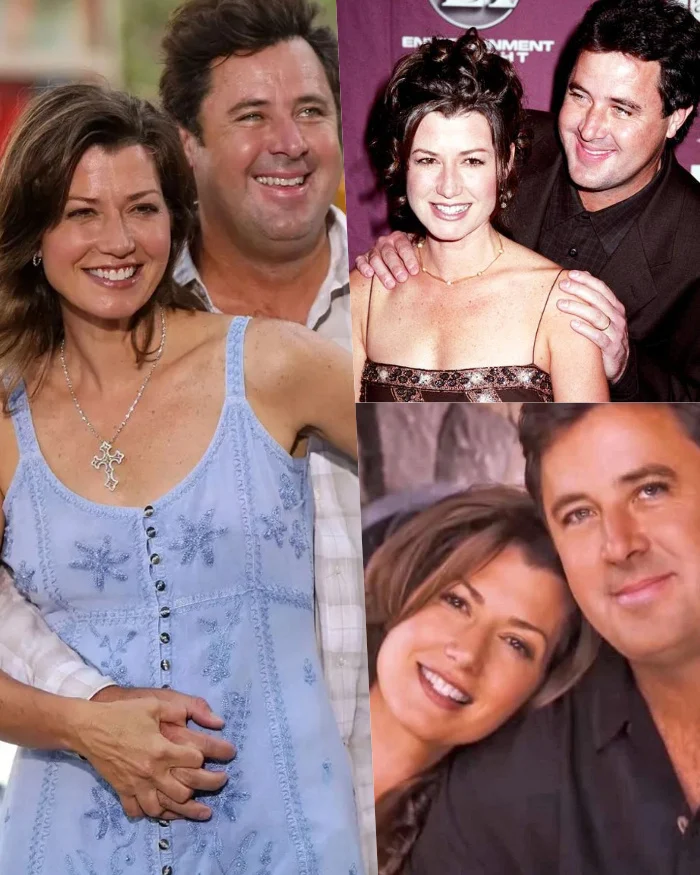
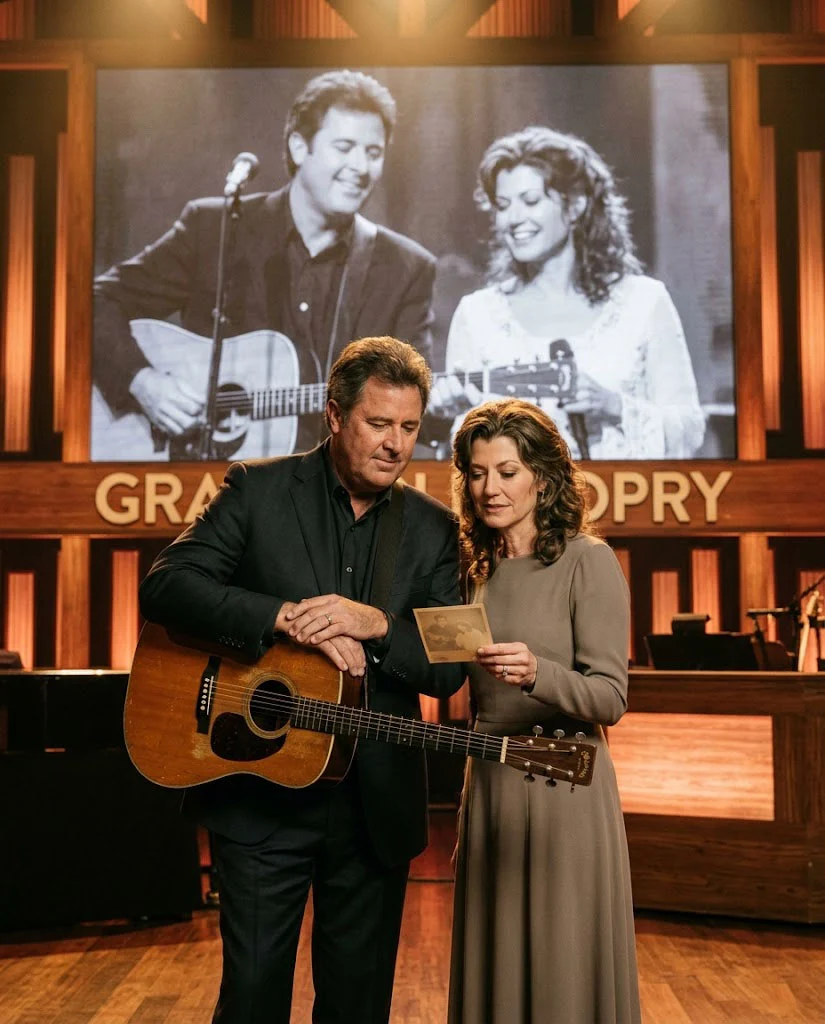
The final note of the pedal steel fades into the rafters and the room goes quiet. That heavy silence is where the real story of Look at Us begins, not in a fairytale, but in the scarred space where Vince Gill and Amy Grant learned what it means to survive.
When the song reached the airwaves in 1991, listeners heard a tender ballad about devotion. They heard a voice like silk promising that love could last. What they could not see was the man behind the microphone counting the cost of a heart already broken.
Before Amy, love had failed Vince in the cold reality of a Nashville morning. He knew the hollow weight of a quiet house. He knew the finality of a closing door. He did not want to write a radio hit that lied to people. He wanted to write something that breathed the truth.
We are still here.
That truth is why Look at Us never begged for forever or hid behind poetic lies. It stood still and whispered the one thing broken people need to hear. Survival is not a fantasy. It is a choice made again and again.
Years later, standing beside Amy, Vince felt the lyrics shift under the weight of their shared history. The song stopped being a reflection of what he hoped for. It became a quiet form of survival.
They did not come together as two perfect people with untarnished hearts. They came together as two survivors who knew exactly what it felt like to lose everything they thought was permanent. The notes remained the same, but the air behind them grew heavier.
When they look at each other on stage today, there is a specific gravity in the silence between the verses. It is the look of two people who have stopped trying to convince the world they are perfect. They are just real.
The most profound love is not the one that has never seen a storm. It is the one that decided to stay after the roof was blown off.
They both knew how easy it was to walk away. They had both seen the exit signs. Choosing to stay became a silent daily act of rebellion, a conscious decision to remain in the light when the shadows of the past tried to pull them back into the dark.
Every time they sing those words now, it feels less like a performance and more like a private vow. They are not singing for charts or standing ovations. They are singing to remind themselves that they made it through.
It is a love built on the knowledge that everything can break, but some things are worth the work of mending. They do not look at each other like they have never been hurt. They look at each other like people who finally found where they belong.
As the final note fades and the room goes quiet, the silence acknowledges the truth behind the music. It is a quiet proof that love can remain even after the world thinks it is gone.