

The spotlight found her at center stage, but the song did not begin.
For a few seconds Loretta Lynn simply stood there, looking into the dark. The room went still. No one cheered. No one moved. Thousands of fans held their breath.
That pause became the most revealing moment of her final years. The quick, defiant stride was gone. The walk to the microphone was slow and careful, as if every step carried a lifetime.
For six decades Loretta had been a force of nature. The world knew her as the Coal Miner’s Daughter. The proud girl from Butcher Hollow gave rural America a voice when Nashville often preferred silence. She sang about betrayal, survival, working-class motherhood and the hard truths too many people tried to ignore.
Her voice broke down stubborn doors in Nashville and forced the industry to listen. Fans expected the fire, and she gave it to them year after year.
Time still asked its price. As her health faded, quiet rumors moved through Nashville. People wondered when the final goodbye would come.
Loretta did not turn her frailty into a spectacle. She kept showing up. She kept walking to the microphone.
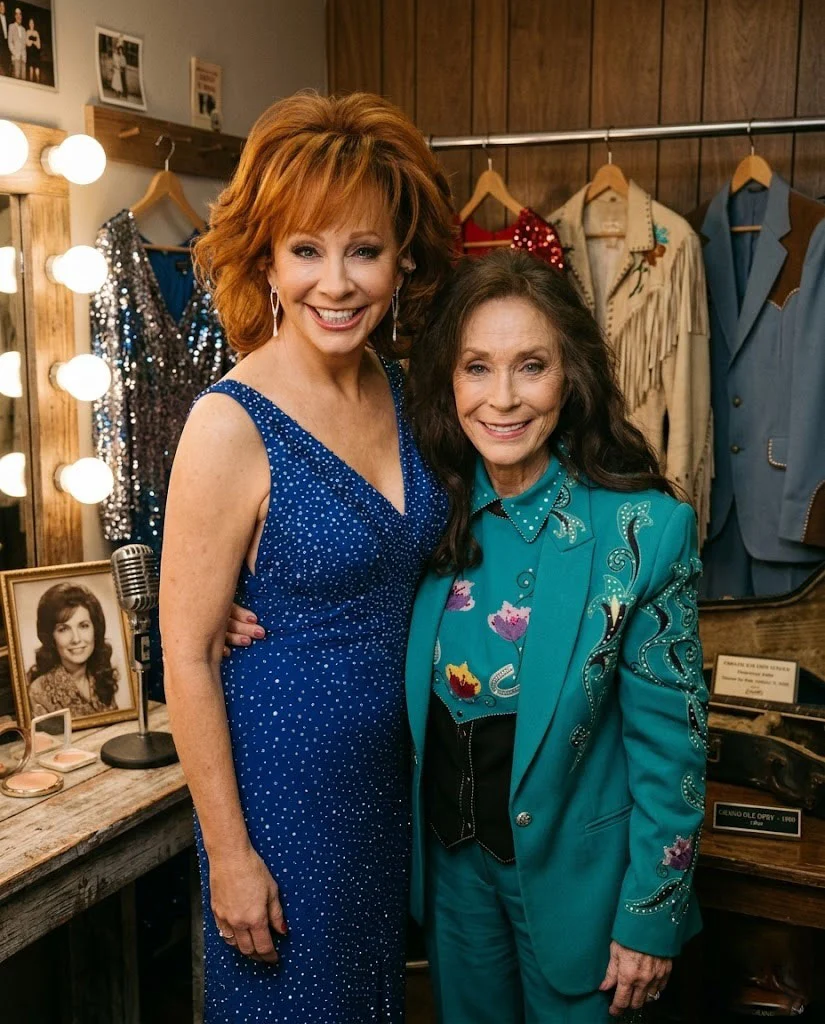
Backstage she once shared a simple truth with those closest to her.
“Every song carries a lifetime.”
Those final shows made that truth visible. The history arrived before the first lyric. The silence was not empty. It held years, memories and a quiet grace that needed no explanation.
She was not fighting an unwinnable war with time. She stood in the spotlight because music was how she knew to live. The connection remained steady even as her body faded.
Today the stage is dark. The voice that guided generations of women has gone quiet.
But the people who sat in that breathless stillness took home something rarer than a hit song. They saw a woman who refused to let time speak louder than her truth.
In the end she proved that the most powerful part of a song can be the quiet moment right before it begins.