
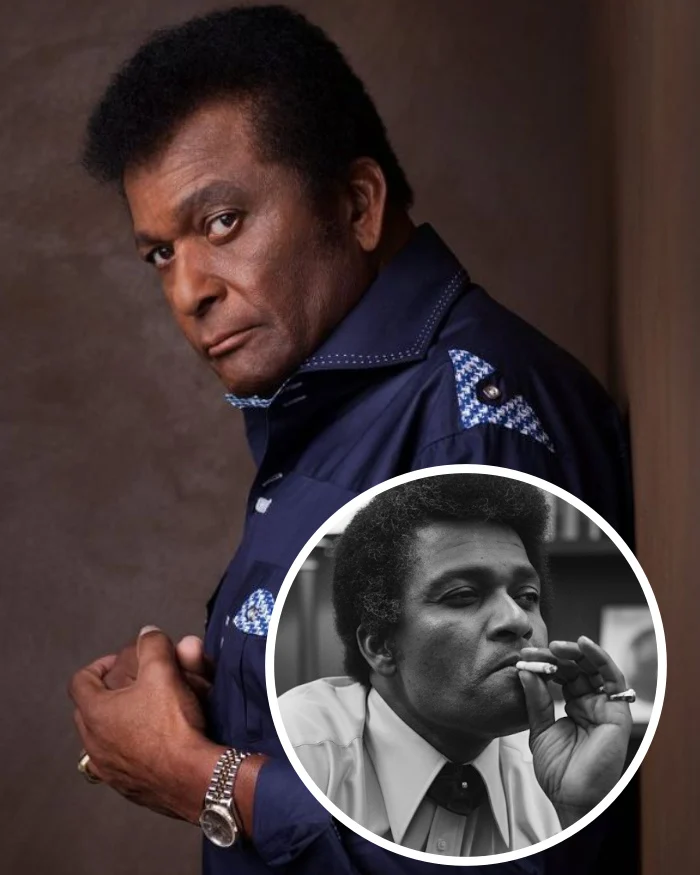
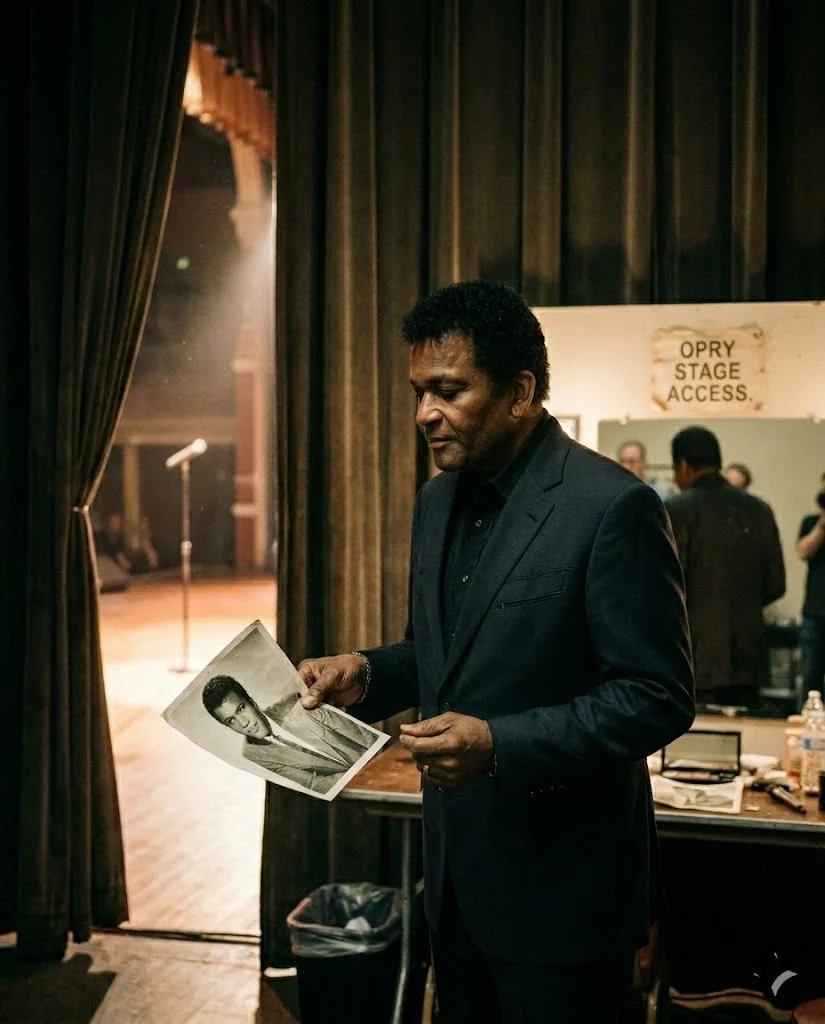
The spotlight hit Charley Pride and the room went quiet, but not because the crowd was ready to listen. The silence had a sharper edge. It was the sound of assumptions cracking in real time, under a country music spotlight in Nashville.
Music usually asks for a simple exchange. A stage, a microphone, and an audience willing to be carried somewhere softer for a few minutes. That night, the music was not the problem.
Behind the curtain, the air smelled of warm cables and stale coffee. The rules had shifted politely. Charley had already proved himself in every way that mattered. His baritone was steady and undeniable, the kind of voice that made people lean closer and forget to breathe. He sold out shows. He moved records. He was a phantom voice welcomed into living rooms and pickup trucks, a singer whose lyrics strangers knew by heart while the man himself remained a mystery.
The word was confusion. Hours before the show, a man with a clipboard appeared in the hallway. He was not loud or angry. He was careful, speaking as if he were offering a favor rather than delivering a warning.
“There’s been some confusion,” the man said softly. “We just want to smooth things over.”
Charley did not ask what kind of confusion a love song could cause. He understood. The confusion was about the color of his skin standing under a country music spotlight. Someone had printed the concert posters without a photograph. The promoters had built an image in the audience’s minds, an image that kept the reality of a Black country singer comfortably hidden. Now, with the doors opening, that fragile illusion was cracking.
Another voice joined in. The suggestion was gentle and awful. Charley should say a few light words before the set, just to put the audience at ease. They were not asking him to apologize for a missed note. They were asking him to soften the blow of his own existence. They wanted him to manage the discomfort of people who could not handle the truth.
The quiet refusal came without a speech. Charley did not argue. He let the heavy silence hang in the backstage air. He looked down at his hands. They were calloused and steady. There is a specific kind of strength in remaining calm when the world asks you to shrink. He could have turned the hallway into a battle. He could have walked out the back door. But he knew the microphone was louder than their careful, exclusionary language.
A faint smile crossed his face. He did not reach for a microphone to beg for acceptance. He gripped the worn neck of his guitar, pushed past the heavy velvet curtain, and walked directly into the blinding glare.
The truth arrived in the chords. When the spotlight hit him, the restless crowd hushed. Murmurs rippled through the theater as assumptions broke in real time. Some people shifted in their seats. Others simply stared. Charley let the pause stretch. He stood firm, refusing to apologize for the space he occupied. Then he turned to his band, gave a small nod, and struck the first chord.
And then he sang.
People remember different endings to that night. Some swear the applause took a painfully long moment to arrive. Others say the room erupted almost instantly. A voice does not have to shout to dismantle a room’s prejudice. Sometimes it just stands there, undeniable and true.
He did not give them the apology they wanted. He gave them a song they could never unhear, one that lingered long after the stage went black.